Arq. Bras. Oftalmol. 200366
| DOI: 10.1590/S0004-27492003000400002
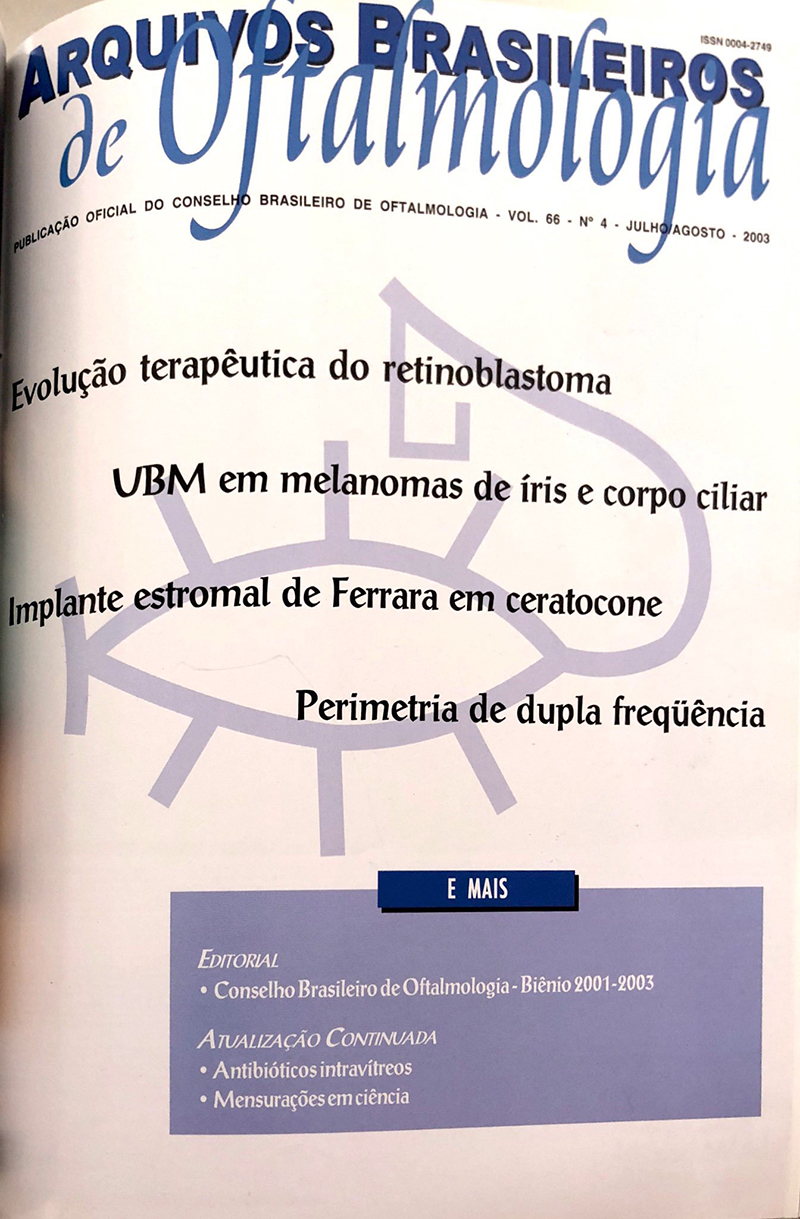
PURPOSE: The management of retinoblastoma (Rb) has gradually changed over the past years achieving a satisfactory result (increasing overall survival and avoiding enucleations).
METHODS: Three hundred and nineteen patients with retinoblastoma were studied. From January 1986 to November 1996, 257 patients with Rb were referred to "Hospital do Cancer AC Camargo". The treatment changed according to the period, from 1986 to 1990 and from 1991 to 1996. From January 1996 to December 2000, 62 patients presenting intraocular (IO) tumors were treated with chemoreduction and adjuvant treatment to avoid enucleation or external beam radiation therapy.
RESULTS: From January 1996 to December 2000, 62 patients with IO Rb (47 bilateral and 15 unilateral tumors) with potential vision were treated with chemoreduction and ophthalmological adjuvant treatment. In the patients with bilateral tumors 49.8% preserved the eye vs. 26.7% for patients with unilateral tumors. Among 257 patients 59 presented extraocular Rb according to CCG classification. Overall five-year survival was improved in the second period (63.7 x 41% - p=0.059).
CONCLUSION: Chemorreduction plus focal treatment plays an important role in the management of children with Rb. Gene therapy perhaps will increase the number of preserved eyes. A multicenter trial should be considered to evaluate patients with CNS Rb or metastatic disease with ominous prognosis. The lag time between the first sign and symptoms and the early diagnosis is the best weapon to achieve the cure in this patients.
Keywords: Retinoblastoma; Survival; Vision
Arq. Bras. Oftalmol. 200366
| DOI: 10.1590/S0004-27492003000400003
PURPOSE: To study pre-operatively and post-operatively ultrasound biomicroscopy (UBM) findings of iris and ciliary body melanomas and correlate tumor extension (revealed by ultrasound biomicroscopy) with histopathology findings.
METHODS: Prospective study of 5 patients with a clinical diagnosis of iris and ciliary body tumors. These patients were evaluated by ultrasound biomicroscopy before and after treatment with iridectomy or iridociclectomy. All specimens were sent for histopathologic study. Patients were followed-up for a minimum of 6 months when a new ultrasound biomi croscopy examination was performed.
RESULTS: In this group of 5 patients, 3 were females and 2, males, age range from 32 to 64 years. All tumors were unilateral. Four patients presented an iridociliary tumor and one presented a lesion limited to the iris. In all cases ultrasound biomicroscopy was very helpful to determine surgical planning ensuring free surgical margins. Postoperative ultrasound biomicroscopy revealed no signs of tumor recurrence in all cases; 2 patients presented vitreous in the surgical wound, one with limited vitreous traction but no retinal detachment was detected. CONCLUSIONS: Ultrasound biomicroscopy seems to be a reliable ancilliary method to diagnose iris and iridociliary tumors, plan surgical treatment and postoperative follow-up.
Keywords: Ciliary body; Iris neoplasms; Iris neoplasms; Uveal neoplasms; Melanoma; Pigment epithelium of eye
Arq. Bras. Oftalmol. 200366
| DOI: 10.1590/S0004-27492003000400004
PURPOSE: To compare the changes in corneal curvature, visual acuity and spherical equivalent before and after the implantation of the intrastromal corneal Ferrara ring in contact lens intolerant keratoconus patients.
METHODS: The first 400 eyes treated with the Ferrara ring were evaluated according to the alterations obtained in the corneal curvature, visual acuity and refraction after surgery, as well as the stability of the results in the first year.
RESULTS: In the 400-studied eyes, there was a mean reduction of 4.18 D in keratometry and 4.65 D in spherical equivalent. The mean uncorrected visual acuity showed the greatest improvement varying from less than 20/400 before to 20/100 after surgery. The mean BSCVA was 20/50 after the surgery. The more advanced keratoconus (III/IV groups) showed the greatest reduction in keratometry. The correction remained stable along the period of the study in all groups.
CONCLUSION: The Ferrara ring showed to produce reduction of myopia, regularization of the cornea and consequent corrections of the irregular astigmatism, disappearance of the keratoconic pattern and a significant improvement of the corrected and uncorrected visual acuity.
Keywords: Keratoconus; Corneal stroma; Visual acuity; Corneal topography; Astigmatism; Prostheses and implants
Arq. Bras. Oftalmol. 200366
| DOI: 10.1590/S0004-27492003000400005
PURPOSE: To determine the sensitivity and specificity of frequency doubling perimetry (FDP) with Humphrey visual field testing used as the gold standard.
METHODS: In a prospective study, 45 glaucomatous patients (90 eyes) and 31 normal patients (62 eyes) underwent frequency doubling perimetry and Humphrey visual field testing (24-2). Glaucomatous visual field loss was classified as early (mean deviation no worse than -6dB), moderate (mean deviation between -6 and -12dB) or advanced (mean deviation greater or equal to -12dB). Sensitivity and specificity were calculated.
RESULTS: One hundred and fifty two eyes underwent both tests. The average time for the frequency doubling perimetry was 5.23 minutes and 16.53 for Humphrey 24-2. The frequency doubling perimetry had a sensitivity of 92% and specificity of 71% irrespective of visual field loss. For early visual field loss, FDP achieved a sensibility of 76% and especificity of 74%. For moderate and advanced visual field loss sensitivity and specificity were 86% and 79%; 93% and 80%.
CONCLUSION: Frequency doubling perimetry had a high sensitivity and specificity in detecting glaucomatous visual field defects especially in those eyes with severe visual field defects.
Keywords: Sensitivity and specificity; Glaucoma; Perimetry; Comparative study; Visual fields; Optic nerve
Arq. Bras. Oftalmol. 200366
| DOI: 10.1590/S0004-27492003000400006
PURPOSE: To compare the use of non-steroid anti-inflammatory drugs (NSAID) with steroids in the follow-up of strabismus surgery, regarding inflammation control.
METHODS: All patients underwent resection-recession surgery. Both groups used the same antibiotic eye-drop. One group used NSAID (ketorolac tromethamine- Acular®) and the other, prednisolone, 0.12% - Pred Mild®, for 21 days. They were examined with slit-lamp and ectoscopy to evaluate IOP (comparing with the fellow eye), edema, hyperemia and comfort.
RESULTS: Of a total of 23 patients, 15 were treated with NSAID and 12 with steroid. Regarding comfort, edema and IOP there was no important difference between the NSAID and steroid groups. However, when we analyzing hyperemia, there were 5 (33.3%) patients in the NSAID group with ++/4 of hyperemia at the 21st postoperative day and only 1 (8.3%) patient in the steroid group. There were also three granulomas (20%) in the NSAID group and none in steroid-treated patients.
CONCLUSION: For resection-recession surgeries, procedures that induce a greater inflammatory response, the use of NSAID is not advisable.
Keywords: Inflammation; Strabismus; Anti-inflammatory agents; steroids; Prednisolone topic; Ketorolac tromethamine
Arq. Bras. Oftalmol. 200366
| DOI: 10.1590/S0004-27492003000400007
PURPOSE: To study intraocular pressure (IOP) variations in healthy volunteers after weight lifting, in the supine position.
METHODS: A descriptive study was designed. Thirty-four individuals were preselected for this study, and a group of 25 volunteers fulfilled the inclusion criteria for joining the initial phase of this research. All of them were healthy without glaucoma. They were asked to lift an 85% top load in the supine position for 8 times. IOP was measured before and after the exercise. Student's t test was used to analyze the IOP variations.
RESULTS: A small, but significant IOP decrease (1.61 mmHg) was obtained after exposing 25 individuals (49 eyes) to a specific physical effort. CONCLUSIONS: After a session of weight lifting in the supine position with 85% top load for 8 repetitions, there is a small, but significant IOP decrease.
Keywords: Intraocular pressure; Weight lifting; Sports
Arq. Bras. Oftalmol. 200366
| DOI: 10.1590/S0004-27492003000400008
PURPOSE: The lack of experimental models to study diverse therapeutical alterations in sclera led the authors to propose an animal model for a quantitative study of scleral vessels and cells.
METHODS: This is a randomized, masked, prospective study using 15 female rabbits divided into 3 groups. The first group of animals (control) was not submitted to surgery or drug application; the second group was submitted to conjunctival surgery and application of a sponge containing distilled water. The third group was submitted to conjunctival surgery and application of 0.4 mg/ml mitomycin C. A morphometric histological analysis (point counting) was made with light microscopy. The proposed model could quantify vessels and cells in rabbit sclera.
RESULTS: The third group presented a reduction of vascular parameters and an increase of cell parameters when compared to the other two groups. The second group showed a reduction in the number of endothelial cell nuclei and an increase in inflammatory cells when compared to the control group. CONCLUSIONS: The model was shown to be feasible in quantifying vessels and cells in rabbit sclera. It was able to detect vascular and cell alterations in sclera due to the topical application of 0.4 mg/ml mitomycin C.
Keywords: Esclera; Sclera; Sclera; Sclerostomy; Mitomycin C; Rabbits
Arq. Bras. Oftalmol. 200366
| DOI: 10.1590/S0004-27492003000400009
PURPOSE: To organize a regional data bank of all individuals that have retinal degenerative diseases, with the aim to classify each patient according to the type of distrophy and pattern of inheritance.
METHODS: During the meeting of the São Paulo Retina Group on May 5th, 2001, two hundred and forty-three persons were registered, part of whom provided information concerning ocular, personal and family history and family tree. Ninety-three patients were asked about age, origin, type of dystrophy, family history and family tree information, type of inheritance, other systemic abnormalities and complementary examination. They were classified according to the diagnosis and pattern of inhe-ritance.
RESULTS: The distrophies found in the registered two hundred and forty-three patients, were: retinitis pigmentosa, Stargardt disease, Usher syndrome, Leber congenital amaurosis and choroideremia. Of the ninety-three patients examined on the same day, sixty-two had retinitis pigmentosa, thirteen had Stargardt disease, thirteen had Usher syndrome, three had Leber congenital amaurosis and two had choroideremia. The inheritance pattern of the patients with retinitis pigmentosa was autosomal dominant in 4 cases (7%), autosomal recessive in twenty cases (32%), X-linked recessive in 7 cases (11%). Twenty-nine cases were isolated (47%) and two had an indeterminate pattern of inheritance (3%). Of the Stargardt disease patients, three (23%) were autosomal recessive and ten (77%) were isolated cases. Of the thirteen patients with Usher syndrome, eight (61.5%) were autosomal recessive, four (31%) were isolated cases and one (7.5%) did not have a determined inheritance pattern. The two patients with choroideremia were X-linked recessive. In Leber congenital amaurosis one (33.5%) was autosomal recessive and two (66.5%) were isolated cases.
CONCLUSION: This study highlights the importance of this classification as being the first reference of inheritance patterns of retinal distrophies in our country. This is the first step to further classify the genetic and molecular characteristics based on the sequencing of each gene that causes each inheritance pattern. The frequency of each disease is similar to that of the literature.
Keywords: Retinal diseases; Retinal degeneration; Retinal degeneration; Retinitis pigmentosa; Retinitis pigmentosa; Choroideremia; Blindness
Arq. Bras. Oftalmol. 200366
| DOI: 10.1590/S0004-27492003000400010
PURPOSE: To report long-term experience with cyclophotocoagulation using diode laser in refractory glaucomas.
METHODS: We selected cases of refractory glaucoma with indication for cyclophotocoagulation (CPC) with diode laser using a G probe (Iris Medical). All procedures were performed by the same surgeon: twenty applications of 2000 mW power at 270- degree extension. The probe placed set at 1.5 mm from the limbus during 2.0 a 2.5 s. Only cases with at least 6 months of follow-up were included. The procedure was considered successful when IOP was < 24 mmHg or decrease was larger or equal to 30% of the initial IOP with remission of symptoms. Only 25 patients (18.75%) concluded the study (36 months).
RESULTS: One hundred and thirty cases had a mean follow-up of 18,1 ± 9,6 months with 116 (87.2%) successful cases and 17 (12,7%) insuccess ful cases. Initial and final IOP were, 48.20 ± 12.11mmHg and 19.93 ± 11,93mmHg respectively (p < 0.0001). Main complications were: "Phthisis bulbi" in 7 (5.2%) cases and long-term hypotony in 6 (4.5%) cases. CONCLUSIONS: Considering the severity of our cases, we conclude that the long-term results of cyclophotocoagulation with diode laser for refractory glaucomas were satisfactory, with an acceptable incidence of complications.
Keywords: Photocoagulation; Light coagulation; Sclera; Glaucoma; Treatment outcome
Arq. Bras. Oftalmol. 200366
| DOI: 10.1590/S0004-27492003000400011
INTRODUCTION: The balance of the oculomotor system depends on multiple factors, whose corrections are usually based on indirect procedures (modifications of muscular responses but not of the innervational causes) and unsatisfactory in many cases (correction of paralysis, dyssynergic movements, nystagmus). Use of methods for the specific control of the innervational command has not been possible because of the peculiarities of the central nervous system. Therefore, the solution remains the application of forces for rotational movements or for their contention directly on the eye itself. ANALYSIS OF ALTERNATIVE
METHODS: FORCES FOR ROTATIONS: Among the methods which may produce ocular rotations that of muscular transpositions is reviewed, with a proposition to favor the abducting action of the oblique muscles. References are also made about methods based on forces accumulated by distensible mechanisms; generated by electric stimulation of muscles or generated by magnetic fields (in experimental models). RESTRICTIVE FORCES: For restraining excessive or undesirable muscular actions, the propositions are of using forces generated by distensible fixations (of the eye to the orbit), by magnetic fields, or by increased friction during the rotational ocular movement, caused by increased viscosity.
Keywords: Ocular motility disorders; Diagnostic techniques; ophthalmological; Oculomotor muscles
Arq. Bras. Oftalmol. 200366
| DOI: 10.1590/S0004-27492003000400012
PURPOSE: To analyze and establish clinical-radiological findings of orbital mucocele.
METHODS: Clinical analysis and image of 166 patients with expansive orbital lesions submitted to third generation Siemens Somaton DR computed tomography from February 1986 to February 1995.
RESULTS: The most common clinical findings were mass and proptosis. On computed tomography, the typical finding was mass with low density, coming from paranasal sinuses presenting adjacent bone destruction and orbital invasion, with displacement of ocular globe.
CONCLUSION: The development of computed tomography was an important mark in orbital studies because it allows incredible anatomic imagings, yielding information about the pathologic process like its localization and anatomic relation.
Keywords: Mucocele; Orbit; Orbit; Tomography, x-ray computed; Exophthalmos; Orbital neoplasms
Arq. Bras. Oftalmol. 200366
| DOI: 10.1590/S0004-27492003000400013
PURPOSE: The aim of this study was to find out if the viscous friction forces could, from the quantitative point of view, act as possible promoters of ocular stabilization keeping the rotational movements and give an idea of the necessary amount for the applicability to the ocular system.
METHODS: A mechanic model was made to measure the necessary forces to overcome the friction of the aluminium sphere partially kept in a viscous liquid. Methylcellulose solutions at 1% to 6% (with a variation of 0.5%) and viscoelastic products (Viscoat® and Provisc®) were tested. Another variable was the area of contact between the sphere and the viscous liquid.
RESULTS: The force that was found, after appropriate corrections and discounts, was meaningful (over 5 gf) only in the of methylcellulose solutions at 5.5% and 6% and only in the largest area of the tested contact.
CONCLUSION: The tested viscous liquids are apparently not able to obtain sufficient friction force for ocular stabilization, except for the methylcellulose solutions at 5.5% and 6%, but only in the largest area of the tested contact (which corresponded to 26.2% of the total area of the sphere).
Keywords: Strabismus; Ocular movements; Oculomotor muscles; Nystagmus; physiologic; Viscosity
Arq. Bras. Oftalmol. 200366
| DOI: 10.1590/S0004-27492003000400014
PURPOSE: To study the prevalence and circumstances of severe ocular trauma in a University Hospital of São José do Rio Preto - SP.
METHODS: A retrospective study was performed on 216 patients with severe ocular trauma who underwent surgery between September, 1986 to September, 2000. Sex, age, la-terality, cause of trauma, type of trauma, activity during the accident and final vision after trauma were evaluated.
RESULTS: 216 patients of whom 173 (80%) were male, were studied. The most frequent age was below 20 years in 94 (43.5%) patients. The unilateral injuries predominated in 209 (96.8%). The major activity during the accident was leisure in 88 (40.7%) patients. The most frequent agent was construction materials in 82 (38%) cases. Ocular perforation was the most frequent type of trauma in 84 (85.2%) patients. CONCLUSIONS: Unilateral ocular perforations by construction materials predominated in male children, teenagers and old people during leisure.
Keywords: Eye injuries; Accidents occupational; Construction materials; Blindness; Eye health
Arq. Bras. Oftalmol. 200366
| DOI: 10.1590/S0004-27492003000400015
PURPOSE: To describe the findings related to contact lenses use after ocular trauma in the past 6 years at the São Geraldo Eye Hospital. We emphasize the improvement of visual acuity with contact lenses.
METHODS: Chart review from the Contact Lens Service in the past 6 years. The information about age, gender, diagnosis, associated diseases, involved eye, pre- and post-trauma visual acuity, radius, curvature and of the lenses is described.
RESULTS: The main diagnosis was ocular perforation, in 25 cases (44.6%), the left eye was involved in 25 cases (58.2%). The most frequent post-trauma best corrected visual acuity was 20/200 (21%). The average best correct visual acuity after contact lens use was 20/20 (14%). The major improvement in terms of lines of Snellen table occurred in 6 patients (14%) (5 lines). The average lens diameter was 9.5 mm, the average radius was 8.0 mm. The lens curvature ranged from 37.00 dioptries to 52.75 dioptries. Most of the lenses had a 71 oxygen permeability index. The lens fitting was successful in all cases. The mean interval between the trauma and the contact lens fitting was 3.5 years.
CONCLUSION: The contact lenses are important in the late ocular trauma rehabilitation, providing significant improvement of visual acuity in most of the cases.
Keywords: Contact lenses; Eye injuries; Visual acuity; Ocular adaptation
Arq. Bras. Oftalmol. 200366
| DOI: 10.1590/S0004-27492003000400016
PURPOSE: To identify the alterations of the lacrimal system in patients with Down syndrome.
METHODS: A descriptive and retrospective survey covering eleven eyes in eight patients, diagnosed as Down syndrome, attended in the period from 1995 to 2001.
RESULTS: All patients had chronic dacryocystitis with obstruction of the nasolacrimal duct. One patient also presented canaliculitis by Streptococcus sp and congenital absence of the lower lacrimal punctum was observed in another patient. Five patients were submitted to dacryocystorhinostomy, probing and intubation was performed in three patients. The complaints of epiphora were solved in four eyes. CONCLUSIONS: There are few accounts about lacrimal system disorders in patients with Down syndrome. The identification and surgical resolution of lacrimal obstruction is important, since it interferes with the quality of life of these patients. In the present study, it was verified that the lacrimal obstruction occurred in the nasolacrimal duct, like that which occurs in adults. The surgical prognosis was bad in 83.4% of intubations and in 57.2% of dacryocystorhinostomies. The reasons for the unsuccessful surgery may be related to a greater postoperative fibrosis in these patients, and the difficulty of obtaining their collaboration after surgery. Further studies are necessary to support the present observation.
Keywords: Down syndrome; Lacrimal apparatus diseases; Dacryocystitis; Dacryocystorhinostomy; Intubation
Arq. Bras. Oftalmol. 200366
| DOI: 10.1590/S0004-27492003000400017
PURPOSE: To describe the unusual occurrence of unilateral proptosis associated with oculomotor palsy and blindness, caused by a giant pituitary adenoma.
METHODS: The patient was submitted to clinical and ophthalmologic examination, visual field, magnetic resonance imaging and histopathological study after surgical intervention for the removal of the tumor.
RESULTS: A 21-years-old woman had progressive bilateral visual loss, associated with proptosis and limitation of ocular motility of the left eye. Visual field examination revealed a complete temporal hemianopsia in the right eye and no light perception in the left eye. Magnetic resonance imaging showed a large tumor infiltrating the III ventricule, cavernous sinus and orbital apex. The histopathological study revealed a pituitary adenoma producing prolactin and growth hormone without signs of malignancy. CONCLUSIONS: This case is of interest not only because it documents the extremely rare occurrence of orbital involvement by a pituitary tumor but also because it emphasizes the need of an early diagnosis of invasive adenomas since such tumors not necessarily follow a benign clinical course despite their histologically benign nature.
Keywords: Exophtalmos; Pituitary neoplasms; Pituitary neoplasms; Adenoma; Perimetry; Blindness; Pituitary gland; Case report
Arq. Bras. Oftalmol. 200366
| DOI: 10.1590/S0004-27492003000400018
PURPOSE: To determine how much pediatricians know about eye disorders in children, their diagnosis and therapy, through a standardized questionnaire.
METHODS: A semistructured questionnaire with demographic data and questions about knowledge in ophthalmology among pediatricians was applied in the city of Porto Alegre between January and April 2002. Subsequently, a transverse delineation study was carried out and the answers were recorded. Blank answers were considered wrong. The answers were analyzed and compared to previously published articles.
RESULTS: The study group was composed of 140 pediatricians, of which 89 (63.57%) were women. The average age of the group was 37.78 years. The average time of reported practice was 11.77 years. The average number of correctly answered questions was 11 (58%). The group that scored best was composed of the physicians with less time of practice in pediatrics. The most used antibiotic was tobramicine (61%) (n=85) followed by chloramphenicol (31%) (n=44) and other classes of antibiotic were rare (8%) (n=11). The majority of the interviewed doctors did not know the correct time for ophthalmic evaluation in children with retinopathy of prematurity. Also, the majority of the interviewed (70%) (n=98) ignored the correct meaning of ambliopia. Questions on congenital cataract, congenital glaucoma and leucocoria also revealed the lack of ophthalmic knowledge in the group of pediatricians.
CONCLUSION: These data suggest deficient knowledge of ophthalmology among the interviewed pediatricians.
Keywords: Knowledge; practice; Pediatrics; Questionnaires; Clinical competence; Quality of health care; Eye diseases
Arq. Bras. Oftalmol. 200366
| DOI: 10.1590/S0004-27492003000400019
PURPOSE: To assess the influence of the antiproliferative agent (5-FU) on the intact rabbit corneal epithelium.
METHODS: 10 rabbits (14 eyes),were divided into: control group (CG), 4 eyes without drug administration; G1, 5 eyes underwent treatment with topical 12.5 mg/ml 5-fluorouracil and G2, 5 eyes received 5-fluorouracil in the concentration of 25 mg/ml. Topical 5-fluorouracil was administered four times daily for 7 days. Then the animals were sacrificed, the cornea was removed and fixed in 2% glutaraldehyde solution and the corneal specimens were prepared for scanning electron microscopy (SEM).
RESULTS: CG: the corneal surface in normal rabbits are composed of characteristic flat polygonal cell arranged in a mosaic pattern, in which light, dark and intermediate cells were distinguishable. Light cells have the most numerous microplicae. The crypts were randomly distributed over the surface, one to three were founded on each cell. G1: dark cells were present in a higher number than white cells, with a tower number of crypts, surface alterations, exposing the nucleus and desquamative cells. G2: increase of microprojections, disrupted attachments with adjacent cells, decrease in number and variability of crypt size. These alterations appeared mainly at the peripheral cornea.
CONCLUSION: 5-fluorouracil caused discernible changes in the intact rabbit cornea. These changes were more evident in eyes wich received the drug at a higher concentration, and appeared mainly at the peripheral cornea.
Keywords: Fluorouracil; Cornea; corneal; Microscopy; electron; scanning; Rabbits; Ophthalmic solutions
Arq. Bras. Oftalmol. 200366
| DOI: 10.1590/S0004-27492003000400020
PURPOSE: To assess the effect of 5-fluorouracil (5FU) injected in pterygia before surgery.
METHODS: 53 eyes of 52 patients (28 primary and 25 recurrent pterygia) underwent subconjunctival 5-fluorouracil application 30 days before surgery - group 1 (G1) and 10 days before surgery - group 2 (G2). All surgeries were performed by the same surgeon, who used the same technique in all patients. Patients were assessed 7, 30 and 60 days after surgery. Results were submitted to statistical analysis (p<0,05).
RESULTS: There were 52,8% primary and 47,2% recurrent pterygia, equally distributed regarding gender. There were no complications due to the infiltration of the drug. Recurrence occurred more frequently among recurrent pterygia and in G1. CONCLUSIONS: The use of subconjunctival 5-fluorouracil into the pterygium did not cause any deleterious effect to the studied eyes. There was less recurrence rate in the 10-day preoperative use of 5-fluorouracil when compared to the 30-day preoperative use of the drug.
Keywords: Pterygium; Ophthalmic solutions; Fluorouracil; Fluorouracil; Mitomycin; Recurrence; Intraoperative care
Arq. Bras. Oftalmol. 200366
| DOI: 10.1590/S0004-27492003000400021
PURPOSE: To standardize recordings of pattern electroretinograms (PERG) in normal human subjects.
METHODS: The standardization followed the model proposed by the International Organization of Eletroretinography and was specific for the laboratory of evoked potentials of the Department of Neurology, Faculty of Medical Sciences, State University of Campinas. Two types of stimuli were used, one of 30 minutes of arch of visual angle and another of 60 minutes of arch of visual angle.
RESULTS: In all patients a positive wave, defined internationally as P50, and a negative, called N95, were obtained without interferences. The normal range for latency, amplitude and duration of each wave was obtained. There were significative differences in amplitude, latency and duration of P50 and N95 waves among the several age groups. There was an increase in latency and a decrease in amplitude with increasing age. No significative differences were found among the variables comparing different stimuli, sex or when eyes were compared with each other. CONCLUSIONS: The standardization of pattern electroretinograms yield reproductibility of results and the possibility of further comparative studies.
Keywords: Electroretinography; Evoked potentials; visual; Optic nerve; Reproducibility of results
Arq. Bras. Oftalmol. 200366
| DOI: 10.1590/S0004-27492003000400022
PURPOSE: To report a case of gyrate atrophy confirmed by biochemical blood analysis.
METHODS: Best corrected visual acuity was evaluated. Biomicroscopy of the anterior segment, indirect ophthalmoscopy, fluorescein angiography and computerized visual fields were performed. Color vision was assessed and plasma ornithine level was determined.
RESULTS: 22-year-old white female with high myopia, visual acuity of 20/100 in both eyes. Biomicroscopy showed posterior subcapsular cataract in both eyes. Retinography showed well-delineated atrophic lesions of the choroid and retina in the mid-periphery and around the optic nerve in both eyes. Blood aminoacid determination showed high levels of ornithine.
CONCLUSION: We describe here a typical case of girate atrophy of the retina and choroid, a rare disease associated with high levels of plasma ornithine.
Keywords: Gyrate atrophy; Choroid; Retina; Choroideremia
Arq. Bras. Oftalmol. 200366
| DOI: 10.1590/S0004-27492003000400023
OBJECTIVE: We report a case of myiasis in a patient with basocellular carcinoma of the orbit, treated with ivermectine prior to surgery.
METHODS: We report a case and emphasize the efficacy of ivermectine in the treatment of myiasis, as alternative therapy.
RESULTS: After oral administration of a single dose of ivermectine we saw a complete resolution of the myiasis in a 48-hour period.
CONCLUSION: Ivermectine can be used successfully in the treatment of orbital myiasis, turning the mechanical removal of larvae an unnecessary procedure.
Keywords: Myasis; Ivermectin; Carcinoma basal cell; Orbital neoplasms; Larva; Eye infections parasitic; Case report
Arq. Bras. Oftalmol. 200366
| DOI: 10.1590/S0004-27492003000400024
PURPOSE: To report a case of a 17-year-old patient who presented with spontaneuos remission of an eosinophilic granuloma (EG) of the superior orbital wall after biopsy.
METHODS: Case report.
RESULTS: An orbital roof lesion was biopsied through lid crease approach. The histopathological study showed a granuloma with a proliferative aspect with macrophages, eosinophils and Langerhans' cells, without neoplastic features. After biopsy there was spontaneous remission demonstrated by computerized tomography scans of the orbit on a 22-month follow-up period.
CONCLUSION: This case highlights that spontaneous remission of unifocal eosinophilic granuloma should be considered in the management of these lesions.
Keywords: Eosinophilic granuloma; Histiocytosis; Langerhans cell; Orbital disease; Biopsy; Case report; Adolescent
Arq. Bras. Oftalmol. 200366
| DOI: 10.1590/S0004-27492003000400025
The purpose of the article is to present the basic principles of intravitreous antibiotic therapy. To report the initial studies related to intraocular penetration of antibiotics and the concept of blood-ocular barriers. To point out the features associated with retinal toxicity and efficacy of intravitreous antibiotic injection. To present intravitreous antibiotic therapy as a safe and effective option for the treatment of intraocular infections.
Keywords: Endophthalmitis; Eye infections; Antibiotics; Injections; Vitreous body
Arq. Bras. Oftalmol. 200366
| DOI: 10.1590/S0004-27492003000400026
The nature of mensurations, terminologies and the importance of their uses are commented regarding numerical systems, logarithmic representations, units (with applications to measurements of the index of refraction, visual acuity and angles), orders of magnitude, scales, sensitivity, instrumental readings and interpolations, significant digits, precision and accuracy, reliability and significance (clinical and statistical).
Keywords: Visual acuity; Refraction, ocular; Measures; Mathematics; Visual tests; Reproducibility of results; Models, theoretical


 ABO is licensed under a Creative Commons Attribution-NonComercial 4.0 Internacional.