
Showing of 1 until 15 from 21 result(s)
Search for: Trachoma; Trachoma; Epidemiological surveillance; School health; Chlamydia trachomatis
10-fig01.jpg)
Abstract
Objetivo: Avaliar os resultados visuais, satisfação e qualidade de vida de pacientes atendidos em um hospital escola pelo Sistema Único de Saúde, submetidos a implante bilateral de lente intraocular multifocal difrativa.
Métodos: Estudo tipo série de casos com intervenção, incluindo 20 pacientes submetidos a implante bilateral da lente intraocular multifocal difrativa EyeDiff® (Eyeol UK, Dunstable, UK). Os critérios de exclusão foram astigmatismo corneano >1,5 dioptria cilíndrica, cirurgia ou doença ocular prévias e complicações intraoperatórias ou pós-operatórias. Os pacientes foram avaliados após 1, 3 e 6 meses da cirurgia. Foram avaliadas a acuidade visual monocular e binocular para longe, intermediário e perto sob condições fotópica e mesópica, sensibilidade ao contraste monocular sob condições fotópicas, curva de defocus e questionário para avaliação da qualidade de vida.
Resultados: A acuidade visual para longe corrigida monocular foi de 0,3 logMAR ou melhor e a acuidade visual para perto com correção para longe foi J3 ou melhor em todos os olhos, sob condições fotópicas. A acuidade visual binocular para perto com a correção para longe foi J1 em todos os casos. A sensibilidade ao contraste estava no nível mínimo de normalidade para frequências espaciais baixas e altas e abaixo dos limites normais para frequência espacial intermediária. O questionário de qualidade de vida mostrou que os pacientes apresentavam altos níveis de satisfação.
Conclusão: O implante bilateral da lente intraocular multifocal EyeDiff® proporcionou boa acuidade visual e qualidade de vida, e independência de óculos aos pacientes. A acuidade visual e a sensibilidade ao contraste melhoraram progressivamente entre um e seis meses de pós-operatório.
Keywords: Acuidade visual; Qualidade de vida; Satisfação do paciente; Implante de lente intraocular; Sistema Único de Saúde.
09-fig01.jpg)
Abstract
Objetivo: Analisar o perfil epidemiológico dos casos de evisceração e enucleação no pronto-socorro oftalmológico de um hospital terciário brasileiro.
Métodos: Análise retrospectiva dos casos tratados no pronto-socorro oftalmológico do Hospital São Paulo (Universidade Federal de São Paulo) entre os anos de 2013 a 2018. Os casos urgentes de evisceração e enucleação foram incluídos e os casos eletivos foram excluídos. A análise dos prontuários médicos foi baseada em: dados demográficos, causas imediatas e associadas ao procedimento, acuidade visual informada, duração dos sintomas antes do atendimento oftalmológico, complicações, distância da residência até o hospital e tempo de hospitalização.
Resultados: 61 enucleações e 121 eviscerações foram incluídas no estudo. Os pacientes tinham uma média de idade de 63,27 ± 18,68 anos; 99 eram do sexo masculino (54,50%) e 83 do sexo feminino (45,60%). As indicações de evisceração e enucleação foram: perfuração corneana com (44,50%) e sem (23,63%) sinais infecciosos, endoftalmite (15,38%), trauma ocular (14,29%), neoplasia (0,55%), queimadura (1,10%) e phthisis bulbi (0,55%). A acuidade visual informada foi de ausência de percepção luminosa (87,36%), percepção luminosa (1.10%), ausência de colaboração (3,30%) e sem dados informados (8,24%). A média de tempo até a busca pelo serviço oftalmológico foi de 18,32 dias. Houve 2 casos de oftalmia simpática após evisceração.
Conclusões: Eviscerações foram predominantemente realizadas em comparação a enucleações em todo o período de estudo. As características demográficas mais comuns foram idade >60 anos e sexo masculino. As principais indicações para procedimentos urgentes de evisceração e enucleação foram perfuração corneana com e sem infecção, endoftalmite e trauma ocular. Este estudo poderia guiar medidas preventivas para evitar procedimentos oculares destrutivos.
Keywords: Evisceração do olho; Enucleação ocular; Úlcera da córnea/epidemiologia; Endoftalmite; Traumatismos oculares; Serviços médicos de emergência; Serviços de saúde ocular.
05-tab01tb.jpg)
Abstract
Objetivo: Avaliar as razões para não comparecimento à clínica oftalmológica da universidade após triagem oftalmológica realizada usando uma unidade móvel oftalmológica que fornece exame oftalmológico para comunidades não assistidas em uma região do Brasil.
Métodos: Foi realizado um estudo observacional prospectivo no ano de 2017/2018 para avaliar as razões que fizeram com que os indivíduos triados usando uma unidade móvel oftalmológica e referenciados para a clínica oftalmológica da universidade não comparecessem à consulta agendada. A triagem foi feita em 10 municípios da região centro-oeste do estado de São Paulo, Brasil. Todos os 1.928 participantes fizeram o exame oftalmológico sem custo e 37,1% deles necessitaram de encaminhamento para a clínica oftalmológica da universidade para exames especializados ou cirurgias. O estudo usou duas ferramentas: (1) análise comparativa entre os dados dos indivíduos encaminhados que compareceram ao agendamento com os que não compareceram; (2) busca ativa dos indivíduos que não compareceram à consulta agendada, aplicando-se um questionário para avaliar os motivos para o não comparecimento.
Resultados: Fatores como idade, sexo, distância entre a cidade de origem e o hospital universitário, número de oftalmologistas na cidade de procedência, renda familiar média e acuidade visual não influenciaram no comparecimento ao encaminhamento. Catarata foi a maior causa para o encaminhamento (350 casos). O não comparecimento foi maior nos portadores de glaucoma/glaucoma suspeitos (54,1%), estrabismo (45%) e afecções do segmento anterior (33,6%). Muitos indivíduos que não compareceram ao serviço de referência procuraram por outro local para o atendimento oftalmológico.
Conclusão: O não comparecimento para tratamento oftalmológico sem custo depende de fatores relacionados ao paciente ou à falta de conhecimento das próprias condições oftalmológicas. Campanhas educativas nas comunidades assistidas devem ser feitas para alcançar maior comparecimento às consultas e melhor prevenir a cegueira evitável.
Keywords: Serviços de saúde ocular; Unidades móveis de saúde; Acesso aos serviços de saúde; Pacientes desistentes do tratamento; Promoção da saúde
Abstract
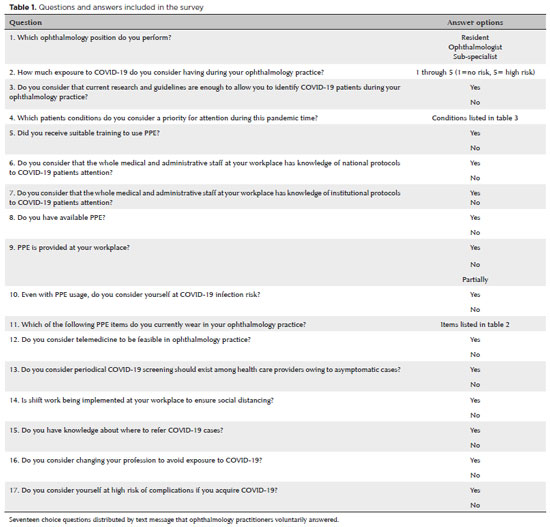
Objetivos: Avaliar a percepção do risco de exposição da Doença de Coronavírus 2019 (COVID-19), conhecimento sobre medidas de proteção pessoal entre os profissionais de oftalmologia latino-americanos e priorização de pacientes com Covid-19.
Métodos: Pesquisa anônima voluntária autoadministrada (formulários do Google Drive) distribuída por mensagem de texto para profissionais de oftalmologia em 1º a 5 de maio de 2020.
Resultados: Trezentos e setenta e um profissionais completaram a pesquisa (taxa de resposta de 45%), composta por 118 residentes (27,6%), 111 oftalmologistas (40,5%) e 142 subespecialistas (32,8%). 106 profissionais (32,6%) sentiram-se em alto risco de adquirir o COVID-19 no trabalho. 273 (69,1%) acreditavam que as diretrizes atuais não são suficientes para identificar os pacientes com COVID-19. 265 (59,5%) não tinham treinamento para usar os equipamentos de proteção individual (EPI) e, mesmo com seu uso correto, 341 (91,5%) ainda se sentiram em risco de adquirir COVID-19. 80% consideraram que a equipe de trabalho não tem conhecimento de protocolos nacionais para o atendimento aos pacientes com COVID-19. Apenas 9 dos profissionais (2%) consideraram mudar a profissão para minimizar o risco de contágio por COVID-19.
Conclusão: Esta pesquisa mostra a escassez de pessoal e treinamento específico que os praticantes de oftalmologia na América Latina enfrentam em sua prática diária. Essas preocupações e ansiedade parecem ser as mesmas em todo o mundo com a pandemia de COVID- 19. É importante reforçar a confiança dos profissionais de oftalmologia nas diretrizes atuais de atendimento ao paciente com COVID-19 e também disponibilizar programas de treinamento sobre o uso de EPI e também itens de EPI disponíveis em todos os momentos para garantir a qualidade do atendimento e a disseminação mínima da doença.
Keywords: Pandemias; Oftalmologia; Pesquisas sobre serviços de saúde; América Latina; SARS-CoV2; Infecções por coronavirus; COVID-19
08-fig01.jpg)
Abstract
Objetivo: Determinar o impacto do uso de unidade móvel no acesso à saúde ocular e avaliar o perfil da população que necessita de cuidados oftalmológicos, as doenças oculares mais frequentes e o tratamento. Métodos: Estudo transversal realizado em 14 municípios da região sudoeste do Estado de São Paulo utilizando uma unidade móvel oftalmológica. Os participantes eram usuários do Sistema Único de Saúde que procuraram atendimento oftalmológico, sem restrição quanto a idade, gênero ou condição socioeconômica. Os dados foram transferidos para a tabela Excel para análise estatística. Resultados: Participaram do estudo 6.878 pessoas, com média de idade de 44 anos (variação de 4 meses a 96 anos) e 65,5% eram mulheres. Erros refrativos estavam presentes em 78,6% dos participantes, catarata em 9,6% e pterígio em 8,3%. Para 60% foram prescritos óculos, para 10% foi mantida a correção óptica em uso e para 28% foram necessárias apenas orientações. Exames especializados ou procedimentos cirúrgicos foram indicados para 18,1% dos casos que foram encaminhados para tratamento em serviço terciário. Dentre os pacientes referenciados, 36,4% necessitavam de cirurgia oculoplástica ou para tratar afecções externas do olho e 31,8%, de cirurgia de catarata. Conclusão: A grande maioria dos pacientes que procurou atendimento na unidade móvel necessitava de prescrição de óculos. A unidade móvel oftalmológica possui alto grau de resolutividade para os problemas oculares, com oportunidade de tratar os erros refrativos e referenciar os pacientes que necessitam de atendimento especializado, geralmente relacionado a condições cirúrgicas. Unidades móveis podem ser uma alternativa aos cuidados oftalmológicos básicos, melhorando o acesso, atuando na promoção da saúde ocular e prevenindo a cegueira.
Keywords: Unidades móveis de saúde; Saúde ocular; Transtornos da visão; Erros de refração; Óculos; Cegueira/prevenção & controle
Abstract
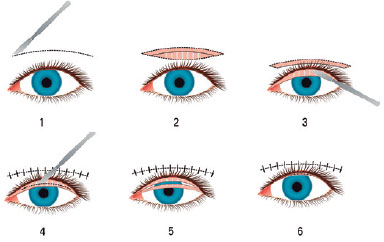
Objetivo: Compartilhar os resultados dos pacientes submetidos à rotação de retalho tarsal anterior, combinados com a reposição lamelar anterior devido à entrópio cicatricial da pálpebra superior e determinar a eficácia e a confiabilidade desta técnica cirúrgica.
Métodos: Foram incluídos neste estudo quinze olhos de 11 pacientes em quem realizamos cirurgia de rotação de retalho tarsal anterior combinada com reposição lamelar anterior devido ao entrópio cicatricial. Os registros médicos dos pacientes foram analisados retrospectivamente e as causas da entrópio cicatricial, bem como os achados do exame oftalmológico pré-operatório e pós-operatório foram registrados. A integridade anatômica e funcional da pálpebra foi considerada como sucesso cirúrgico.
Resultados: A idade média foi de 59,81 ± 18 anos. O período médio de seguimento foi de 21,72 ± 14 meses (intervalo 5-43 meses). As causas da entrópio cicatricial foram o desenvolvimento de cicatrizes pós-operatórias devido a eletrólises múltiplas para triquíase e/ou distiquiase em 7 olhos, tracoma em 6 olhos e trauma em 2 olhos. Todos os pacientes foram tiveram irritação e lacrimejamento pré-operatório, enquanto que 10 pacientes apresentavam opacidade e erosão da córnea e 1 paciente apresentava apenas erosão epitelial. O sucesso total anatômico e funcional foi alcançado em todos os casos.
Conclusão: A rotação do retalho tarsal anterior combinada com a reposição lamelar anterior no reparo da entrópio cicatricial é um procedimento cirúrgico alternativo efetivo e confiável.
Keywords: Tracoma/complicações; Pálpebras/cirurgia; Entrópio/cirurgia; Cicatriz; Retalhos cirúrgicos; Procedimentos cirúrgicos oftalmológicos/métodos
Abstract
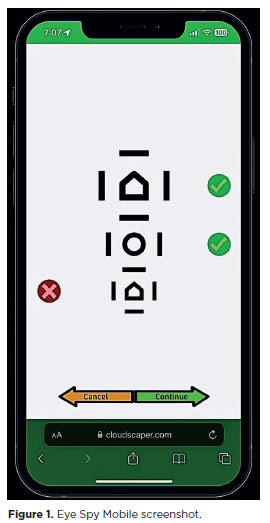
PURPOSE: This cross-sectional study compared best-corrected visual acuity obtained using Cloudscaper symbols, a novel optotype developed according to ETDRS specifications for children's virtual screening, with that obtained using LEA symbols.
METHODS: A total of 560 children aged 3-16 yr underwent visual acuity test with both Cloudscaper symbols and LS. The test application was standardized using the EyeSpy algorithm. Additionally, 147 participants were tested with the standard Snellen E paper chart. Paired t tests were performed to assess the clinical significance of logMAR visual acuity differences.
RESULTS: The mean logMAR visual acuity with LEA symbols was 0.12 (standard deviation [SD]=0.18; range, -0.10 to 0.80), while with Cloudscaper symbols it was 0.18 (SD=0.19; range, -0.10 to 0.80). The mean difference between Cloudscaper symbols and LEA symbols was 0.099 logMAR (approximately 0.5 optotypes; SD=0.08; range, 0.0-0.14; p<0.0001). Cloudscaper symbols slightly underestimated visual acuity compared to LEA symbols. Visual acuity measured by both methods was highly correlated (Spearman's r=0.74, p<0.0001). The mean visual acuity difference between Cloudscaper symbols and the Snellen E chart was 0.0045 (p=0.805; 95% confidence interval [95% CI]), whereas the difference between LEA symbols and Snellen E was 0.0883 (p<0.001; 95% CI).
CONCLUSIONS: Cloudscaper symbols provide a reliable tool for visual screening in children. Although they slightly underestimate visual acuity compared to LEA symbols – a finding also reported when comparing ETDRS letters with LEA symbols – Cloudscaper symbols show strong agreement with Snellen E chart measurements. This suggests that Cloudscaper symbols allow precise visual acuity assessment comparable to the gold standard.
Keywords: Vision screening; Vision tests; Visual acuity; Mobile applications; Eye health; Child health; Diagnostic techniques, Ophthalmological; Child; Preschool child; Adolescent
Abstract
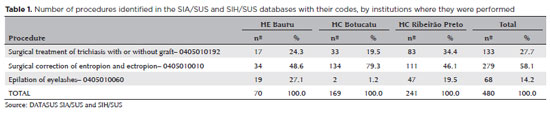
PURPOSE: Trachoma is the major infectious cause of preventable blindness in the world, and its sequelae include the presence of cicatricial entropion and trachomatous trichiasis. Trachoma can be corrected by surgical treatment of the eyelids and, if left untreated, may result in corneal opacification, low vision, and blindness. There are limited data on trachomatous trichiasis in Brazil. This study was conducted to estimate the frequency of entropion and trichiasis surgeries of trachomatous origin based on the records of procedures performed in specialized hospitals that served the Unified Health System (SUS) in the years 2016 and 2017.
METHODS: This was a retrospective study conducted in the oculoplastic sectors of the ophthalmology services of the following three hospitals in the state of São Paulo: Hospital das Clínicas da Faculdade de Medicina de Botucatu (HC Botucatu), Hospital das Clínicas da Faculdade de Medicina de Ribeirão Preto da Universidade de São Paulo (HC Ribeirão Preto), and Hospital Estadual de Bauru (HE Bauru). Medical records corresponding to the codes of interest were evaluated.
RESULTS: In total, 462 medical records were evaluated, including 170 (36.8%) at HC Botucatu, 61 (13.2%) at HE Bauru, and 231 (50.0%) at HC Ribeirão Preto. There were 39 (8.4%) cases of trachomatous trichiasis, ranging from 9 (14.8%) at HE Bauru to 15 (6.5%) at HC Ribeirão Preto.
CONCLUSIONS: The frequency of surgery due to trachoma was low in these oculoplastic services. The state of São Paulo might have reached the goal for trachoma elimination in the surgical component. The questionnaire used for data collection was successfully tested despite some difficulties in collecting data from the medical records. Studies with the same methodology are recommended in other services in the areas of endemic trachoma in the past to understand the frequency of eye lid surgeries performed for treating trachomatous sequelae.
Keywords: Trachoma; Trichiasis; Medical records; Epidemiology; Neglected diseases; Unified Health System; Brazil

Abstract
PURPOSE: This study aimed to evaluate disparities in the distribution of ophthalmologists and the volume of cataract surgeries across Brazil, considering public and private health sectors and the country's federative units.
METHODS: Data on ophthalmologists were obtained from the National Medical Residency Commission and the Associação Múdica Brasileira. Information on cataract surgeries performed through the Unified Health System was collected from the DATASUS database, while data on procedures covered by private health plans were retrieved from the National Supplementary Health Agency. Population estimates from the 2024 Demographic Census of the Brazilian Institute of Geography and Statistics were used to calculate physician density and surgery rates per 100,000 inhabitants. Associations between the number of ophthalmologists and cataract surgery volume were analyzed using Spearman's correlation coefficient.
RESULTS: Brazil has 16,784 ophthalmologists, representing 8.96 specialists per 100,000 inhabitants. Marked disparities were observed: large cities (>500,000 inhabitants) had 18.75 ophthalmologists per 100,000 residents, whereas municipalities with <50,000 inhabitants had fewer than one. Across federative units, physician density ranged from 19.18 per 100,000 in the Federal District to 4.22 in Maranhão. In 2024, cataract surgery rates varied widely, from 1,012.61 per 100,000 inhabitants in the Southeast to 435.00 in the North. Nationally, Unified Health System performed 736.30 surgeries per 100,000 inhabitants, compared with 1,276.79 in the private sector. On average, each ophthalmologist performed 96.92 cataract surgeries annually.
CONCLUSION: Significant inequalities persist in the geographic distribution of ophthalmologists and in cataract surgery provision, with higher surgical volumes concentrated in the private sector. Targeted policies are required to address regional disparities and improve the equity and efficiency of cataract care delivery in Brazil.
Keywords: Ophthalmologists/supply & distribution; Ophthalmologists/statistics & numerical data; Cataract extraction; Health services accessibility/statistics & numerical data; Healthcare disparities; Health policy; Public health systems; Insurance, Heal
Abstract
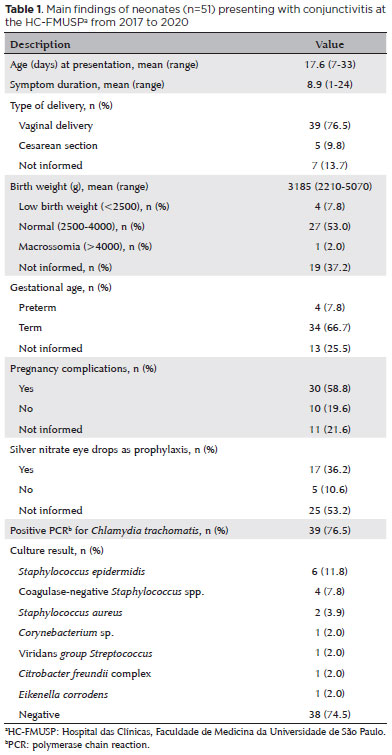
PURPOSE: The microbiology pattern of neonatal conjunctivitis has changed over time, and the incidence of gonococcal conjunctivitis is almost nil. This study aimed to determine the etiology of neonatal conjunctivitis cases referred to a tertiary health center in Brazil.
METHODS: From 2017 to 2020, conjunctival swabs were taken from neonates with clinical signs of conjunctivitis and tested with bacterial culture and polymerase chain reaction for Neisseria gonorrhoeae and Chlamydia trachomatis.
RESULTS: A total of 51 neonates were included in the 3-year study. Chlamydial conjunctivitis was diagnosed in 39 (76.5%) patients, and microbial growth was detected in 13 (25.5%) patients. The most isolated bacterium was Staphylococcus epidermidis (n=6, 11.8%), followed by other coagulase-negative Staphylococcus species (n=4, 7.8%) and S. aureus (n=2, 3.9%). One S. aureus isolate was resistant to oxacillin. There were no cases of gonococcal conjunctivitis. Ten (19.6%) patients showed polymerase chain reaction-negative C. trachomatis and negative bacterial culture test results.
CONCLUSION: Findings show that C. trachomatis is the most common pathogen causing neonatal conjunctivitis. The high prevalence of C. trachomatis infection highlights the importance of screening and treating pregnant woman.
Keywords: Conjunctivitis; Infant, newborn, diseases; Ophthalmia neonatorum; Chlamydia infections; Sexually transmitted diseases
Abstract
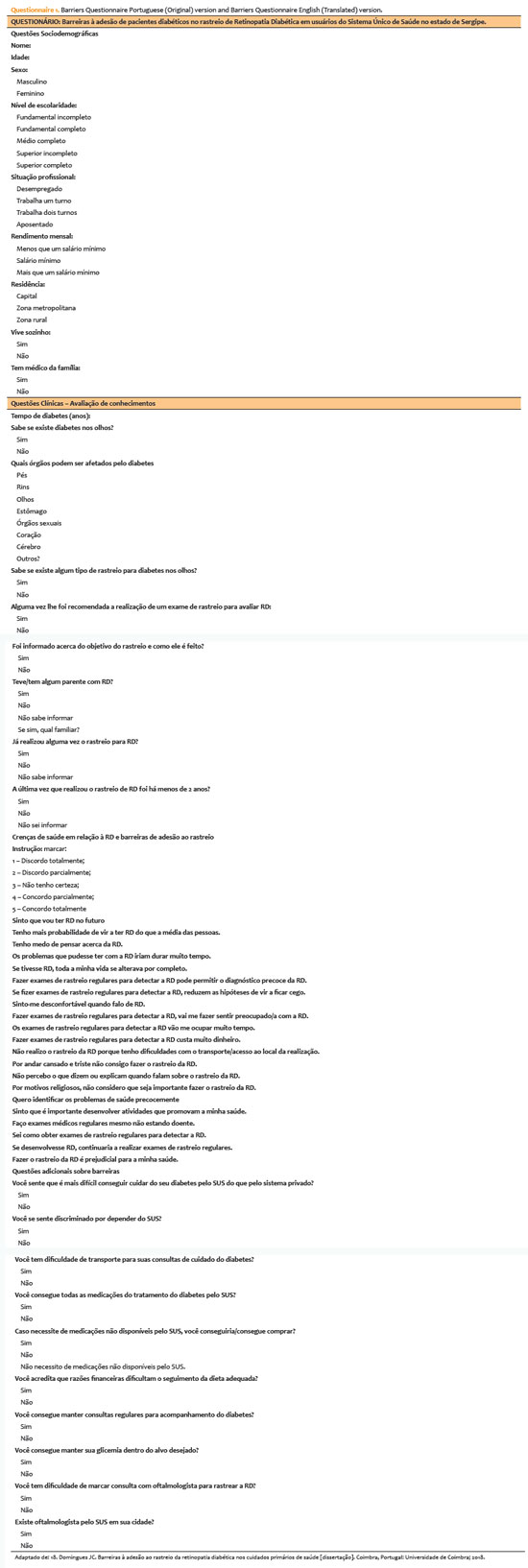
PURPOSE: This study aimed to identify barriers to diabetic retinopathy screening among a socioeconomically vulnerable urban population in northeast Brazil.
METHODS: A cross-sectional study was conducted during a diabetic retinopathy screening campaign at primary healthcare units. Ninety-five patients with diabetes underwent retinal examinations and completed a structured interview. Clinical, demographic, and socioeconomic data were collected.
RESULTS: The study population consisted predominantly of older adults (mean age: 60.7 ± 10.5 years), with a high prevalence of type 2 diabetes (99.0%) and low educational attainment. Most participants were economically inactive (81.1%) and reported low income (83.2%). Diabetic retinopathy and maculopathy were highly prevalent, affecting 50.0% and 22.9% of participants, respectively. Longer duration of diabetes was significantly associated with greater awareness of diabetic retinopathy (p=0.035), higher HbA1c levels (p<0.001), and increased prevalence of diabetic retinopathy (p=0.013) and maculopathy (p=0.002). Notably, 33.3% of participants reported difficulties attending medical appointments for diabetes management. In addition, 78.1% experienced challenges scheduling ophthalmologic evaluations, and 76.3% reported that no ophthalmologist was available in their city through the public healthcare system. Financial constraints also limited adherence to recommended dietary practices (90.4%) and impaired glycemic control, with more than half of participants reporting difficulty maintaining target glucose levels.
CONCLUSION: Major barriers to diabetic retinopathy screening included limited awareness of the importance of screening, financial hardship, and transportation challenges. Targeted educational initiatives and structural interventions such as expanded screening programs incorporating telemedicine and subsidized transportation—may improve screening adherence among vulnerable populations.
Keywords: Diabetic retinopathy; Mass screening; Health services accessibility; Health knowledge, attitudes, practices; Socioeconomic factors
Abstract
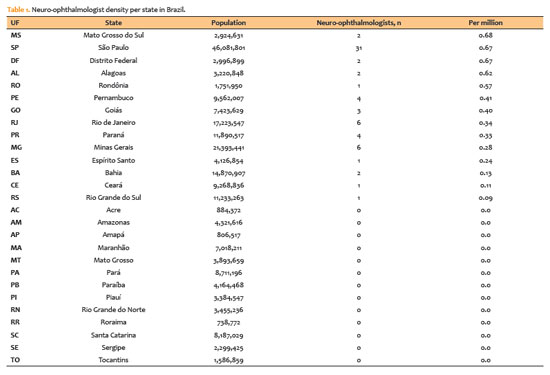
PURPOSE: Neuro-ophthalmology is a highly specialized subspecialty at the interface of neurology and ophthalmology. Globally, workforce shortages and geographic maldistribution limit access to neuro-ophthalmic care. Although Brazil has a large ophthalmology workforce, regional disparities may restrict access to subspecialty services. The national distribution of neuro-ophthalmologists has not previously been quantified. This study aimed to characterize the geographic distribution of neuro-ophthalmologists in Brazil and identify potential gaps in access to neuro-ophthalmic care.
METHODS: This cross-sectional, population-based study used data from the registry of the Brazilian Neuro-Ophthalmology Association (Associação Brasileira de Neuro-Oftalmologia [ABNO]) to identify practicing neuro-ophthalmologists (data extracted on January 1, 2026). Municipal- and state-level population estimates were obtained from the Brazilian Institute of Geography and Statistics. Specialist density was calculated as the number of neuro-ophthalmologists per million inhabitants. States were classified according to the presence or absence of at least one specialist and were further grouped into Brazil's five macroregions for comparative analyses. Descriptive statistical analyses were performed.
RESULTS: A total of 66 neuro-ophthalmologists were identified across 14 of Brazil's 27 states. Thirteen states had no registered neuro-ophthalmologists, representing approximately 49.4 million people (23.2% of the national population). Five states—São Paulo (n=31), Rio de Janeiro (n=6), Minas Gerais (n=6), Pernambuco (n=4), and Paraná (n=4)—accounted for more than two-thirds of all specialists. Specialist density ranged from 0 to more than 0.7 per million inhabitants, with higher concentrations in the Southeast and no specialists in several states in the North and Northeast. The distribution was highly clustered in metropolitan areas.
CONCLUSION: Brazil exhibits marked geographic maldistribution of neuro-ophthalmologists, with nearly one-quarter of the population lacking local access to specialized care. The concentration of specialists in urban and economically developed regions mirrors international trends and may exacerbate inequities within the public health system. Expanding the workforce and integrating teleophthalmology into neuro-ophthalmic services may help reduce regional disparities and improve access to specialized care.
Keywords: Ophthalmologists; Public health; Health policy; Workforce; Professional practice location; Telemedicine; Teleophthalmology; Brazil
04-fig01tb.jpg)
Abstract
OBJETIVO: Descrever o processo de implementação e os resultados preliminares de um sistema de vigilância epidemiológica para endoftalmites associada à assistência à saúde.
MÉTODOS: Trata-se de um estudo de caso de implementação de um sistema de vigilância epidemiológica para endoftalmites. O sistema de vigilância epidemiológica para endoftalmites é um sistema estruturado que possibilita a vigilância de casos de endoftalmite associados à assistência à saúde após procedimentos oftalmológicos invasivos, desenvolvido e coordenado pela Divisão de Infecção Hospitalar da Secretaria de Estado da Saúde, São Paulo, Brasil. O processo de implementação incluiu uma fase piloto, seguida pela fase de expansão. Os dados foram enviados mensalmente à Divisão de Infecção Hospitalar pelos estabelecimentos de saúde participantes que realizaram procedimentos oftalmológicos no estado de São Paulo, Brasil no período de setembro de 2017 a dezembro de 2019.
RESULTADOS: Entre os 1.483 estabelecimentos de saúde elegíveis, 175 participaram do estudo (taxa de adesão de 11,8%), relatando 222.728 procedimentos oftalmológicos realizados, sendo 164.207 cirurgias de catarata e 58.521 injeções intravítreas. A taxa de incidência global de endoftalmite relatada foi de 0,05% (n=105; 80 casos após cirurgia de catarata e 25 casos após injeção intravítrea). As taxas de incidência entre os estabelecimentos de saúde variaram de 0,02% a 4,55%. A maioria dos casos foi causada por bactérias gram-positivas, principalmente Staphylococcus spp. Em 36 (46,2%) casos não houve crescimento bacteriano; nenhuma amostra foi coletada em 28 (26,7%) casos. O sistema de vigilância epidemiológica para endoftalmites possibilitou a identificação de um surto de quatro casos de endoftalmite após injeção intravítrea.
CONCLUSÃO: O sistema de vigilância epidemiológica para endoftalmites mostrou-se operacionalmente viável e eficiente para o monitoramento de casos de endoftalmite em nível estadual.
Keywords: Monitoramento epidemiológico; Endoftalmite; Atenção à saúde; Inquéritos epidemiológicos; Procedimentos cirúrgicos oftalmológicos
Abstract
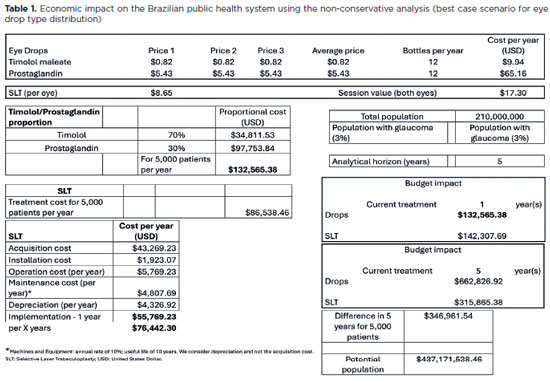
PURPOSE: To evaluate the economic impact of the following initial treatment scenarios for glaucoma on the Brazilian Public Health System (SUS): (1) traditional continuous instillation of hypotensive eye drops and (2) single session of selective laser trabeculoplasty.
METHODS: Economic impact was analyzed in three scenarios, from the least to the most conservative, for a hypothetical cohort of 5,000 individuals with open-angle glaucoma. Thereafter, projections were made on the basis of a glaucoma prevalence of 3% in the 2021 Brazilian population size.
RESULTS: All three scenarios demonstrated that selective laser trabeculoplasty exhibited a significantly lower economic impact than the eye drops on SUS over one and five years. Furthermore, the difference was more than United States Dollar 8 billion at five years when considering 3% of the Brazilian population aged >40 years in 2021.
CONCLUSION: As the initial treatment for primary open-angle glaucoma, selective laser trabeculoplasty exhibited a lower economic impact on SUS than latanoprost and timolol maleate eye drop instillation in all the studied scenarios over one and five-year periods.
Keywords: Glaucoma; Trabeculotomy; Laser therapy; Cost analysis; Health care cost Unified Health System; Brazil
02-tab01.jpg)
Abstract
A COVID-19 é uma doença infeciosa causada pelo SARS-CoV-2, sendo sua principal forma de transmissão através de gotículas respiratórias. Já existem relatos de caso descrevendo a presença desse vírus em materiais biológicos como sangue, fezes, urina e lágrima, o que gera hipóteses sobre outros meios de transmissão da doença. Neste estudo, descrevemos um caso de identificação do vírus SARS-CoV-2 na superfície ocular de um profissional de saúde assintomático. A transcrição inversa da reação em cadeia da polimerase da nasofaringe, coletada no mesmo dia, e o teste sorológico, realizado três meses após, não detectaram qualquer evidência de infecção pelo SARS-CoV-2. Esses dados alertam para a possibilidade de resultado falso positivo da transcrição inversa da reação em cadeia da polimerase da superfície ocular ou a presença do vírus na mucosa conjuntival sem infecção.
Keywords: Infecção por coronavírus; COVID-19; Infecção ocular viral; SARS-CoV-2; Profissional de saúde.
 ABO is licensed under a Creative Commons Attribution-NonComercial 4.0 Internacional.
About
Issues
Editorial Board
Submission

Arquivos Brasileiros de Oftalmologia
Official publication of Brazilian Council of Ophthalmology - Conselho Brasileiro de Oftalmologia (CBO)
Rua Casa do Ator, 1.117 - 2nd floor - Zip Code: 04546-004
São Paulo - SP, Brazil
TEL: +55 11 3266-4000
E-mail: [email protected]