
Showing of 1 until 14 from 58 result(s)
Search for: Professional practice; Education, medical, continuing; Ophthalmology; Job market; Health management
01-fig01.jpg)
Abstract
Objetivos: O objetivo deste estudo é comparar as curvas de aprendizagem dos especialistas em dois campos diferentes sem experiência prévia de dacriocistorrinostomia endonasal endoscópica e revelar as complicações com as taxas de sucesso cirúrgico.
Métodos: Foram investigados retrospectivamente 90 pacientes que receberam dacriocistorrinostomia endonasal endoscópica consecutiva com preservação da mucosa realizada por um oftalmologista (Grupo 1, n=45) e realizada por um otorrinolaringologista (Grupo 2, n=45) entre outubro de 2017 e outubro de 2019. Foram incluídos no estudo pacientes admitidos com epífora e diagnosticados com obstrução primária do ducto nasolacrimal adquirido como resultado do teste de irrigação lacrimal, com idade superior a 18 anos e com, pelo menos, 6 meses de acompanhamento. Em todos os casos, patologias adicionais, como o desvio do septo, foram avaliadas por meio da realização de imagens maxilofaciais. Os prontuários dos pacientes foram avaliados quanto à duração da cirurgia, complicações e desempenho funcional.
Resultados: A média de duração cirúrgica dos pacientes no Grupo-2 foi de 36,27 ± 11,61 minutos, enquanto no Grupo-1 foi de 43,62 ± 16,89 minutos, sendo a diferença estatisticamente significativa (p=0,018). O desempenho funcional no Grupo 1 foi de 84,4% (73,3% nos primeiros 15 casos, 93,3% nos últimos 15 casos) no Grupo 2, essa taxa foi de 88,9% (80% nos primeiros 15 casos, 93,3% nos últimos 15 casos) e a diferença não foi estatisticamente significativa (p=0,53). A intervenção do septo além da cirurgia endoscópica em ambos os grupos (p=0,03, p=0,005, respectivamente) e sangramento intenso durante a cirurgia (para ambos os grupos, p<0,0001) diminuiu significativamente o sucesso funcional.
Conclusão: A dacriocistorrinostomia endonasal endoscópica, realizada após o treinamento necessário, pode ser realizada com alto sucesso e com baixas taxas de complicações por oftalmologistas que não estão familiarizados com a cirurgia endoscópica após adquirirem experiência com trinta casos.
Keywords: Obstrução dos ductos lacrimais; Ducto nasolacrimal/cirurgia; Dacriocistorinostomia/métodos; Endoscopia; Oftalmologia/educação
09-fig01.jpg)
Abstract
Objetivo: Analisar o perfil epidemiológico dos casos de evisceração e enucleação no pronto-socorro oftalmológico de um hospital terciário brasileiro.
Métodos: Análise retrospectiva dos casos tratados no pronto-socorro oftalmológico do Hospital São Paulo (Universidade Federal de São Paulo) entre os anos de 2013 a 2018. Os casos urgentes de evisceração e enucleação foram incluídos e os casos eletivos foram excluídos. A análise dos prontuários médicos foi baseada em: dados demográficos, causas imediatas e associadas ao procedimento, acuidade visual informada, duração dos sintomas antes do atendimento oftalmológico, complicações, distância da residência até o hospital e tempo de hospitalização.
Resultados: 61 enucleações e 121 eviscerações foram incluídas no estudo. Os pacientes tinham uma média de idade de 63,27 ± 18,68 anos; 99 eram do sexo masculino (54,50%) e 83 do sexo feminino (45,60%). As indicações de evisceração e enucleação foram: perfuração corneana com (44,50%) e sem (23,63%) sinais infecciosos, endoftalmite (15,38%), trauma ocular (14,29%), neoplasia (0,55%), queimadura (1,10%) e phthisis bulbi (0,55%). A acuidade visual informada foi de ausência de percepção luminosa (87,36%), percepção luminosa (1.10%), ausência de colaboração (3,30%) e sem dados informados (8,24%). A média de tempo até a busca pelo serviço oftalmológico foi de 18,32 dias. Houve 2 casos de oftalmia simpática após evisceração.
Conclusões: Eviscerações foram predominantemente realizadas em comparação a enucleações em todo o período de estudo. As características demográficas mais comuns foram idade >60 anos e sexo masculino. As principais indicações para procedimentos urgentes de evisceração e enucleação foram perfuração corneana com e sem infecção, endoftalmite e trauma ocular. Este estudo poderia guiar medidas preventivas para evitar procedimentos oculares destrutivos.
Keywords: Evisceração do olho; Enucleação ocular; Úlcera da córnea/epidemiologia; Endoftalmite; Traumatismos oculares; Serviços médicos de emergência; Serviços de saúde ocular.
Abstract
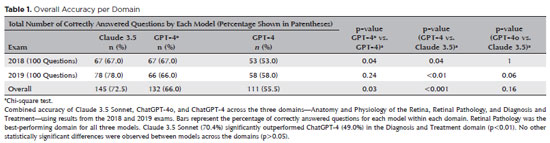
PURPOSE: Natural language models and chatbots, particularly OpenAI’s Generative Pre-Trained Transformer architecture, have transformed human interaction with digital interfaces. The latest versions, including ChatGPT-4o, offer enhanced functionalities compared to their predecessors. This study evaluates the accuracy of ChatGPT-4, ChatGPT-4o, and Claude 3.5 Sonnet in answering questions from the Brazilian Retina and Vitreous Society certification exam.
METHODS: We compiled 200 multiple-choice questions from the Brazilian Retina and Vitreous Society 2018 and 2019 exams. Questions were categorized into three domains: Anatomy and Physiology of the Retina, Retinal Pathology, and Diagnosis and Treatment. Using a standardized prompt developed according to prompt design guidelines, we tested ChatGPT-4, ChatGPT-4o, and Claude 3.5 Sonnet, recording their first responses as final. Three retina specialists performed a qualitative analysis of the answers. Accuracy was determined by comparing responses to the official correct answers. Statistical analysis was conducted using chi-square tests and Cohen’s Kappa.
RESULTS: Claude 3.5 Sonnet achieved the highest overall accuracy (72.5%), followed by ChatGPT-4o (66.0%) and ChatGPT-4 (55.5%). Claude 3.5 Sonnet and ChatGPT-4o significantly outperformed ChatGPT-4 (p<0.01 and p=0.03, respectively), while no significant difference was observed between Claude 3.5 Sonnet and ChatGPT-4o (p=0.16). Model responses agreed 74.5% of the time, with a Cohen’s κ of 0.47. Retinal Pathology was the best-performing domain for all models, whereas Anatomy and Physiology of the Retina and Diagnosis and Treatment were the weakest domains for Claude 3.5 Sonnet and ChatGPT-4, respectively.
CONCLUSIONS: This study is the first to assess Claude 3.5 Sonnet, ChatGPT-4, and ChatGPT-4o in retina specialist certification exams. Claude 3.5 Sonnet and ChatGPT-4o significantly outperformed ChatGPT-4, highlighting their potential as effective tools for studying retina specialist board exams. These findings suggest that the enhanced functionalities of Claude 3.5 Sonnet and ChatGPT-4o offer substantial improvements in medical education contexts.
Keywords: Artificial intelligence; ChatGPT; Retina; Medical education; Ophthalmology, Large language model; Natural language processing
Abstract
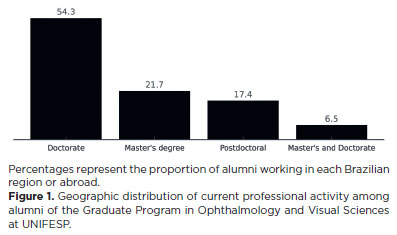
PURPOSE: To evaluate the academic and professional trajectories of graduates from the Graduate Program in Ophthalmology and Visual Sciences at the Escola Paulista de Medicina, Universidade Federal de São Paulo, including geographic distribution, occupational characteristics, and scientific productivity.
METHODS: This descriptive, retrospective, quantitative study included 498 alumni who completed the program between 1979 and 2021. Data were obtained from institutional records and supplemented by public databases (Google Scholar, Lattes Platform, and LinkedIn). The analyzed variables included demographic characteristics, academic background, current professional role, and bibliometric indicators (citation count and h-index). Statistical analyses comprised nonparametric tests and linear regression, with a significance level set at 5%.
RESULTS: Most alumni were Brazilian (96.6%) and physicians (90.7%), predominantly located in the Southeast region (66.9%). Doctoral training was completed by 80.5% of participants. Alumni with current institutional ties to Universidade Federal de São Paulo or Hospital São Paulo demonstrated significantly higher citation counts and h-index values. No significant correlation was observed between time since graduation and citation count (p=0.185). Alumni engaged in academic roles or with postdoctoral training showed greater scientific productivity.
CONCLUSIONS: The findings highlight the strong academic performance and professional integration of alumni from Universidade Federal de São Paulo, particularly within public institutions and the Southeast region of Brazil. Doctoral training and institutional affiliation were associated with higher scientific productivity. Alumni tracking provides valuable insights into the impact of postgraduate programs and informs strategic planning and development.
Keywords: Factual databases; Program evaluation; Medical education; Graduate education; Ophthalmology; Linear models
Abstract
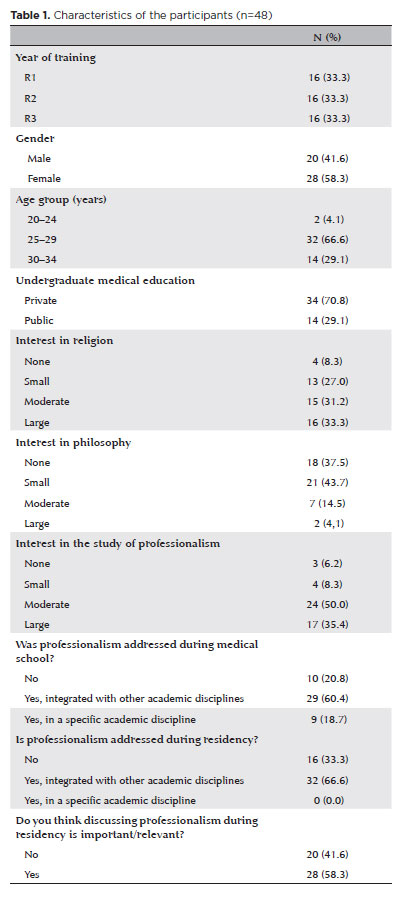
PURPOSE: This study aimed to examine factors related to the professionalism of ophthalmology residents.
METHODS: A cross-sectional study was carried out involving 48 ophthalmology residents in Brazil. Professionalism was assessed using the professionalism mini-evaluation exercise, completed by both preceptors and residents, and the Pennsylvania State College of Medicine Professionalism Questionnaire, completed by the residents. The association between the professionalism score assigned by the preceptor through the professionalism mini-evaluation exercise and various sociodemographic and educational variables was assessed. The correlation between the residents’ self-assessment across both instruments and the preceptor’s assessments was measured using Spearman’s Rho.
RESULTS: All 48 residents were included, with equal representation across the 3 years of residency. The majority were female (58.3%) and between 25 and 29 years old (66.7%). The average professionalism score on the professionalism mini-evaluation exercise given by the preceptors was 3.0 (75%). A significant association was found between the year of training and the score in the doctor-patient relationship domain, with first-year residents showing lower scores (p=0.002). Male residents had higher scores in the “Interprofessional” domain (p=0.031). Graduates from private medical schools scored higher in both the “doctor-patient relationship” (p=0.015) and “reflective skills” (p=0.033) domains. Lower interest in professionalism was linked to lower scores in the “Interprofessional relationships” (p=0.033) and “time management” (p=0.003) domains. A strong correlation was observed between preceptor’s professionalism mini-evaluation exercise scores and residents’ self-assessed professionalism mini-evaluation exercise scores (r=0.917). However, the correlation between the self-assessed professionalism mini-evaluation exercise and the Pennsylvania questionnaire scores was weak (r=0.226).
CONCLUSION: Professionalism scores among ophthalmology residents were associated with year of training, gender, type of undergraduate education, and level of interest in the topic.
Keywords: Internship and residency; Ophthalmology; Professional competence; Education, professional; Physician-patient relations; Surveys and questionnaires
Abstract
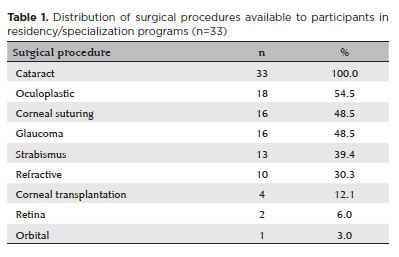
PURPOSE: In Brazil, it has traditionally been standard practice to teach a wide range of surgical techniques to all ophthalmology residents, with the aim of equipping them to manage most ocular conditions. However, with modern developments, access to subspecialists has expanded to nearly the entire country. This raises the question of whether it is still necessary to teach numerous surgical techniques to every resident. This study evaluates the effectiveness of surgical training in Brazilian ophthalmology residency programs to determine if comprehensive surgical training for all residents is truly effective, thereby providing evidence to inform educational policy decisions.
METHODS: A cross-sectional study using a questionnaire distributed to physicians engaged in eye care.
RESULTS: A total of 137 physicians responded to the survey, with 104 (76.0%) having already completed their specialization. The findings indicate that most practicing ophthalmologists received surgical training during residency in cataract, glaucoma, oculoplastic, and strabismus surgeries. Nonetheless, many of these specialists no longer perform most of these surgeries in practice, except for cataract surgery. While 53.8% of those who completed residency reported satisfaction with their training, 35.6% indicated that they wished they had received better surgical preparation.
CONCLUSION: The training of ophthalmology specialists must be made more efficient. Training efficiency is reduced when time and resources are devoted to surgical procedures that many specialists will not perform in their careers.
Keywords: Opthalmologists; Teaching; Education, medical; Ophthalmological surgical procedures; Simulation training; Wet lab; Surveys and questionnaires
Abstract
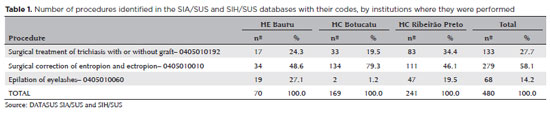
PURPOSE: Trachoma is the major infectious cause of preventable blindness in the world, and its sequelae include the presence of cicatricial entropion and trachomatous trichiasis. Trachoma can be corrected by surgical treatment of the eyelids and, if left untreated, may result in corneal opacification, low vision, and blindness. There are limited data on trachomatous trichiasis in Brazil. This study was conducted to estimate the frequency of entropion and trichiasis surgeries of trachomatous origin based on the records of procedures performed in specialized hospitals that served the Unified Health System (SUS) in the years 2016 and 2017.
METHODS: This was a retrospective study conducted in the oculoplastic sectors of the ophthalmology services of the following three hospitals in the state of São Paulo: Hospital das Clínicas da Faculdade de Medicina de Botucatu (HC Botucatu), Hospital das Clínicas da Faculdade de Medicina de Ribeirão Preto da Universidade de São Paulo (HC Ribeirão Preto), and Hospital Estadual de Bauru (HE Bauru). Medical records corresponding to the codes of interest were evaluated.
RESULTS: In total, 462 medical records were evaluated, including 170 (36.8%) at HC Botucatu, 61 (13.2%) at HE Bauru, and 231 (50.0%) at HC Ribeirão Preto. There were 39 (8.4%) cases of trachomatous trichiasis, ranging from 9 (14.8%) at HE Bauru to 15 (6.5%) at HC Ribeirão Preto.
CONCLUSIONS: The frequency of surgery due to trachoma was low in these oculoplastic services. The state of São Paulo might have reached the goal for trachoma elimination in the surgical component. The questionnaire used for data collection was successfully tested despite some difficulties in collecting data from the medical records. Studies with the same methodology are recommended in other services in the areas of endemic trachoma in the past to understand the frequency of eye lid surgeries performed for treating trachomatous sequelae.
Keywords: Trachoma; Trichiasis; Medical records; Epidemiology; Neglected diseases; Unified Health System; Brazil
Abstract
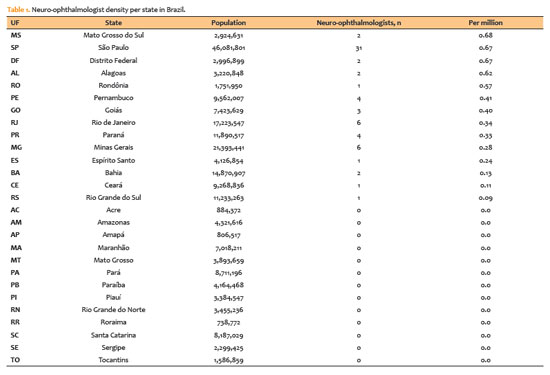
PURPOSE: Neuro-ophthalmology is a highly specialized subspecialty at the interface of neurology and ophthalmology. Globally, workforce shortages and geographic maldistribution limit access to neuro-ophthalmic care. Although Brazil has a large ophthalmology workforce, regional disparities may restrict access to subspecialty services. The national distribution of neuro-ophthalmologists has not previously been quantified. This study aimed to characterize the geographic distribution of neuro-ophthalmologists in Brazil and identify potential gaps in access to neuro-ophthalmic care.
METHODS: This cross-sectional, population-based study used data from the registry of the Brazilian Neuro-Ophthalmology Association (Associação Brasileira de Neuro-Oftalmologia [ABNO]) to identify practicing neuro-ophthalmologists (data extracted on January 1, 2026). Municipal- and state-level population estimates were obtained from the Brazilian Institute of Geography and Statistics. Specialist density was calculated as the number of neuro-ophthalmologists per million inhabitants. States were classified according to the presence or absence of at least one specialist and were further grouped into Brazil's five macroregions for comparative analyses. Descriptive statistical analyses were performed.
RESULTS: A total of 66 neuro-ophthalmologists were identified across 14 of Brazil's 27 states. Thirteen states had no registered neuro-ophthalmologists, representing approximately 49.4 million people (23.2% of the national population). Five states—São Paulo (n=31), Rio de Janeiro (n=6), Minas Gerais (n=6), Pernambuco (n=4), and Paraná (n=4)—accounted for more than two-thirds of all specialists. Specialist density ranged from 0 to more than 0.7 per million inhabitants, with higher concentrations in the Southeast and no specialists in several states in the North and Northeast. The distribution was highly clustered in metropolitan areas.
CONCLUSION: Brazil exhibits marked geographic maldistribution of neuro-ophthalmologists, with nearly one-quarter of the population lacking local access to specialized care. The concentration of specialists in urban and economically developed regions mirrors international trends and may exacerbate inequities within the public health system. Expanding the workforce and integrating teleophthalmology into neuro-ophthalmic services may help reduce regional disparities and improve access to specialized care.
Keywords: Ophthalmologists; Public health; Health policy; Workforce; Professional practice location; Telemedicine; Teleophthalmology; Brazil
12-tab01.jpg)
Abstract
OBJETIVO: Nos últimos 20 anos, o número de escolas médicas no Brasil aumentou, mas as vagas para especialização em Oftalmologia não acompanharam a demanda crescente. Este estudo quer estimar a demanda por especialização e avaliar a oferta de oportunidades de aprendizado em Oftalmologia.
MÉTODOS: Estudo epidemiológico com pesquisa em banco de dados provenientes do Ministério da Educação e Conselho Brasileiro de Oftalmologia. Estes dados foram checados através de 120 editais publicados pelos serviços de Residência em 2021.
RESULTADOS: De 2002 a 2021, o número de vagas em faculdades de Medicina aumentou 370%, enquanto o número de vagas certificadas de especialização em Oftalmologia aumentou 64%. Houve um desalinhamento de 11.4% entre os dados do Conselho Brasileiro de Oftalmologia e do Ministério da Educação.
CONCLUSÃO: A proporção de graduados em Medicina aumentou muito mais do que a oferta de oportunidades de especialização em Oftalmologia, o impacto disto na busca por vagas de especialização não acreditadas é desconhecido, políticas de monitoramento das vagas de especialização em Oftalmologia devem ser estabelecidas.
Keywords: Oftalmologia; Ensino; Educação médica; Especialização
Abstract
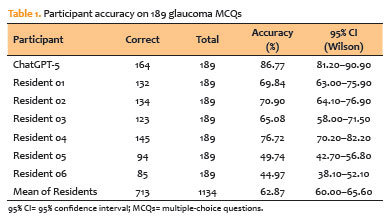
PURPOSE: To assess the performance of a contemporary large language model (ChatGPT-5) against ophthalmology residents on a standardized set of glaucoma multiple-choice questions.
METHODS: We conducted a cross-sectional comparative study with 189 text-only glaucoma multiple-choice questions from the Cybersight question bank. ChatGPT-5 was tested under standardized conditions, with each item placed in a new chat and limited to letter-only outputs. Six ophthalmology residents from a Brazilian training program (two Postgraduate Year 1, two Postgraduate Year 2, and two Postgraduate Year 3) answered the same questions under supervision. Accuracy was calculated using the official key. McNemar’s exact test was used to compare items between ChatGPT-5 and residents, and matched odds ratios and 95% confidence intervals (95% CIs) were calculated using the Haldane–Anscombe correction.
RESULTS: ChatGPT-5 received 164 of 189 correct responses (86.8%; 95% CI, 81.2–90.9). Residents’ overall accuracy was 62.9% (713/1,134; 95% CI, 60.0–65.6). The top-performing resident earned 76.7%. ChatGPT-5 outperformed all residents in head-to-head comparisons, with odds ratios ranging from 1.84 (95% CI, 1.10–3.08) to 13.15 (95% CI, 5.93–29.20), all p≤0.023. ChatGPT-5 correctly answered 17/189 items (9.0%), but fewer than half of residents were correct (“large language model-only wins”), whereas residents were more successful on items that ChatGPT-5 overlooked.
CONCLUSIONS: ChatGPT-5 outperformed ophthalmology residents on text-based glaucoma multiple-choice questions, indicating its potential as a subspecialty education and assessment tool. Generalizability is limited by the single question bank, text-only items, a small resident cohort, and the evaluation of one large language model version at a single time point. Before incorporating these findings into clinical decision-making, larger, multimodal, and longitudinal studies are required.
Keywords: Glaucoma; Artificial intelligence; Large language models; Education, medical; Medical staff, hospital
Abstract
PURPOSE: To determine and analyze the usability metrics of a free mobile learning app for ophthalmology in Brazil.
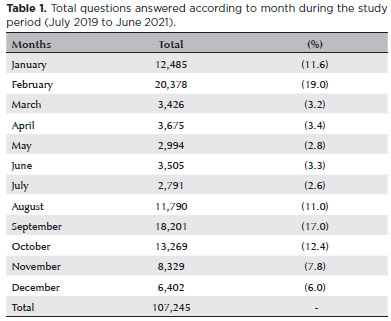
METHODS: Metric data from the management dashboard of the CBOQUIZ app were used. All users registered on the platform between March 2019 and June 30, 2021 were included. The number of questions answered, number of correct answers, number of questions answered and correct answers by subject area, and user performance by geographic region were analyzed.
RESULTS: There were 458 active users during the research period and 107,245 questions answered (average, 234.16 questions per user). Of the questions answered, 81,600 (75.5%) were correct and 2,645 were incorrect. The states in Brazil with the best performance were Espírito Santo, Paraiba, and Paraná. The subject area with the lowest hit rate was basic sciences (69.1%), within which embryology demonstrated the lowest hit rate (58.28%). The posterior segment had the highest number of questions answered, followed by miscellaneous topics and the anterior segment. Questions on strabismus were the least answered.
CONCLUSION: The app was used consistently throughout the period studied, and participants adhered to this teaching modality. Performance asymmetry was observed across the Brazil states. The CBOQUIZ app can be used to homogenize ophthalmology teaching in the country.
Keywords: Ophthalmology; Mobile applications; Teaching; Smartphone; Education, distance; Internship and residency; Brazil
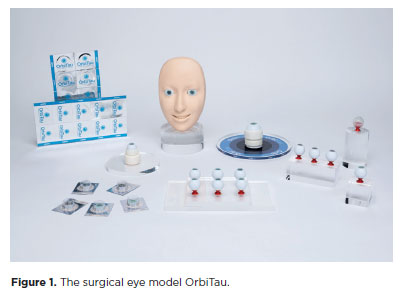
Abstract
PURPOSE: The OrbiTau surgical simulator is a synthetic eye model developed to enhance cataract surgical training. Herein, we aimed to describe the perspectives of Harvard’s Ophthalmology faculty and residents regarding the effectiveness of OrbiTau.
METHODS: A cross-sectional study was conducted in which 11 surgeons from the Massachusetts Eye and Ear Infirmary, with prior experience utilizing simulated phacoemulsification platforms, conducted cataract surgery with the OrbiTau. Subsequently, they completed a satisfaction questionnaire using the Likert scale.
RESULTS: Regarding the various OrbiTau components, 90.90% of the participants reported that the OrbiTau lens capsule was comparable to that of the human lens during capsulotomy. Furthermore, 72.72% of the participants found that the OrbiTau lens consistency was analogous to that of the human lens nucleus. Approximately 63.63% of the participants reported that the model’s posterior lens capsule resembled the native posterior capsule, and 72.72% of the participants noted that the model’s red reflex was similar to that of the dilated human pupil. Most participants believed that the OrbiTau was easier to use and more realistic than other commercially available simulators.
CONCLUSION: Our single-institution survey of the Orbitau demonstrated that this model realistically replicates ocular structures and may be a viable option for cataract surgery training.
Keywords: Cataract extraction/education; Simulation training/methods; Ophthalmology/education; Phacoemulsification/education; Ophthalmologists/education; Surgeons/education; High fidelity simulation training
Abstract
PURPOSE: To assess the effect of the coronavirus disease 2019 (COVID-19) pandemic on cataract surgery by residents who had mandatory surgical simulator training during residency.
METHODS: In this retrospective, observational analytical study, the total number of cataract surgeries and surgical complications by all senior residents of 2019 (2019 class; prepandemic) and 2020 (2020 class; affected by the reduced number of elective surgeries due to the COVID-19 pandemic) were collected and compared. All residents had routine mandatory cataract surgery training on a virtual surgical simulator during residency. The total score obtained by these residents on cataract challenges of the surgical simulator was also evaluated.
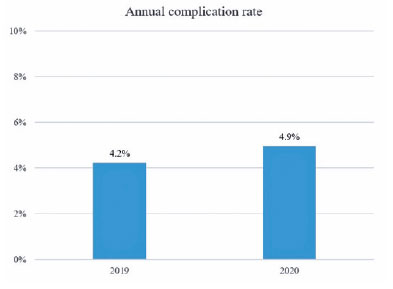
RESULTS: The 2020 and 2019 classes performed 1275 and 2561 cataract surgeries, respectively. This revealed a reduction of 50.2% in the total number of procedures performed by the 2020 class because of the pandemic. The incidence of surgical complications was not statistically different between the two groups (4.2% in the 2019 class and 4.9% in the 2020 class; p=0.314). Both groups also did not differ in their mean scores on the simulator’s cataract challenges (p<0.696).
CONCLUSION: Despite the reduction of 50.2% in the total number of cataract surgeries performed by senior residents of 2020 during the COVID-19 pandemic, the incidence of surgical complications did not increase. This suggests that surgical simulator training during residency mitigated the negative effects of the reduced surgical volume during the pandemic.
Keywords: COVID-19; Pandemics; Cataract extraction/education; Internship and residency/methods; Simulation training/methods; Phacoemulsification/education; Surgery, computer-assisted; Computer simulation; Clinical competence; Ophthalmology/education
02-tab01.jpg)
Abstract
A COVID-19 é uma doença infeciosa causada pelo SARS-CoV-2, sendo sua principal forma de transmissão através de gotículas respiratórias. Já existem relatos de caso descrevendo a presença desse vírus em materiais biológicos como sangue, fezes, urina e lágrima, o que gera hipóteses sobre outros meios de transmissão da doença. Neste estudo, descrevemos um caso de identificação do vírus SARS-CoV-2 na superfície ocular de um profissional de saúde assintomático. A transcrição inversa da reação em cadeia da polimerase da nasofaringe, coletada no mesmo dia, e o teste sorológico, realizado três meses após, não detectaram qualquer evidência de infecção pelo SARS-CoV-2. Esses dados alertam para a possibilidade de resultado falso positivo da transcrição inversa da reação em cadeia da polimerase da superfície ocular ou a presença do vírus na mucosa conjuntival sem infecção.
Keywords: Infecção por coronavírus; COVID-19; Infecção ocular viral; SARS-CoV-2; Profissional de saúde.
 ABO is licensed under a Creative Commons Attribution-NonComercial 4.0 Internacional.
About
Issues
Editorial Board
Submission

Arquivos Brasileiros de Oftalmologia
Official publication of Brazilian Council of Ophthalmology - Conselho Brasileiro de Oftalmologia (CBO)
Rua Casa do Ator, 1.117 - 2nd floor - Zip Code: 04546-004
São Paulo - SP, Brazil
TEL: +55 11 3266-4000
E-mail: [email protected]