
Showing of 1 until 15 from 81 result(s)
Search for: Ophthalmologists; Public health; Health policy; Workforce; Professional practice location; Telemedicine; Teleophthalmology; Brazil
Abstract
PURPOSE: This study aimed to identify the strategies adopted by Brazilian ophthalmologists to control myopia in clinical practice.
METHODS: This was a prospective cross-sectional study. Data were collected using an online questionnaire.
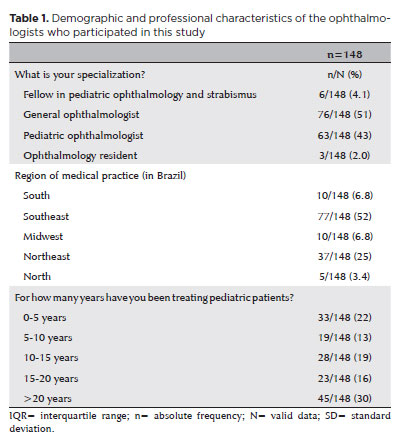
RESULTS: Responses from 148 participants were collected between March and May 2024. The majority of respondents were general ophthalmologists (51%) and pediatric ophthalmologists (43%). They came from all regions of Brazil, but more than half (52%) were from the Southeast region. Most participants (30%) had over 20 years of clinical practice experience. A significant proportion (89.2%) treated progressive myopia. The most requested complementary exams were optical biometry (83.78%) and corneal topography or tomography (69.59%). Behavioral measures were considered the most effective myopia treatment strategies by 41.2% of the respondents, followed by optical (33.8%) and pharmacological interventions (25%). Most recommended spending more time outdoors (94.59%) and reducing screen time (93.92%). Spectacle lenses for myopia (83.11%) and 0.025% atropine eye drops (54.73%) were the most prescribed treatments after the recommendation of environmental and behavioral changes.
CONCLUSION: This study presents a novel analysis of the clinical strategies for myopia control among Brazilian ophthalmologists. Understanding current clinical practices and identifying possible improvements are essential steps toward developing evidence-based guidelines and professional education aimed at improving patient care.
Keywords: Myopia/epidemiology; Refractive errors; Contact lenses; Myopia/drug therapy; Atropine/therapeutic use; Ophthalmologists; Practice patterns, physicians’; Surveys and questionnaires; Brazil/epidemiology
05-tab01tb.jpg)
Abstract
Objetivo: Avaliar as razões para não comparecimento à clínica oftalmológica da universidade após triagem oftalmológica realizada usando uma unidade móvel oftalmológica que fornece exame oftalmológico para comunidades não assistidas em uma região do Brasil.
Métodos: Foi realizado um estudo observacional prospectivo no ano de 2017/2018 para avaliar as razões que fizeram com que os indivíduos triados usando uma unidade móvel oftalmológica e referenciados para a clínica oftalmológica da universidade não comparecessem à consulta agendada. A triagem foi feita em 10 municípios da região centro-oeste do estado de São Paulo, Brasil. Todos os 1.928 participantes fizeram o exame oftalmológico sem custo e 37,1% deles necessitaram de encaminhamento para a clínica oftalmológica da universidade para exames especializados ou cirurgias. O estudo usou duas ferramentas: (1) análise comparativa entre os dados dos indivíduos encaminhados que compareceram ao agendamento com os que não compareceram; (2) busca ativa dos indivíduos que não compareceram à consulta agendada, aplicando-se um questionário para avaliar os motivos para o não comparecimento.
Resultados: Fatores como idade, sexo, distância entre a cidade de origem e o hospital universitário, número de oftalmologistas na cidade de procedência, renda familiar média e acuidade visual não influenciaram no comparecimento ao encaminhamento. Catarata foi a maior causa para o encaminhamento (350 casos). O não comparecimento foi maior nos portadores de glaucoma/glaucoma suspeitos (54,1%), estrabismo (45%) e afecções do segmento anterior (33,6%). Muitos indivíduos que não compareceram ao serviço de referência procuraram por outro local para o atendimento oftalmológico.
Conclusão: O não comparecimento para tratamento oftalmológico sem custo depende de fatores relacionados ao paciente ou à falta de conhecimento das próprias condições oftalmológicas. Campanhas educativas nas comunidades assistidas devem ser feitas para alcançar maior comparecimento às consultas e melhor prevenir a cegueira evitável.
Keywords: Serviços de saúde ocular; Unidades móveis de saúde; Acesso aos serviços de saúde; Pacientes desistentes do tratamento; Promoção da saúde
03-qua01tb.jpg)
Abstract
Objetivos: Dimensionar o impacto da pandemia da COVID-19 nas doações e transplantes de córnea no Brasil e obter indicadores confiáveis para o embasamento de proposições de medidas efetivas para a manutenção e o aperfeiçoamento do sistema de obtenção, processamento, distribuição, utilização e controle dos tecidos oculares doados.
Métodos: Um questionário foi enviado, pelo escritório Brasil da Associação Pan-Americana de Bancos de Olhos (APABO), aos Bancos de Olhos brasileiros. Dados de janeiro a agosto de 2020 foram coletados para gerar indicadores confiáveis sobre o impacto da pandemia da COVID-19 nas doações e transplantes de córnea no Brasil.
Resultados: Dados de 37 Bancos de Olhos mostraram que 76,1% das 3.060 doações e 74,5% dos 3.167 transplantes aconteceram no período pré-pandemia. Das 6.052 córneas processadas 71,8% foram disponibilizadas para fins terapêuticos: 72,9% foram transplantadas, 26,1% acabaram sendo inviabilizadas (45% destas, classificadas para indicações ópticas) e 1%, em glicerina, permanecia em estoque. Das 1.706 córneas que não puderam ser disponibilizadas para uso terapêutico, 47,9% foram excluídas por fatores relacionados às condições dos tecidos, 43,6% por fatores sorológicos, 6,7% por contraindicações constatadas em histórico clínico após a captação e 1,8% por outros fatores.
Conclusões: O impacto negativo da pandemia nas doações e transplantes de córnea no Brasil se deveu à recomendação do Ministério da Saúde de suspender, por quase seis meses, as captações de doadores em parada cardiorrespiratória. Os indicadores tornam evidente a necessidade de atualização dos critérios de classificação e disponibilização das córneas pelos Bancos de Olhos e do sistema nacional de distribuição destes tecidos.
Keywords: Bancos de Olhos; Córnea; Doação de tecidos; Transplante de Córnea; COVID-19; Política pública; Brasil.
Abstract
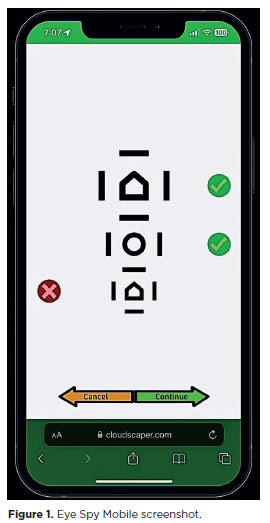
PURPOSE: This cross-sectional study compared best-corrected visual acuity obtained using Cloudscaper symbols, a novel optotype developed according to ETDRS specifications for children's virtual screening, with that obtained using LEA symbols.
METHODS: A total of 560 children aged 3-16 yr underwent visual acuity test with both Cloudscaper symbols and LS. The test application was standardized using the EyeSpy algorithm. Additionally, 147 participants were tested with the standard Snellen E paper chart. Paired t tests were performed to assess the clinical significance of logMAR visual acuity differences.
RESULTS: The mean logMAR visual acuity with LEA symbols was 0.12 (standard deviation [SD]=0.18; range, -0.10 to 0.80), while with Cloudscaper symbols it was 0.18 (SD=0.19; range, -0.10 to 0.80). The mean difference between Cloudscaper symbols and LEA symbols was 0.099 logMAR (approximately 0.5 optotypes; SD=0.08; range, 0.0-0.14; p<0.0001). Cloudscaper symbols slightly underestimated visual acuity compared to LEA symbols. Visual acuity measured by both methods was highly correlated (Spearman's r=0.74, p<0.0001). The mean visual acuity difference between Cloudscaper symbols and the Snellen E chart was 0.0045 (p=0.805; 95% confidence interval [95% CI]), whereas the difference between LEA symbols and Snellen E was 0.0883 (p<0.001; 95% CI).
CONCLUSIONS: Cloudscaper symbols provide a reliable tool for visual screening in children. Although they slightly underestimate visual acuity compared to LEA symbols – a finding also reported when comparing ETDRS letters with LEA symbols – Cloudscaper symbols show strong agreement with Snellen E chart measurements. This suggests that Cloudscaper symbols allow precise visual acuity assessment comparable to the gold standard.
Keywords: Vision screening; Vision tests; Visual acuity; Mobile applications; Eye health; Child health; Diagnostic techniques, Ophthalmological; Child; Preschool child; Adolescent
Abstract
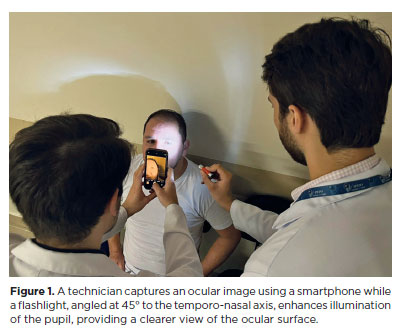
PURPOSE: This pilot study evaluated the diagnostic accuracy of a deep learning model for detecting pterygium in anterior segment photographs taken using smartphones in the Brazilian Amazon. The model’s performance was benchmarked against assessments made by experienced ophthalmologists, considered the clinical gold standard.
METHODS: In this cross-sectional study, 38 participants (76 eyes) from Barcelos, Brazil, were enrolled. Trained nonmedical health workers captured high-resolution anterior segment images using smartphones. These images were analyzed using a deep learning model based on the MobileNet-V2 convolutional neural network. Diagnostic metrics–including sensitivity, specificity, accuracy, positive predictive value, negative predictive value, and area under the receiver operating characteristic curve–were calculated and compared with the ophthalmologists’ evaluations.
RESULTS: The deep learning model achieved a sensitivity of 91.43%, specificity of 90.24%, positive predictive value of 88.46%, negative predictive value of 92.79%, and an area under the curve of 0.91. Logistic regression revealed no statistically significant association between pterygium and demographic variables such as age or gender.
CONCLUSIONS: The deep learning model demonstrated high diagnostic performance in identifying pterygium in a remote Amazonian population. These preliminary findings support the potential use of artificial intelligence–based tools to facilitate early detection and screening in underserved regions, thereby enhancing access to ophthalmic care.
Keywords: Pterygium/diagnostic imaging; Smartphone; Diagnostic techniques, ophthalmological; Deep learning; Telemedicine; Artificial intelligence; Cross-sectional studies; Brazil/epidemiology

Abstract
PURPOSE: This study aimed to evaluate disparities in the distribution of ophthalmologists and the volume of cataract surgeries across Brazil, considering public and private health sectors and the country's federative units.
METHODS: Data on ophthalmologists were obtained from the National Medical Residency Commission and the Associação Múdica Brasileira. Information on cataract surgeries performed through the Unified Health System was collected from the DATASUS database, while data on procedures covered by private health plans were retrieved from the National Supplementary Health Agency. Population estimates from the 2024 Demographic Census of the Brazilian Institute of Geography and Statistics were used to calculate physician density and surgery rates per 100,000 inhabitants. Associations between the number of ophthalmologists and cataract surgery volume were analyzed using Spearman's correlation coefficient.
RESULTS: Brazil has 16,784 ophthalmologists, representing 8.96 specialists per 100,000 inhabitants. Marked disparities were observed: large cities (>500,000 inhabitants) had 18.75 ophthalmologists per 100,000 residents, whereas municipalities with <50,000 inhabitants had fewer than one. Across federative units, physician density ranged from 19.18 per 100,000 in the Federal District to 4.22 in Maranhão. In 2024, cataract surgery rates varied widely, from 1,012.61 per 100,000 inhabitants in the Southeast to 435.00 in the North. Nationally, Unified Health System performed 736.30 surgeries per 100,000 inhabitants, compared with 1,276.79 in the private sector. On average, each ophthalmologist performed 96.92 cataract surgeries annually.
CONCLUSION: Significant inequalities persist in the geographic distribution of ophthalmologists and in cataract surgery provision, with higher surgical volumes concentrated in the private sector. Targeted policies are required to address regional disparities and improve the equity and efficiency of cataract care delivery in Brazil.
Keywords: Ophthalmologists/supply & distribution; Ophthalmologists/statistics & numerical data; Cataract extraction; Health services accessibility/statistics & numerical data; Healthcare disparities; Health policy; Public health systems; Insurance, Heal
Abstract
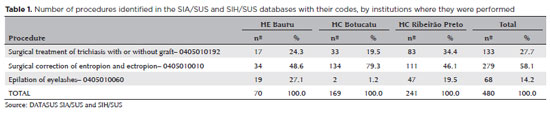
PURPOSE: Trachoma is the major infectious cause of preventable blindness in the world, and its sequelae include the presence of cicatricial entropion and trachomatous trichiasis. Trachoma can be corrected by surgical treatment of the eyelids and, if left untreated, may result in corneal opacification, low vision, and blindness. There are limited data on trachomatous trichiasis in Brazil. This study was conducted to estimate the frequency of entropion and trichiasis surgeries of trachomatous origin based on the records of procedures performed in specialized hospitals that served the Unified Health System (SUS) in the years 2016 and 2017.
METHODS: This was a retrospective study conducted in the oculoplastic sectors of the ophthalmology services of the following three hospitals in the state of São Paulo: Hospital das Clínicas da Faculdade de Medicina de Botucatu (HC Botucatu), Hospital das Clínicas da Faculdade de Medicina de Ribeirão Preto da Universidade de São Paulo (HC Ribeirão Preto), and Hospital Estadual de Bauru (HE Bauru). Medical records corresponding to the codes of interest were evaluated.
RESULTS: In total, 462 medical records were evaluated, including 170 (36.8%) at HC Botucatu, 61 (13.2%) at HE Bauru, and 231 (50.0%) at HC Ribeirão Preto. There were 39 (8.4%) cases of trachomatous trichiasis, ranging from 9 (14.8%) at HE Bauru to 15 (6.5%) at HC Ribeirão Preto.
CONCLUSIONS: The frequency of surgery due to trachoma was low in these oculoplastic services. The state of São Paulo might have reached the goal for trachoma elimination in the surgical component. The questionnaire used for data collection was successfully tested despite some difficulties in collecting data from the medical records. Studies with the same methodology are recommended in other services in the areas of endemic trachoma in the past to understand the frequency of eye lid surgeries performed for treating trachomatous sequelae.
Keywords: Trachoma; Trichiasis; Medical records; Epidemiology; Neglected diseases; Unified Health System; Brazil
10-tab01.jpg)
Abstract
OBJETIVO: Analisar a teleconsulta em um hospital público de ensino oftalmológico, durante o período da pandemia do COVID-19.
MÉTODOS: Foram revisados os registros médicos dos pacientes que solicitaram teleconsulta oftalmológica, no período de Junho de 2020 a Março de 2021. Os resultados incluem dados demográficos, sintomas de queixas oculares e hipóteses diagnósticas. Além disso, foram analisados dados da pesquisa de satisfação aplicada após cada teleconsulta.
RESULTADOS: Um total de 161 prontuários foram revisados. A idade média dos pacientes foi de 45.98 ± 17.57 (8 a 90) anos, a maioria mulheres, 113 (70,20%). Apenas 57 (35,60%) eram pacientes acompanhados no hospital previamente. A principal razão pela busca pela teleconsulta foi o erro refracional, 73 (45.43%), seguido de olho seco, 16 (9.93%), pterígio, 13 (8.07%). Outros motivos foram o acompanhamento de doenças prévias como glaucoma, retinopatias, miopia, estrabismo e ceratocone. Quanto a pesquisa de satisfação, 151(93,87%) pacientes responderam a pesquisa on-line. A maioria deles mostrou-se satisfeito com a teleconsulta (94.03%) e fariam uma nova teleconsulta (90.06%).
CONCLUSÃO: A teleconsulta pode auxiliar a saúde pública em oftalmologia podendo ser utilizada em hospitais universitários. Embora o erro refracional tenha sido o motivo mais frequente nas consultas, os pacientes mostraram-se satisfeitos com essa modalidade de atendimento que serve como um serviço de orientação.
Keywords: COVID-19; Telemedicina; Pandemias; Consulta remota; Oftalmopatias/diagnóstico; Hospitais públicos
Abstract
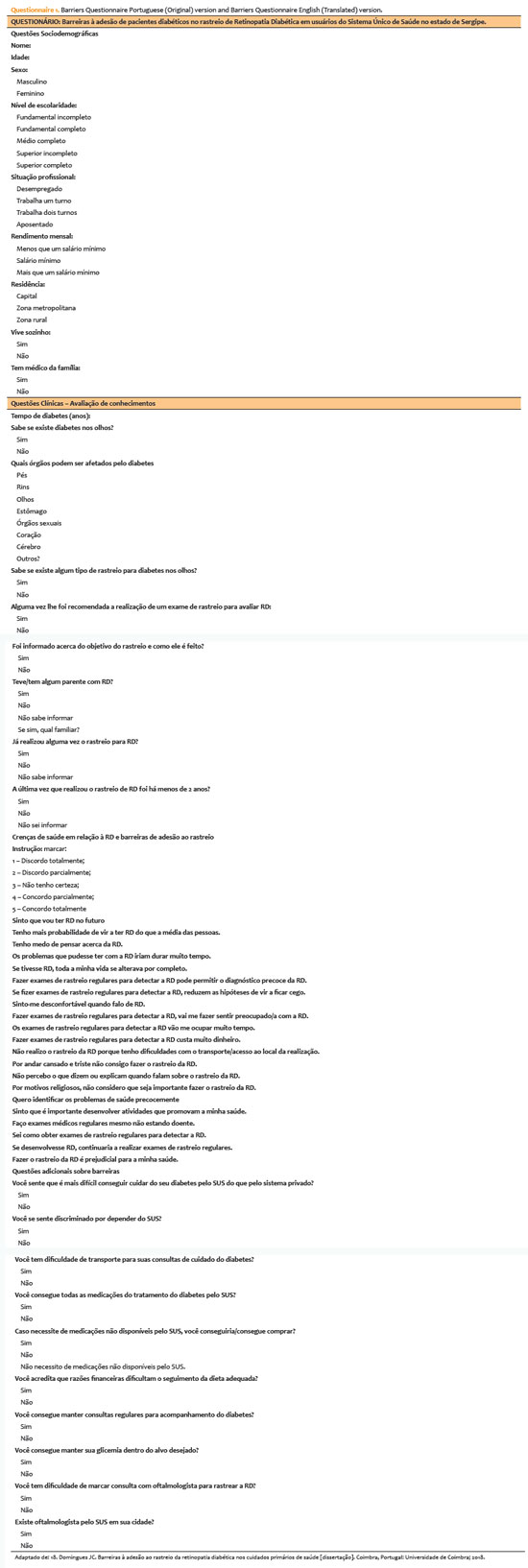
PURPOSE: This study aimed to identify barriers to diabetic retinopathy screening among a socioeconomically vulnerable urban population in northeast Brazil.
METHODS: A cross-sectional study was conducted during a diabetic retinopathy screening campaign at primary healthcare units. Ninety-five patients with diabetes underwent retinal examinations and completed a structured interview. Clinical, demographic, and socioeconomic data were collected.
RESULTS: The study population consisted predominantly of older adults (mean age: 60.7 ± 10.5 years), with a high prevalence of type 2 diabetes (99.0%) and low educational attainment. Most participants were economically inactive (81.1%) and reported low income (83.2%). Diabetic retinopathy and maculopathy were highly prevalent, affecting 50.0% and 22.9% of participants, respectively. Longer duration of diabetes was significantly associated with greater awareness of diabetic retinopathy (p=0.035), higher HbA1c levels (p<0.001), and increased prevalence of diabetic retinopathy (p=0.013) and maculopathy (p=0.002). Notably, 33.3% of participants reported difficulties attending medical appointments for diabetes management. In addition, 78.1% experienced challenges scheduling ophthalmologic evaluations, and 76.3% reported that no ophthalmologist was available in their city through the public healthcare system. Financial constraints also limited adherence to recommended dietary practices (90.4%) and impaired glycemic control, with more than half of participants reporting difficulty maintaining target glucose levels.
CONCLUSION: Major barriers to diabetic retinopathy screening included limited awareness of the importance of screening, financial hardship, and transportation challenges. Targeted educational initiatives and structural interventions such as expanded screening programs incorporating telemedicine and subsidized transportation—may improve screening adherence among vulnerable populations.
Keywords: Diabetic retinopathy; Mass screening; Health services accessibility; Health knowledge, attitudes, practices; Socioeconomic factors
Abstract
PURPOSE: To assess musculoskeletal symptoms, identify the most affected body areas, and investigate factors associated with the development of musculoskeletal disorders among ophthalmologists in Brazil.
METHODS: A survey was conducted using an online questionnaire and snowball sampling. Statistical analyses were performed using Jamovi version 2.3.28, and graphs were generated using RStudio version 2023.06.2 + 561.
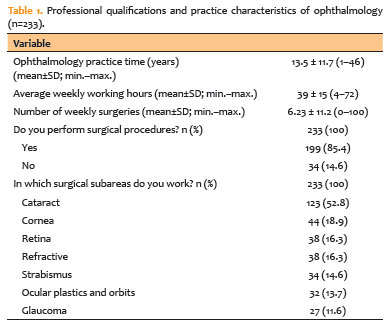
RESULTS: A total of 233 participants (42 ophthalmology residents and 191 ophthalmologists) were included, with a mean age of 40.4 years (standard deviation 11.3; range 25–73 years). Musculoskeletal symptoms were reported by 83% of participants. The cervical region (57.1%), upper back (54.5%), and lumbar region (53.6%) were the most frequently reported sites of pain. A high body mass index was identified in 54.9% of the sample, and 50.2% of participants reported using painkillers in the previous year for musculoskeletal symptoms. The mean duration of professional activity in ophthalmology was 13.5 years, and the mean weekly workload was 39 hours. A significant association was observed between weekly workload and the presence of musculoskeletal disorders (p=0.045).
CONCLUSION: This study demonstrated a high prevalence of musculoskeletal disorders among ophthalmologists in Brazil, particularly involving the cervical, lumbar, and upper back regions, consistent with findings reported in international studies. Important contributing factors include long working hours, a high patient volume, and repetitive or awkward postures during examinations and procedures. Preventive strategies and improvements in working conditions are needed to protect the health and well-being of ophthalmologists.
Keywords: Musculoskeletal Diseases/epidemiology; Back pain; Lumbar Vertebrae; Occupational diseases/epidemiology; Ergonomics; Ophthalmic practice; Ophthalmologists/statistics & numerical data; Brazil/epidemiology
Abstract
PURPOSE: To describe the ophthalmological findings of dry eye disease and its relation to the quality of life of COVID-19 survivors.
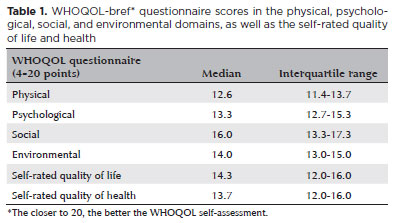
METHODS: COVID-19 survivors who had previously been hospitalized at Hospital das Clínicas de Ribeirão Preto complex underwent an ophthalmological evaluation, which included a dry eye disease questionnaire, break-up time, fluorescein staining, and Schirmer test. We collected the presenting and best-corrected visual acuity, sociodemographic data, personal medical history, and scores from a self-reported quality of life questionnaire (WHOQOL-bref). According to the severity of the acute phase of the disease, the patients were classified into mild-to-moderate, severe, and critical groups.
RESULTS: Ninety-five patients (190 eyes) were evaluated 100 ± 44 days after the onset of COVID-19 symptoms. Of these, 83 patients (87.3%) completed the WHOQOL-bref questionnaire. Ten patients (12.0%) had mild-to-moderate COVID-19, 41 (49.4%) had severe COVID-19, and 32 (38.6%) had critical COVID-19. The median best-corrected visual acuity was logMAR 0 (0-1). Approximately 26.3% patients had a history of dry eye disease or severe dry eye symptoms (frequent or constant ocular dryness and irritation). There was an association between the proportion of patients with dry eye disease and the quality of life (p=0.014) and health (p=0.001). Furthermore, there was a significant trend between the proportion of patients with dry eye disease and how they rated their health and quality of life (p=0.0004 and 0.0027, respectively.
CONCLUSIONS: There is a significant negative correlation between the proportion of patients with dry eye disease and their self-reported quality of life.
Keywords: COVID-19; Coronavirus infections; SARS-CoV-2; Eye diseases; Epidemiology; Ocular surface; Public health
Abstract
PURPOSE: To evaluate the current scenario of rehabilitation services for people with retinal diseases in Brazil.
METHODS: An exploratory study was conducted between February 2023 and June 2023 using a Google Forms questionnaire that was distributed by patient associations.
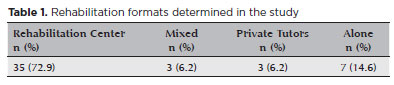
RESULTS: A total of 142 patients, aged 18-80 were included in the study. Forty-eight participants (33.8%) were undergoing rehabilitation, while 94 (66.2%) were not. The main reason for not undergoing rehabilitation was a lack of knowledge about the service (n=41, 43.6%). Healthcare professionals made the most referrals (n=20, 41.7%). Rehabilitation improved the quality of life in 38 (80.9%) participants, and 28 (62.2%) participants were satisfied with the process. There was a statistically significant disparity between patient satisfaction and the locale of rehabilitation implementation. Twenty-three (69.7%) participants who underwent rehabilitation at a specialized center reported satisfaction.
CONCLUSION: The rehabilitation process directly increases the quality of life of individuals with retinal diseases. However, despite the availability of rehabilitation centers in large parts of Brazil, most patients with retinal diseases are not acquainted with the rehabilitation process and do not receive referrals for it. Thus, healthcare providers should increase referrals to rehabilitation centers, and public policies should be formulated to raise awareness among the population regarding the availability of rehabilitation services.
Keywords: Rehabilitation; Quality of life; Retinal diseases; Personal satisfaction; Patient care team; Public policy; Surveys and questionnaires; Brazil
04-fig01tb.jpg)
Abstract
OBJETIVO: Descrever o processo de implementação e os resultados preliminares de um sistema de vigilância epidemiológica para endoftalmites associada à assistência à saúde.
MÉTODOS: Trata-se de um estudo de caso de implementação de um sistema de vigilância epidemiológica para endoftalmites. O sistema de vigilância epidemiológica para endoftalmites é um sistema estruturado que possibilita a vigilância de casos de endoftalmite associados à assistência à saúde após procedimentos oftalmológicos invasivos, desenvolvido e coordenado pela Divisão de Infecção Hospitalar da Secretaria de Estado da Saúde, São Paulo, Brasil. O processo de implementação incluiu uma fase piloto, seguida pela fase de expansão. Os dados foram enviados mensalmente à Divisão de Infecção Hospitalar pelos estabelecimentos de saúde participantes que realizaram procedimentos oftalmológicos no estado de São Paulo, Brasil no período de setembro de 2017 a dezembro de 2019.
RESULTADOS: Entre os 1.483 estabelecimentos de saúde elegíveis, 175 participaram do estudo (taxa de adesão de 11,8%), relatando 222.728 procedimentos oftalmológicos realizados, sendo 164.207 cirurgias de catarata e 58.521 injeções intravítreas. A taxa de incidência global de endoftalmite relatada foi de 0,05% (n=105; 80 casos após cirurgia de catarata e 25 casos após injeção intravítrea). As taxas de incidência entre os estabelecimentos de saúde variaram de 0,02% a 4,55%. A maioria dos casos foi causada por bactérias gram-positivas, principalmente Staphylococcus spp. Em 36 (46,2%) casos não houve crescimento bacteriano; nenhuma amostra foi coletada em 28 (26,7%) casos. O sistema de vigilância epidemiológica para endoftalmites possibilitou a identificação de um surto de quatro casos de endoftalmite após injeção intravítrea.
CONCLUSÃO: O sistema de vigilância epidemiológica para endoftalmites mostrou-se operacionalmente viável e eficiente para o monitoramento de casos de endoftalmite em nível estadual.
Keywords: Monitoramento epidemiológico; Endoftalmite; Atenção à saúde; Inquéritos epidemiológicos; Procedimentos cirúrgicos oftalmológicos
Abstract
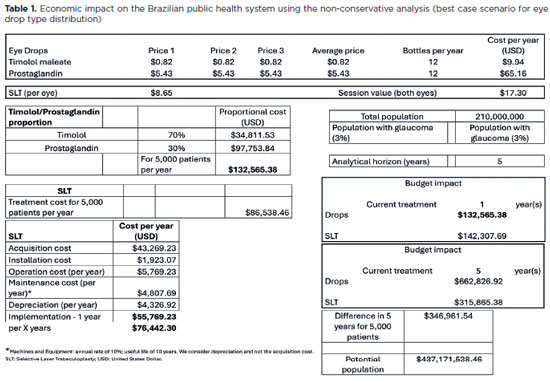
PURPOSE: To evaluate the economic impact of the following initial treatment scenarios for glaucoma on the Brazilian Public Health System (SUS): (1) traditional continuous instillation of hypotensive eye drops and (2) single session of selective laser trabeculoplasty.
METHODS: Economic impact was analyzed in three scenarios, from the least to the most conservative, for a hypothetical cohort of 5,000 individuals with open-angle glaucoma. Thereafter, projections were made on the basis of a glaucoma prevalence of 3% in the 2021 Brazilian population size.
RESULTS: All three scenarios demonstrated that selective laser trabeculoplasty exhibited a significantly lower economic impact than the eye drops on SUS over one and five years. Furthermore, the difference was more than United States Dollar 8 billion at five years when considering 3% of the Brazilian population aged >40 years in 2021.
CONCLUSION: As the initial treatment for primary open-angle glaucoma, selective laser trabeculoplasty exhibited a lower economic impact on SUS than latanoprost and timolol maleate eye drop instillation in all the studied scenarios over one and five-year periods.
Keywords: Glaucoma; Trabeculotomy; Laser therapy; Cost analysis; Health care cost Unified Health System; Brazil
02-tab01.jpg)
Abstract
A COVID-19 é uma doença infeciosa causada pelo SARS-CoV-2, sendo sua principal forma de transmissão através de gotículas respiratórias. Já existem relatos de caso descrevendo a presença desse vírus em materiais biológicos como sangue, fezes, urina e lágrima, o que gera hipóteses sobre outros meios de transmissão da doença. Neste estudo, descrevemos um caso de identificação do vírus SARS-CoV-2 na superfície ocular de um profissional de saúde assintomático. A transcrição inversa da reação em cadeia da polimerase da nasofaringe, coletada no mesmo dia, e o teste sorológico, realizado três meses após, não detectaram qualquer evidência de infecção pelo SARS-CoV-2. Esses dados alertam para a possibilidade de resultado falso positivo da transcrição inversa da reação em cadeia da polimerase da superfície ocular ou a presença do vírus na mucosa conjuntival sem infecção.
Keywords: Infecção por coronavírus; COVID-19; Infecção ocular viral; SARS-CoV-2; Profissional de saúde.
 ABO is licensed under a Creative Commons Attribution-NonComercial 4.0 Internacional.
About
Issues
Editorial Board
Submission

Arquivos Brasileiros de Oftalmologia
Official publication of Brazilian Council of Ophthalmology - Conselho Brasileiro de Oftalmologia (CBO)
Rua Casa do Ator, 1.117 - 2nd floor - Zip Code: 04546-004
São Paulo - SP, Brazil
TEL: +55 11 3266-4000
E-mail: [email protected]