Showing of 1 until 15 from 219 result(s)
Search for: Retinoblastoma; Retinal neoplasms; Epidemiology; Prevalence; Risk factors; Delayed diagnosis; Child
Abstract
Objetivo: Estimar a epidemiologia do pterígio; sua correlação com sintomas de olho seco e com potenciais preditores sistêmicos e oculares.
Métodos: Estudo transversal, de base populacional, no qual foram realizadas visitas domiciliares aleatórias a 600 participantes, com 40 anos ou mais de idade, em Ribeirão Preto-SP (n=420) e Cassia dos Coqueiros-SP (n=180), Brasil. Uma entrevista estruturada com um questionário detalhado foi usada para coletar informações sobre demografia e possíveis fatores de risco. Em um segundo momento, participantes aleatórios com pterígio (n=63) ou não (n=110) foram avaliados quanto a alterações na superfície ocular.
Resultados: A frequência de pterígio em Ribeirão Preto foi de 21%; 15.7% entre as mulheres e 32.1% entre os homens (p=0,0002). Em Cássia dos Coqueiros, essa taxa foi de 19.4%; onde 17.3% eram mulheres e 25.5% eram homens (p=0,28). A média de idade naqueles afetados pelo pterígio foi superior à dos participantes sem pterígio, 65,6 ± 10,5 e 61,2 ± 12,0 anos, respectivamente (p=0,02). Houve uma correlação positiva entre o pterígio e história prévia de radioterapia e quimioterapia (p<0,0001 para ambos). Houve maior coloração de fluoresceína na córnea e maior coloração de lissamina verde na conjuntiva em olhos com pterígio (p=0,0003 e 0,0001, respectivamente).
Conclusão: Encontramos uma alta frequência de pterígio em duas populações adultas brasileiras, principalmente em homens e idosos. Danos na superfície ocular e história prévia de radioterapia e/ou quimioterapia foram associados ao pterígio.
Keywords: Pterígio/epidemiologia; Síndrome do olho seco; Prevalência; Fatores de risco
Abstract
PURPOSE: This study aimed to examine the prevalence of myopic eyes over 11 years (2008-2018) in a private clinic and a public assistance service.
METHODS: We retrospectively evaluated 6332 individuals (12,664 eyes)
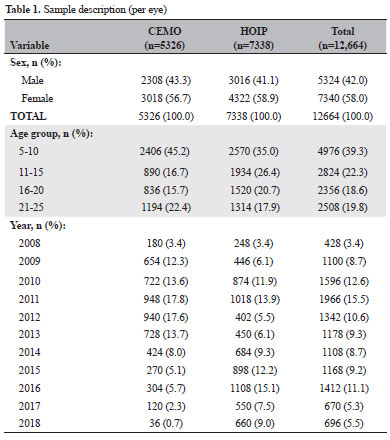
between 5 and 25 years old, seen at a private clinic-CEMO (2,663 individuals) and a public service-HOIP (3,669 individuals) from 2008 to 2018. We evaluated the prevalence of myopic eyes (EE ≤-0.50) and high myopic eyes (EE ≤-6.00).
RESULTS: Sex and services did not show statistical differences. The variation in the prevalence of myopic and high myopic eyes showed a random pattern during the study period (this prevalence could not be increased). Prevalences ranged from 20.7% (in 2017) to 32.4% (in 2015) for myopic eyes and from 1.6% (in 2009 and 2016) to 3.3% (in 2015) for eyes with high myopia. The prevalence of myopia showed a statistically significant increase based on the age group.
CONCLUSION: The prevalence of myopic eyes did not increase in our study. The mean prevalence of myopic eyes was similar in the private clinic and public service.
Keywords: Myopia; Refractive errors; Epidemiology; Prevalence
Abstract
Objetivo: Descrever o perfil epidemiológico das uveítes atendidas no Hospital Universitário Clementino Fraga Filho - UFRJ. Identificando o padrão de apresentação da inflamação intraocular a partir de critérios clínicos, anatômicos, etiológicos e demográficos.
Métodos: Estudo retrospectivo, com base em prontuários de 408 pacientes com doença ativa, atendidos no serviço de oftalmologia no período de março a outubro de 2018. Foram descritos a idade, sexo, acuidade visual no momento do diagnóstico, diagnóstico anatômico e etiológico, aspecto clínico, além dos principais sintomas relatados durante a anamnese.
Resultados: Dos 408 pacientes do estudo, 52% eram do sexo masculino e 48% do feminino. A idade média dos pacientes foi de 42 anos, a maioria (84%) entre 19 e 64 anos. Uveíte anterior foi observada em 37,75% dos pacientes, uveíte posterior em 49,75%, panuveíte em 4,66% e uveíte intermediária em 3,43%; apenas 18 pacientes (4,41%) apresentaram diagnóstico de esclerite. Dos 390 pacientes com classificação anatômica, a etiologia foi determinada em 76% deles, com os diagnósticos mais prevalentes sendo Toxoplasmose (35,4%), artrite idiopática juvenil (6,4%), espondilite anquilosante (5,9%) e sífilis (4,9%). ) A uveíte infecciosa correspondeu a 49,7% desses pacientes, enquanto 26,6% eram de origem não infecciosa. A uveíte anterior teve o maior número de casos classificados como idiopáticos (49,4%), enquanto a uveíte posterior teve a etiologia estabelecida em 94% das vezes. Os sintomas mais frequentes foram dor ocular (71,8%) e visão embaçada (56,8%).
Conclusões: O presente estudo confirmou a importância histórica da uveíte infecciosa em nossa população, principalmente a toxoplasmose ocular. As uveítes parecem não ter predileção por sexo, mas afetam principalmente jovens em idade ativa, gerando consequências sociais e econômicas. Apesar da evolução nos métodos diagnósticos, a uveíte idiopática continua sendo uma das principais causas. Estudos epidemiológicos apontam para diferentes padrões de uveíte nas populações, estes podem refletir características particulares de cada instituição.
Keywords: Uveíte/epidemiologia; Uveíte/etiologia; Uveíte/ diagnóstico; Toxoplasmose ocular; Hospital universitário; Brasil/epidemiologia

Abstract
Objetivo: Avaliar a segurança e o efeito de 12 meses de tratamento com fotocoagulação pelo pattern scanning laser para neoplasia escamosa da superfície ocular em um ambiente com poucos recursos e acesso extremamente limitado a um tratamento cirúrgico.
Métodos: Pacientes adultos com diagnóstico de neoplasia escamosa de superfície ocular foram submetidos a exame oftalmológico completo. Após anestesia tópica e instilação de azul de toluidina 1%, a lesão foi tratada com laser por um tempo de duração que variou de 20 a 100 ms e potência de 600 a 1800 mW. Os pacientes foram examinados semanalmente durante o primeiro mês e foram retratados semanalmente das lesões restantes, conforme necessário. Os pacientes tiveram um seguimento mínimo de 12 meses.
Resultados: Trinta e oito pacientes (38 olhos) foram incluídos no estudo. Todos os pacientes apresentaram neoplasia escamosa da superfície ocular clínica, confirmada por citologia de impressão. A idade dos pacientes variou entre 40 e 83 anos (média de 65.5 anos) e 28 deles eram do sexo masculino (74%). Os pacientes foram divididos em dois grupos: Grupo I (imunocompetente) e grupo II (imunossuprimido). No grupo I, 23 pacientes (74%) apresentaram resposta completa com o controle da lesão após o tratamento com laser. No grupo II, dois dos sete pacientes (28%) apresentaram resposta ao tratamento durante o acompanhamento. A média de aplicações de laser foi de 2,5 (1 a 6 aplicações). Os procedimentos foram bem tolerados.
Conclusões: Os resultados a curto prazo da abordagem de fotocoagulação a laser para o tratamento das lesões conjuntivais de neoplasia escamosa de superfície ocular foram favoráveis, com uma taxa de sucesso de 74% observada em pacientes imunocompetentes. Essa nova estratégia é uma alternativa menos intensiva em recursos que pode demonstrar sua utilidade em ambientes com escassez de salas cirúrgicas e em casos recorrentes. Estudos com acompanhamentos mais longos e amostras maiores são necessários para confirmar nossos achados e avaliar a eficácia do tratamento a laser associado à quimioterapia tópica.
Keywords: Carcinoma de células escamosas/diagnóstico; Neoplasia da túnica conjuntiva/terapia; Terapia a laser; Fotocoagulação
Abstract
PURPOSE: To describe the epidemiological and clinical profile of hospitalized patients with retinoblastoma in Brazil.
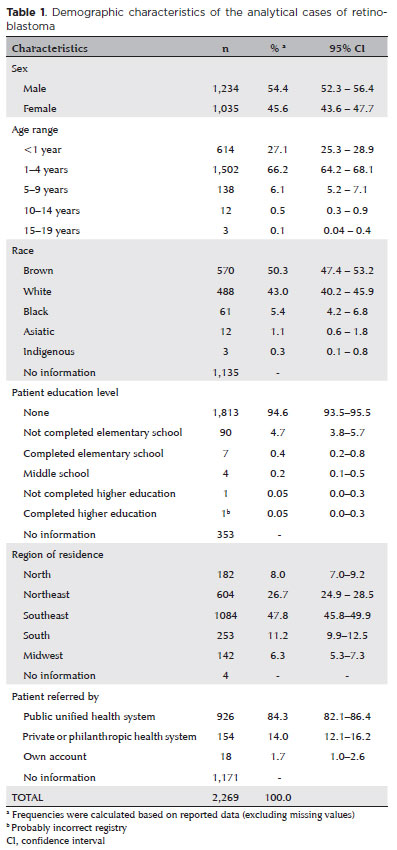
METHODS: Using data from the Hospital Cancer Registry of the , patients with the morphological codes of retinoblastoma who were diagnosed between 2000 to 2018, aged 0–19 years, and followed up in registered hospitals (analytical cases) were selected. The relative and absolute frequencies of demographic, clinical, diagnostic, therapeutic, and outcome variables were described. Hospital performance indicators were calculated and compared between hospitals qualified and not qualified to treat pediatric oncology cases and between hospitals with different case volumes (<20, 20–75, >75 cases).
RESULTS: Of the 2,269 identified analytical cases from 86 institutions, 48% were from the Southeast, 54% were male, and 66% were aged <4 years. The proportion of missing data (NA) was too high for several variables. Approximately 84% of the patients were from the public health system, 40% had a positive family history, and 88% had unilateral involvement. The first treatment included surgery in 58.3% of the patients (NA=2), Approximately 36.6% of these patients achieved complete remission, 10.8% achieved partial remission, and 12.7% died (NA=59%). Hospital performance indicators were within the target in >90% of the patients. The median time between the first appointment and diagnosis (6 days, interquartile range [IQR] 1–14) was significantly lower and the median time to death was longer (343 days, IQR, 212-539) in high-volume hospitals (>75 cases) than in medium- and low-volume hospitals.
CONCLUSIONS: Despite the high proportion of missing data, we found that the delay in diagnosis is due to prehospital factors. Additionally, there is a need for educational programs for healthcare professionals and families that emphasize early identification and referral to specialized centers. Future studies should focus on the impact of Hospital Cancer Registry data completeness on outcomes, causes of delay in diagnosis, regional inequalities, and barriers to accessing specialized services.
Keywords: Retinoblastoma/diagnosis; Retinoblastoma/epidemiology; Patient care; Humans; Children; Adolescents; Brazil.
Abstract
PURPOSE: This study evaluated macular thickness using spectral-domain optical coherence tomography in healthy participants from a population-based eye survey.
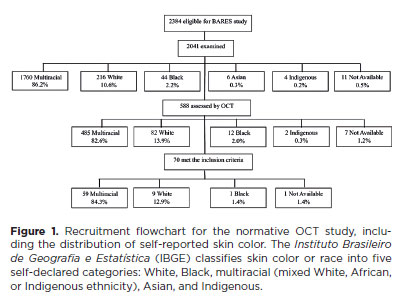
METHODS: The Brazilian Amazon Region Eye Survey was a population-based study assessing the prevalence and causes of visual impairment, blindness, and ocular diseases in adults aged ≥45 years from urban and rural areas of Parintins. A subgroup was selected based on inclusion criteria for both eyes: best-corrected visual acuity ≥20/32, normal eye examination results, and no prior ocular surgery. Scans were performed using the iVue optical coherence tomography device. Measurements were taken from the nine subfields defined by the Early Treatment Diabetic Retinopathy Study, examining the full retina as well as the inner and outer retinal layers. Associations of retinal thickness with age and sex were also analyzed. Statistical significance was set at p≤0.05.
RESULTS: In total, 70 healthy participants (25 males), aged 45–65 years (mean=52 ± 5), were included. Mean central foveal thickness was 248.71 ± 18.73 μm. A significant age-related reduction in macular thickness was observed, particularly in the inner superior parafovea (p=0.036), nasal perifovea (p=0.001), superior perifovea (p=0.028), outer layer of inferior parafovea (p=0.049), and the inferior perifovea of the full retina (p=0.029). Males showed significantly greater thickness in the outer layer, especially in the outer parafovea (p=0.004) and perifovea (p<0.0001).
CONCLUSIONS: This study established normative macular thickness values for healthy older adults in the Brazilian Amazon region using spectral-domain optical coherence tomography. Age and sex were found to significantly influence macular thickness and should be considered when interpreting measurements. These data will support future studies of retinal diseases in this population.
Keywords: Retinal diseases/diagnosis; Macula lutea/pathology; Macular degeneration/diagnosis; Diabetic retinopathy/diagnosis; Vision, low; Vision tests; Tomography, optical coherence/methods; Young adult; Cross-sectional studies; Brazil/epidemiology
Abstract
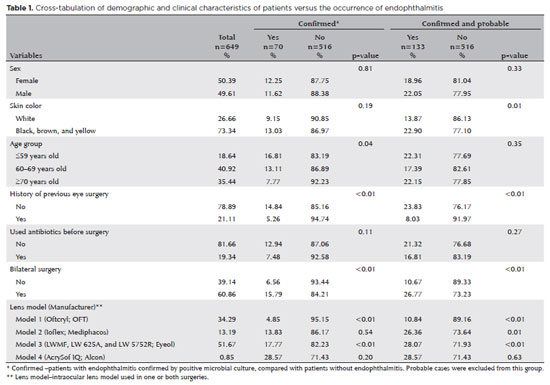
PURPOSE: Endophthalmitis is one of the most important adverse events after cataract surgery, as it can lead to total vision loss. This study aimed to describe the occurrence of endophthalmitis after phacoemulsification with intraocular lens implantation in patients treated in a community setting in Porto Velho, Rondônia, Brazil.
METHODS: This retrospective cohort study was conducted using a database of 649 medical records of patients who underwent surgery and were followed for three months. Poisson regression analysis was used to estimate relative risks and 95% confidence intervals (95% CIs).
RESULTS: The incidence of confirmed endophthalmitis was 11.94% (95% CI, 9.50-14.76), while the incidence of confirmed and probable cases was 20.50% (95% CI, 17.52-23.73). For confirmed cases, bilateral surgery and the use of lens model 3 were identified as risk factors for endophthalmitis, whereas age over 70 yr and preoperative antibiotic use were protective factors. For confirmed and probable cases, brown and yellow skin color, bilateral surgery, and the use of lens model 3 were also identified as risk factors. Gram-negative bacteria were the predominant etiological agents, and corneal edema was the main clinical manifestation. The mean duration of treatment was eight days, and 27.12% of patients used antibiotics.
CONCLUSION: The incidence observed was substantially higher than that reported in the literature, with a predominance of Gram-negative agents and an association with bilateral surgeries and the Eyeol intraocular lens model. These findings reinforce the need for continuous epidemiological surveillance and the implementation of specific biosafety and infection control protocols during cataract surgery campaigns.
Keywords: Endophthalmitis; Disease outbreaks; Phacoemulsification; Lens implantation, intraocular; Lenses, intraocular; Cataract; Risk factors; Anti-bacterial agents
Abstract
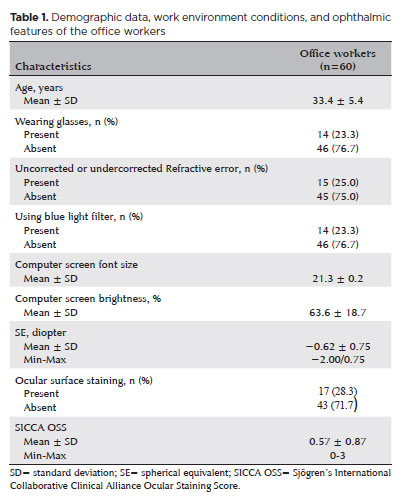
PURPOSE: To examine how ophthalmological features, screen exposure duration, and break habits among office employees affect ocular surface parameters.
METHODS: This single-center cross-sectional study involved two assessments on the same day: one before and one after a visual display terminal task. During the initial assessment, information on screen use was gathered, and refractive error, anterior segment examination, tear breakup time, and Schirmer test measurements were conducted. Participants tracked their screen usage and break durations throughout the day. At the end of the workday, tear breakup time and Schirmer I tests were repeated. Baseline and follow-up results were compared, and regression analysis was performed to identify factors linked to tear breakup time reduction.
RESULTS: The study enrolled 60 female office employees. Their mean screen time was 269.26 ± 70.21 min, with an average break duration of 151.93 ± 46.24 min. Tear breakup time at the second assessment (6.38 ± 2.70) was significantly lower than at baseline (8.62 ± 2.73) (p<0.001), whereas Schirmer test scores showed no significant change (p>0.05). Tear breakup time reduction was noted in 54 participants (90.0%), with a significant association between tear breakup time decrease percentage and screen exposure (p=0.001, r=0.463). Regression analysis showed that uncorrected or undercorrected refractive error was an independent risk factor for a ≥30% tear breakup time reduction, while taking more frequent short breaks (<15 min) acted as a protective factor.
CONCLUSIONS: Taking more frequent short breaks (<15 min) and correcting refractive errors help prevent intra-day tear breakup time decline during visual display terminal use. Structuring breaks to support tear film stability is advisable for occupations that require regular visual display terminal tasks.
Keywords: Tear film; Screen time; Tear breakup time; Office workers; Protective factors; Lacerations; Refractive errors; Risk factors.
Abstract
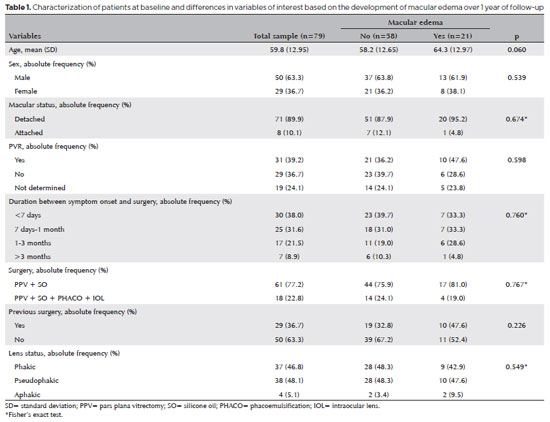
PURPOSE: To clarify the postoperative incidence of macular edema in patients undergoing surgery to repair rhegmatogenous retinal detachment and identify the associated risk factors.
METHODS: In this prospective, observational study, 79 patients who underwent surgery to correct rhegmatogenous retinal detachment using pars plana vitrectomy with silicone oil injection were analyzed. Patients were followed up postoperatively at 7, 30, 90, 180, and 365 days. At each visit, optical coherence tomography was performed to assess the presence or absence of macular edema. were analyzed as possible risk factors for macular edema: age, sex, macular status (attached or detached), presence of vitreoretinal proliferation, history of previous intraocular surgery, reported time of symptoms suggestive of rhegmatogenous retinal detachment up to the date of surgery, and the surgical modality performed.
RESULTS: The 1-year macular edema prevalence rate was 26.6%. In the adjusted analysis, older patients had a higher risk of macular edema, and each 1-year increase in age increased the risk of macular edema by 6% (95% confidence interval = 1.00-1.12). The macular status, vitreoretinal proliferation, the surgical technique used, prior intraocular surgery, and the intraocular lens status were not identified as risk factors. However, the incidence of macular edema increased up to 180 days after surgery, peaking at 10.6%, and then decreased until 365 days after surgery.
CONCLUSION: Macular edema was a common complication after surgery to treat rhegmatogenous retinal detachment, with its incidence peaking between 30 and 180 days after surgery. Age was an important risk factor for macular edema in this cohort.
Keywords: Macular edema; Retinal detachment; Vitrectomy; Tomography, optical coherence; Incidence; Risk factors
Abstract
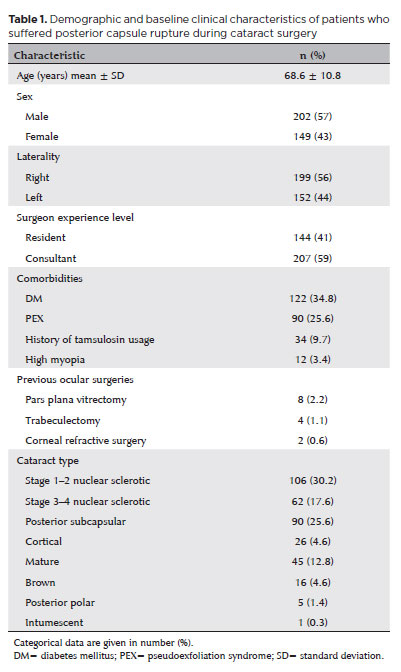
PURPOSE: Posterior capsule rupture is defined as an intraoperative posterior capsule tear resulting in vitreous loss. This study aimed to analyze the clinical characteristics, preoperative risk factors, intraoperative management strategies, and postoperative complications associated with posterior capsule rupture during phacoemulsification surgery.
METHODS: This was a retrospective observational cohort study of the medical records for 25,224 phacoemulsification surgeries performed at our tertiary eye care center between 2017 and 2022. We collected and collated the demographic characteristics and clinical findings of the patients in our cohort. Intraoperative management strategies and postoperative outcomes over a 1-year followup period were also recorded.
RESULTS: Posterior capsule rupture occurred in 351 eyes (351 patients), giving an overall posterior capsule rupture rate of 1.3%. The mean patient age was 68.6 ± 10.8 years. Pseudoexfoliation syndrome, mature cataracts, brown cataracts, and surgery performed by a resident were identified as risk factors for posterior capsule rupture (p<0.05 for each; the risk ratios were 2.70, 2.15, 2.44, 1.34, respectively). The most common intraoperative complications were dislocated lens fragments in the vitreous (8%) and iris damage (7.1%). The mean best-corrected visual acuity improved from 1.31 ± 0.84 (logMAR) postoperatively to 0.51 ± 0.56 at the end of the 1-year follow-up period (p<0.001). Corneal edema (55.6%) and elevated intraocular pressure (33.3%) were the most common early postoperative complications. Persistently elevated intraocular pressure (11.1%) and cystoid macular edema (5.1%) were the most common late postoperative complications.
CONCLUSION: Posterior capsule rupture is a common complication of phacoemulsification surgery that requires prolonged postoperative follow-up and a multidisciplinary approach. Despite the increased incidence of complications when rupture occurs, appropriate intraoperative and postoperative management can lead to satisfactory visual outcomes.
Keywords: Cataract extraction; Phacoemulsification; Posterior capsule rupture; Corneal edema; Risk factors; Postoperative complications; Intraoperative complications
Abstract
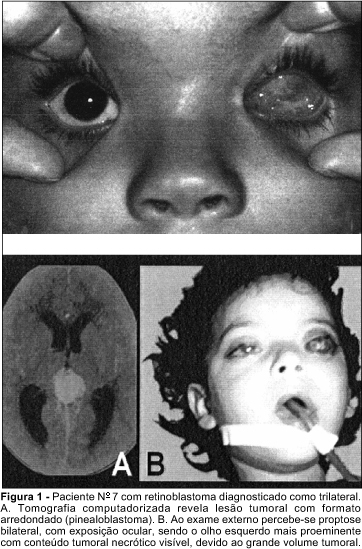
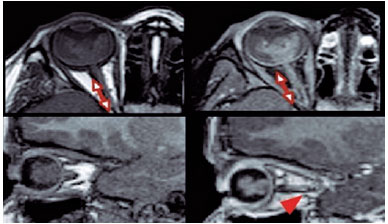
PURPOSE: This study aimed to analyze the association between magnetic resonance imaging apparent diffusion coefficient map value and histopathological differentiation in patients who underwent eye enucleation due to retinoblastomas.
METHODS: An observational chart review study of patients with retinoblastoma that had histopathology of the lesion and orbit magnetic resonance imaging with apparent diffusion coefficient analysis at Hospital de Clínicas de Porto Alegre between November 2013 and November 2016 was performed. The histopathology was reviewed after enucleation. To analyze the difference in apparent diffusion coefficient values between the two major histopathological prognostic groups, Student's t-test was used for the two groups. All statistical analyses were performed using SPSS version 19.0 for Microsoft Windows (SPSS, Inc., Chicago, IL, USA). Our institutional review board approved this retrospective study without obtaining informed consent.
RESULTS: Thirteen children were evaluated, and only eight underwent eye enucleation and were included in the analysis. The others were treated with photocoagulation, embolization, radiotherapy, and chemotherapy and were excluded due to the lack of histopathological results. When compared with histopathology, magnetic resonance imaging demonstrated 100% accuracy in retinoblastoma diagnosis. Optic nerve invasion detection on magnetic resonance imaging showed a 66.6% sensitivity and 80.0% specificity. Positive and negative predictive values were 66.6% and 80.0%, respectively, with an accuracy of 75%. In addition, the mean apparent diffusion coefficient of the eight eyes was 0.615 × 103 mm2/s. The mean apparent diffusion coefficient value of poorly or undifferentiated retinoblastoma and differentiated tumors were 0.520 × 103 mm2/s and 0.774 × 103 mm2/s, respectively.
CONCLUSION: This study revealed that magnetic resonance imaging is useful in the diagnosis of retinoblastoma and detection of optic nerve infiltration, with a sensitivity of 66.6% and specificity of 80%. Our results also showed lower apparent diffusion coefficient values in poorly differentiated retinoblastomas with a mean of 0.520 ×
103 mm2/s, whereas in well and moderately differentiated, the mean was 0.774 × 103 mm2/s.
Keywords: Retinoblastoma; Prognosis; Retinal neoplasms; Orbit; Diffusion magnetic resonance imaging
Abstract
O hamartoma combinado de retina e epitélio pigmentar da retina consiste em um tumor intraocular raro com comportamento benigno. O hamartoma combinado de retina e epitélio pigmentar da retina foi descrito na literatura apresentando dano retiniano variável, desde o envolvimento epirretiniano parcial até distorção completa das camadas retinianas e do epitélio pigmentar da retina. Relatamos o caso de uma menina de 8 anos com estrabismo de longa data que foi diagnosticada com hamartoma combinado de retina e epitélio pigmentar da retina, com base na avaliação de imagem multimodal. Exploramos os achados de imagem específicos de estudos usando tomografia de coerência óptica de domínio espectral, autofluorescência, angiografia por tomografia de coerência óptica e angiografia fluorescente.
Keywords: Hamartoma/diagnóstico; Epitélio pigmentado da retina; Neoplasia da retina; Tomografia de coerência óptica; Angiografia; Humanos; Relato de caso
Abstract
A retinopatia lúpica é uma manifestação clínica do lúpus eritematoso sistêmico no sistema visual. Geralmente assintomática, porém pode ser uma condição ameaçadora à visão. Está intimamente associada à atividade inflamatória do lúpus eritematoso sistêmico e ao aumento da mortalidade. A retinopatia lúpica tem diversas apresentações clínicas, como a microangiopatia lúpica, oclusão vascular, vasculite, retinopatia hipertensiva associada à nefrite lúpica e retinopatia autoimune. A prevalência e os fatores associados à retinopatia lúpica estão bem definidos em algumas partes do mundo. No entanto, esses dados são pouco conhecidos na América Latina, incluindo o Brasil. Como a retinopatia lúpica é geralmente assintomática, sem a fundoscopia de rotina, provavelmente esta é subestimada. O objetivo desta revisão é discutir a epidemiologia e fatores de risco para retinopatia lúpica.
Keywords: Lúpus eritematoso sistêmico/epidemiologia; Doenças retinianas; Fatores de risco
Abstract
Mantle cell lymphoma of the ocular and periorbital regions is extremely rare but should be considered in the differential diagnosis of lesions affecting the periorbital tissues. In this study, we present a rare case of mantle cell lymphoma of the lacrimal sac in a 65-year-old male presenting with a mass in the lacrimal sac region and epiphora. After clinical examinations and imaging studies, the mucocele was misdiagnosed. Considering the unexpected findings during external dacryocystorhinostomy, a frozen biopsy was performed, which confirmed the diagnosis of lymphoma.
Keywords: Lymphoma, mantle cell; Nasolacrimal duct; Neoplasms; Neoplasm staging; Dacryocystorhinostomy; Diagnosis, differential
Abstract
O presente relato de caso identificou a maculopatia média aguda paracentral como a causa de baixa de acuidade visual severa e irreversível após cirurgia de catarata. Existem fatores de risco bem estabelecidos para o desenvolvimento da maculopatia média aguda paracentral que devem ser conhecidos pelos cirurgiões de catarata. Nesse contexto cirúrgico, precauções extras no tocante a procedimentos anestésicos, pressão intraocular e alguns outros aspectos da cirurgia devem ser consideradas. A maculopatia média aguda paracentral é descrita como um sinal clínico observado no exame de tomografia de coerência óptica por domínio espectral e se trata, provavelmente, da evidência de um evento isquêmico no tecido vascular retiniano. Esse diagnóstico deve ser cogitado nos casos de perda de acuidade visual súbita no pós-operatório imediato associada com exame fundoscópico normal, como evidenciado no caso apresentado.
Keywords: Tomografia, coerência óptica; Procedimentos cirúrgicos oftalmológicos; Complicações pós-operatórias; Fatores de risco; Catarata; Extração de catarata; Baixa visão; Saúde oc
ABO is licensed under a Creative Commons Attribution-NonComercial 4.0 Internacional.

About
Issues
Editorial Board
Submission
Official publication of Conselho Brasileiro de Oftalmologia
Rua Casa do Ator, 1.117 - 2º andar - CEP: 04546-004
São Paulo - SP, Brazil
Phone: +55 11 3266-4000