Showing of 1 until 10 from 10 result(s)
Search for: Fernando Korn Malerbi
Abstract
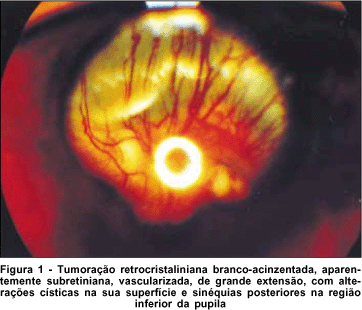
O meduloepitelioma é um tumor intra-ocular congênito originário do epitélio medular primitivo que, por sua vez, é responsável pela formação do epitélio não pigmentado do corpo ciliar. Ocorre geralmente na infância, de forma unilateral, acometendo o corpo ciliar. O objetivo deste trabalho é documentar um caso raro de meduloepitelioma teratóide originário da retina. Paciente de nove anos, feminina, apresentava baixa acuidade visual (AV), estrabismo e leucocoria no olho esquerdo (OE). A AV era de 1,0 no olho direito e movimentos de mão no OE. Foi observada tumoração retrocristaliniana branco-acinzentada no OE, aparentemente subretiniana, vascularizada, de grande extensão, com alterações císticas na sua superfície. Foram realizadas tomografia de crânio e órbitas e ecografia ocular. A paciente foi submetida à enucleação com suspeita clínica de retinoblastoma. Pelo aspecto histopatológico foi feito o diagnóstico de meduloepitelioma teratóide benigno originário da retina. Na maioria dos casos apresentados na literatura o meduloepitelioma tem origem a partir do epitélio não pigmentado do corpo ciliar. No nosso caso, a neoplasia parece ter tido origem a partir da retina, já que os cortes revelaram epitélio do corpo ciliar preservado e não foi reconhecida a estrutura normal da retina. Embora o tumor apresentado neste relato tenha sido classificado como benigno, o fato de ser lesão de grandes proporções e de crescimento aparentemente recente, justifica a conduta cirúrgica empregada. O tratamento do meduloepitelioma deve objetivar a intervenção cirúrgica precoce, na tentativa de se evitar a disseminação extra-ocular.
Keywords: Tumores neuroectodérmicos primitivos; Teratoma; Neoplasias da retina; Retinoblastoma; Criança; Feminino
Abstract
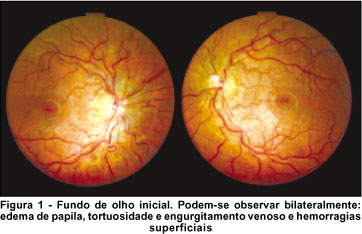
Relato de caso de um paciente masculino de 16 anos de idade com queixa inicial de baixa da acuidade visual e que no exame oftalmológico foi encontrado edema de papila bilateral, que evoluiu para trombose da veia central da retina em ambos os olhos. Na investigação laboratorial, foi feito diagnóstico de um mieloma múltiplo tipo IgA que cursava com síndrome de hiperviscosidade sanguínea, o que explicava o quadro oftalmológico. Após tratamento específico, o paciente apresentou melhora tanto da acuidade visual quanto do aspecto fundoscópico. O achado de oclusão de veia central da retina bilateral pode levar ao diagnóstico de importantes doenças sistêmicas. os achados fundoscópicos podem servir de parâmetro na avaliação do tratamento.
Keywords: Oclusão da veia retiniana; Veia retiniana; Viscosidade sanguínea; Mieloma múltiplo; Relatos de casos
Abstract
OBJETIVO: Descrever caso de descolamento de retina bilateral associado a alterações de comportamento. RESULTADO: Paciente de 62 anos, sexo feminino, apresentou-se com baixa de visão bilateral, progressiva, de 3 meses de duração, associada a alterações de comportamento e agitação psicomotora. Ao exame oftalmológico apresentava acuidade visual de percepção luminosa em olho direito; e conta dedos a 30 cm em olho esquerdo. A biomicroscopia evidenciou reação de câmara anterior; à fundoscopia, apresentava edema e hiperemia do disco óptico bilateralmente, áreas extensas de descolamento de retina seroso, placas sub-retinianas amareladas peripapilares e exsudação sub-retiniana e intra-retiniana em ambos os olhos. O exame sorológico para sífilis foi positivo (FTA-Abs e VDRL). A análise liquórica revelou FTA-Abs e teste de hemaglutinação indireta positivos. Foi feito, então, diagnóstico de neurossífilis, e a paciente foi internada para antibioticoterapia endovenosa, e prednisona oral 40 mg/dia (0,5 mg/kg). Após 2 semanas, a paciente passou a apresentar melhora importante do quadro ocular com reabsorção da exsudação e melhora da acuidade visual. CONCLUSÃO: A sífilis é doença pleomórfica, podendo ter como manifestação ocular uma uveíte difusa associada a descolamento de retina exsudativo bilateral. O envolvimento do sistema nervoso central deve sempre ser considerado e descartado, e o tratamento eficaz da doença pode promover melhora da função visual e diminuir suas seqüelas.
Keywords: Sífilis; Sorodiagnóstico da sífilis; Sífilis; Prednisolona; Descolamento de retina; Uveíte; Reações falso-positivas; Manifestações neurocomportamentais
Abstract
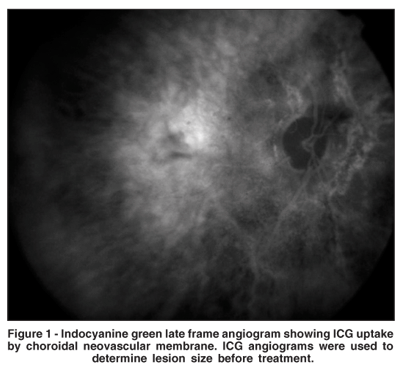
OBJETIVO: Investigar os efeitos da fototrombose mediada por indocianina verde sobre a neovascularização de coróide secundária a estrias angióides. MÉTODOS: Seis olhos de 5 pacientes com média de 70 anos de idade tinham o diagnóstico de neovascularização de coróide secundária a estrias angióides. O tratamento foi indicado para neovascularização de coróide ativa, avaliada pelo vazamento na angiofluoresceinografia e pela presença de fluido intra ou sub-retiniano pela tomografia de coerência óptica. Os pacientes receberam tratamento inicial com indocianina verde, e a seguir foram re-tratados conforme necessário com 3, 6 e 9 meses. Nessas ocasiões avaliava-se o vazamento e a espessura foveal. A angiografia com indocianina verde foi realizada inicialmente e sempre que o re-tratamento era considerado, nos casos em que havia aumento de vazamento pela angiofluoresceinografia nas visitas de seguimento. RESULTADOS: O tempo médio de seguimento foi de 13,3 meses. Todos os olhos atingiram um seguimento de pelo menos 12 meses. Dois olhos foram submetidos a re-tratamento. Três olhos apresentaram melhora e três olhos apresentaram estabilização da acuidade visual. Todos os pacientes apresentaram diminuição final do vazamento e da espessura foveal. CONCLUSÃO: Indocianina verde é procedimento factível para o tratamento de neovascularização de coróide secundária a estrias angióides. A análise das lesões mostrou melhora anatômica na maioria dos casos desta série. Mais estudos são necessários para avaliar os resultados a longo prazo deste tratamento.
Keywords: Estrias angióides; Neovascularização coroidal; Verde de indocianina; Fotoquimioterapia; Agentes fotossensibilizantes; Lasers; Tomografia de coerência óptica
Abstract
Keywords:
Abstract
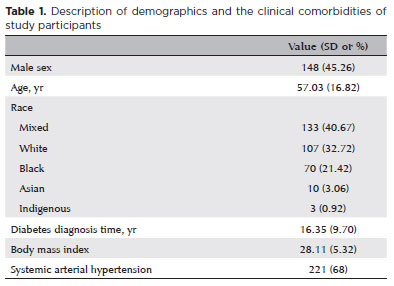
PURPOSE: Diabetic retinopathy screening in low- and middle-income countries is limited by restricted access to specialized care. Portable retinal cameras offer a practical alternative; however, image quality – affected by mydriasis – directly influences the performance of artificial intelligence models. This study evaluated the effect of mydriasis on image gradability and AI-based diabetic retinopathy detection in real-world, resource-limited settings.
METHODS: The proportions of gradable images were compared between mydriatic and non-mydriatic groups. Generalized estimating equations were used to identify factors associated with image gradability, including age, sex, race, diabetes duration, and systemic hypertension. A ResNet-200d model was trained on the mobile Brazilian Ophthalmological dataset and externally validated on both mydriatic and non-mydriatic images. Model performance was evaluated using accuracy, F1 score, area under the curve, and confusion matrix metrics. Sensitivity differences were assessed using the McNemar test, and area under the curves were compared using DeLong's test. The Youden index was used to determine optimal classification thresholds. Agreement between macula- and disc-centered images was analyzed using Cohen's κ.
RESULTS: The mydriatic group demonstrated a higher proportion of gradable images compared with the non-mydriatic group (82.1% vs. 55.6%; p<0.001). In non-mydriatic images, lower gradability was associated with systemic hypertension, older age, male sex, and longer diabetes duration. The AI model achieved better performance in mydriatic images (accuracy, 85.15%; area under the curve, 0.94) than in non-mydriatic images (accuracy, 79.68%; area under the curve, 0.93). The McNemar test showed a significant difference in sensitivity (p=0.0001), whereas DeLong's test revealed no significant difference in area under the curve (p=0.4666). The Youden index indicated that optimal classification thresholds differed based on mydriasis status. Agreement between image fields was moderate to substantial and improved with mydriasis.
CONCLUSION: Mydriasis significantly improves image gradability and enhances AI performance in diabetic retinopathy screening. Nonetheless, in low- and middle-income countries where pharmacologic dilation may be impractical, optimizing model calibration and thresholding for non-mydriatic images is essential to ensure effective AI implementation in real-world clinical environments.
Keywords: Artificial intelligence; Bias; Diabetic retinopathy; Portable camera; Retina
Abstract
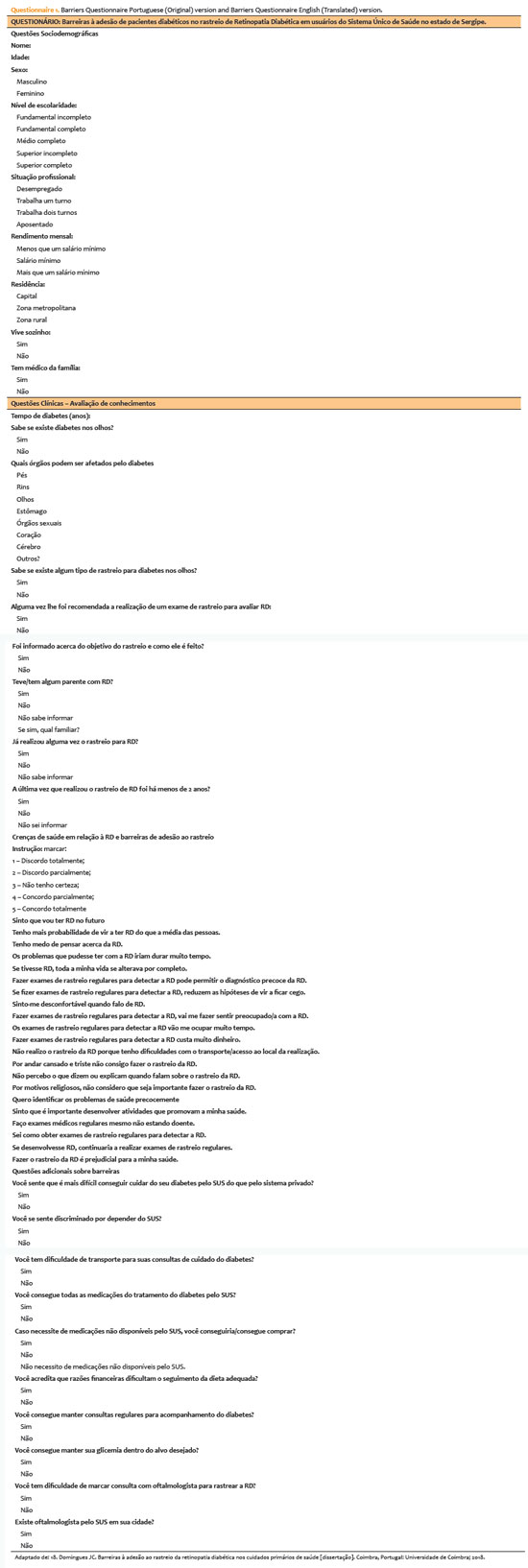
PURPOSE: This study aimed to identify barriers to diabetic retinopathy screening among a socioeconomically vulnerable urban population in northeast Brazil.
METHODS: A cross-sectional study was conducted during a diabetic retinopathy screening campaign at primary healthcare units. Ninety-five patients with diabetes underwent retinal examinations and completed a structured interview. Clinical, demographic, and socioeconomic data were collected.
RESULTS: The study population consisted predominantly of older adults (mean age: 60.7 ± 10.5 years), with a high prevalence of type 2 diabetes (99.0%) and low educational attainment. Most participants were economically inactive (81.1%) and reported low income (83.2%). Diabetic retinopathy and maculopathy were highly prevalent, affecting 50.0% and 22.9% of participants, respectively. Longer duration of diabetes was significantly associated with greater awareness of diabetic retinopathy (p=0.035), higher HbA1c levels (p<0.001), and increased prevalence of diabetic retinopathy (p=0.013) and maculopathy (p=0.002). Notably, 33.3% of participants reported difficulties attending medical appointments for diabetes management. In addition, 78.1% experienced challenges scheduling ophthalmologic evaluations, and 76.3% reported that no ophthalmologist was available in their city through the public healthcare system. Financial constraints also limited adherence to recommended dietary practices (90.4%) and impaired glycemic control, with more than half of participants reporting difficulty maintaining target glucose levels.
CONCLUSION: Major barriers to diabetic retinopathy screening included limited awareness of the importance of screening, financial hardship, and transportation challenges. Targeted educational initiatives and structural interventions such as expanded screening programs incorporating telemedicine and subsidized transportation—may improve screening adherence among vulnerable populations.
Keywords: Diabetic retinopathy; Mass screening; Health services accessibility; Health knowledge, attitudes, practices; Socioeconomic factors
Abstract
PURPOSE: This study aimed to identify barriers to diabetic retinopathy screening among a socioeconomically vulnerable urban population in northeast Brazil.
METHODS: A cross-sectional study was conducted during a diabetic retinopathy screening campaign at primary healthcare units. Ninety-five patients with diabetes underwent retinal examinations and completed a structured interview. Clinical, demographic, and socioeconomic data were collected.
RESULTS: The study population consisted predominantly of older adults (mean age: 60.7 ± 10.5 years), with a high prevalence of type 2 diabetes (99.0%) and low educational attainment. Most participants were economically inactive (81.1%) and reported low income (83.2%). Diabetic retinopathy and maculopathy were highly prevalent, affecting 50.0% and 22.9% of participants, respectively. Longer duration of diabetes was significantly associated with greater awareness of diabetic retinopathy (p=0.035), higher HbA1c levels (p<0.001), and increased prevalence of diabetic retinopathy (p=0.013) and maculopathy (p=0.002). Notably, 33.3% of participants reported difficulties attending medical appointments for diabetes management. In addition, 78.1% experienced challenges scheduling ophthalmologic evaluations, and 76.3% reported that no ophthalmologist was available in their city through the public healthcare system. Financial constraints also limited adherence to recommended dietary practices (90.4%) and impaired glycemic control, with more than half of participants reporting difficulty maintaining target glucose levels.
CONCLUSION: Major barriers to diabetic retinopathy screening included limited awareness of the importance of screening, financial hardship, and transportation challenges. Targeted educational initiatives and structural interventions such as expanded screening programs incorporating telemedicine and subsidized transportation—may improve screening adherence among vulnerable populations.
Keywords: Diabetic retinopathy; Mass screening; Health services accessibility; Health knowledge, attitudes, practices; Socioeconomic factors
Abstract
PURPOSE: This study aimed to identify barriers to diabetic retinopathy screening among a socioeconomically vulnerable urban population in northeast Brazil.
METHODS: A cross-sectional study was conducted during a diabetic retinopathy screening campaign at primary healthcare units. Ninety-five patients with diabetes underwent retinal examinations and completed a structured interview. Clinical, demographic, and socioeconomic data were collected.
RESULTS: The study population consisted predominantly of older adults (mean age: 60.7 ± 10.5 years), with a high prevalence of type 2 diabetes (99.0%) and low educational attainment. Most participants were economically inactive (81.1%) and reported low income (83.2%). Diabetic retinopathy and maculopathy were highly prevalent, affecting 50.0% and 22.9% of participants, respectively. Longer duration of diabetes was significantly associated with greater awareness of diabetic retinopathy (p=0.035), higher HbA1c levels (p<0.001), and increased prevalence of diabetic retinopathy (p=0.013) and maculopathy (p=0.002). Notably, 33.3% of participants reported difficulties attending medical appointments for diabetes management. In addition, 78.1% experienced challenges scheduling ophthalmologic evaluations, and 76.3% reported that no ophthalmologist was available in their city through the public healthcare system. Financial constraints also limited adherence to recommended dietary practices (90.4%) and impaired glycemic control, with more than half of participants reporting difficulty maintaining target glucose levels.
CONCLUSION: Major barriers to diabetic retinopathy screening included limited awareness of the importance of screening, financial hardship, and transportation challenges. Targeted educational initiatives and structural interventions such as expanded screening programs incorporating telemedicine and subsidized transportation—may improve screening adherence among vulnerable populations.
Keywords: Diabetic retinopathy; Mass screening; Health services accessibility; Health knowledge, attitudes, practices; Socioeconomic factors
Abstract
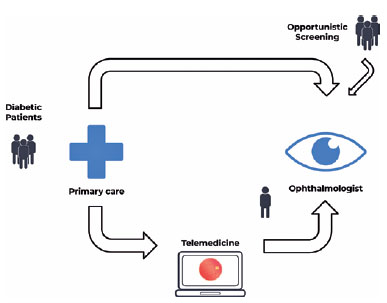
PURPOSE: Timely screening and treatment are essential for preventing diabetic retinopathy blindness. Improving screening workflows can reduce waiting times for specialist evaluation and thus enhance patient outcomes. This study assessed different screening approaches in a Brazilian public healthcare setting.
METHODS: This retrospective study evaluated a telemedicine-based diabetic retinopathy screening implemented during the COVID-19 pandemic and compared it with in-person strategies. The evaluation was conducted from the perspective of a specialized referral center in an urban area of Central-West Brazil. In the telemedicine approach, a trained technician would capture retinal images by using a handheld camera. These images were sent to specialists for remote evaluation. Patient variables, including age, gender, duration of diabetes diagnosis, diabetes treatment, comorbidities, and waiting time, were analyzed and compared.
RESULTS: In total, 437 patients with diabetes mellitus were included in the study (mean age: 62.5 ± 11.0 years, female: 61.7%, mean diabetes duration: 15.3 ± 9.7 years, insulin users: 67.8%). In the in-person assessment group, the average waiting time between primary care referral and specialist evaluation was 292.3 ± 213.9 days, and the referral rate was 73.29%. In the telemedicine group, the average waiting time was 158.8 ± 192.4 days, and the referral rate was 29.38%. The telemedicine approach significantly reduced the waiting time (p<0.001) and significantly lowered the referral rate (p<0.001).
CONCLUSION: The telemedicine approach significantly reduced the waiting time for specialist evaluation in a real-world setting. Employing portable retinal cameras may address the burden of diabetic retinopathy, especially in resource-limited settings.
Keywords: Telemedicine/methods; Diabetic retinopathy; Diagnostic screening programs; Vision screening; Practice patterns, physicians

ABO is licensed under a Creative Commons Attribution-NonComercial 4.0 Internacional.

About
Issues
Editorial Board
Submission
Official publication of Conselho Brasileiro de Oftalmologia
Rua Casa do Ator, 1.117 - 2º andar - CEP: 04546-004
São Paulo - SP, Brazil
Phone: +55 11 3266-4000