Arq. Bras. Oftalmol. 2021;84 (4 )
:311-315
| DOI: 10.5935/0004-2749.20210044
Abstract
OBJETIVO: Portadores de catarata podem apresentar concomitantemente obstrução do ducto lacrimo-nasal (DLN), com risco de desenvolver endoftalmite no pós-operatório da facectomia. O objetivo do presente estudo é apresentar as percepções dos cirurgiões de catarata sobre a propedêutica e a conduta frente a pacientes com obstrução do ducto lacrimo-nasal concomitante com catarata.
MÉTODOS: Trata-se de uma pesquisa baseada em um questionário envolvendo cirurgiões brasileiros de catarata, realizado no período de março a abril de 2018. Foram levantados dados sobre o perfil dos participantes, o tempo e a experiencia da prática oftalmológica, o treinamento prévio para diagnóstico e tratamento da obstrução do ducto lacrimo-nasal e os conhecimentos de endoftalmite após cirurgia de catarata. Todos os dados foram inseridos em planilha Excel e analisados de acordo com a frequência de ocorrência.
RESULTADOS: Noventa e um oftalmologistas responderam ao questionário. A maioria (63,7%) deles realiza cirurgias de catarata há mais de 10 anos e a maioria (84,6%) recebeu treinamento para diagnóstico e tratamento da obstrução do ducto lacrimo-nasal durante o curso de residência médica. A pesquisa da obstrução crônica do ducto lacrimo-nasal no pré-operatório da catarata é feita pelo teste do refluxo de secreção pelos pontos lacrimais (53,8%) ou por irrigação das vias lacrimais (23,1%). A obstrução do ducto lacrimo-nasal é tratada com colírios antibióticos por 47,2% dos respondentes. Para os portadores de obstrução do ducto lacrimo-nasal , 78% indicam a desobstrução das vias lacrimais previamente à facectoma, aguardando de 4 a 6 semanas para tal. O procedimento de escolha para tratar a obstrução do ducto lacrimo-nasal antes da facectomia é a dacriocistorrinostomia (88,4%). A necessidade de um protocolo para auxiliar na detecção e tratamento da obstrução do ducto lacrimo-nasal em portadores de catarata é reconhecida pela maioria dos participantes deste estudo.
CONLUSÃO: É necessário melhorar a propedêutica e o manejo da catarata em portador de obstrução do ducto lacrimo-nasal porque esse é um fator de risco para endoftalmite.
Keywords: Catarata; Extração de catarata; Endoftalmite; Obstrução dos ductos lacrimais; Dacriocistite; Intervenção baseada em internet; Inquéritos e questionários
Arq. Bras. Oftalmol. 2020;83 (4 )
:294-298
| DOI: 10.5935/0004-2749.20200050
Abstract
Objetivo: Avaliar os resultados da destreza da microcirurgia de duas avaliações sequenciais de treinamento usando a tecnologia de realidade virtual.
Métodos: Estudo transversal multicêntrico em que todos os candidatos que foram aceitos como residentes de primeiro ano em uma de seis instituições de ensino de oftalmologia. Os residentes foram submetidos a duas séries idênticas de testes de destreza padronizados e reprodutíveis usando equipamento de realidade virtual (Eyesi®): “sequência 1” e “sequência 2”. Cada sequência consistiu em 5 níveis de dificuldade que foram avaliados usando um sistema de pontuação proprietário. Os dados foram testados quanto à normalidade utilizando o teste de Shapiro-Wilk. As diferenças entre os testes nas sequências 1 e 2 foram avaliadas com o teste de Wilcoxon signed-rank.
Resultados: Os dados não seguiram uma distribuição normal. Houve melhora da sequência 1 em todos os testes (todos os valores de p<0,05). A soma de todas as pontuações (pontuação total) melhorou da sequência 1 (mediana= 152,50) para a sequência 2 (mediana= 256,00; p<0.001). Não houve correlação entre os valores da sequência delta e as pontuações médias.
Conclusão: Duas avaliações sequenciais de treinamento utilizando a tecnologia de realidade virtual mostraram melhora relevante nas quantificações da destreza da microcirurgia. Essas informações devem ser consideradas se abordagens de realidade virtual forem utilizadas para fins de teste, pois a experiência prévia pode levar a melhores resultados.
Keywords: Destreza motora; Realidade virtual; Competência clínica; Procedimentos cirúrgicos oftalmológicos/educação
Arq. Bras. Oftalmol. 2026;89 (1 )
:1-5
| DOI: 10.5935/0004-2749.2025-0045
Abstract
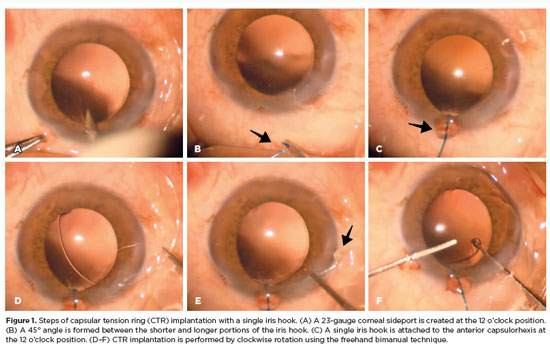
PURPOSE: To evaluate the effect of using a single iris retractor, affixed to the anterior capsulorhexis at the 12 o'clock position, on the ease of capsular tension ring implantation.
METHODS: This prospective comparative study comprised 37 patients with zonular weakness attributed to pseudoexfoliation syndrome who underwent capsular tension ring implantation during cataract surgery. In Group 1, a single iris retractor was inserted into the anterior capsulorhexis at the 12 o'clock position. Group 2 did not receive this intervention. Zonular weakness was graded on a scale of 1–5, and the subjective difficulty of capsular tension ring implantation was categorized as easy, medium, or difficult.
RESULTS: Group 1 and 2 comprised 20 and 17 patients, respectively. There were no significant differences between the groups in age, sex distribution, and presence of glaucoma (p=0.53, p=0.28, and p=1.00, respectively). The mean zonular weakness score was significantly higher in Group 1 (3.35 ± 0.45) than in Group 2 (2.71 ± 0.59; p=0.02). Capsular tension ring implantation was significantly easier in the iris retractor group (p<0.001).
CONCLUSIONS: Placement of a single iris retractor attached to the anterior capsulorhexis at the 12 o'clock position may facilitate easier capsular tension ring implantation, even in patients with greater zonular weakness. This technique could reduce the risk of capsular tension ring displacement into the iridocorneal angle or ciliary sulcus.
Keywords: Capsular tension ring; Cataract; Iris hook; Pseudoexfoliation syndrome; Zonular weakness; Cataract extraction; Phacoemulsification; Capsulorhexis.
Arq. Bras. Oftalmol. 2025;88 (6 )
:1-9
| DOI: 10.5935/0004-2749.2024-0381
Abstract
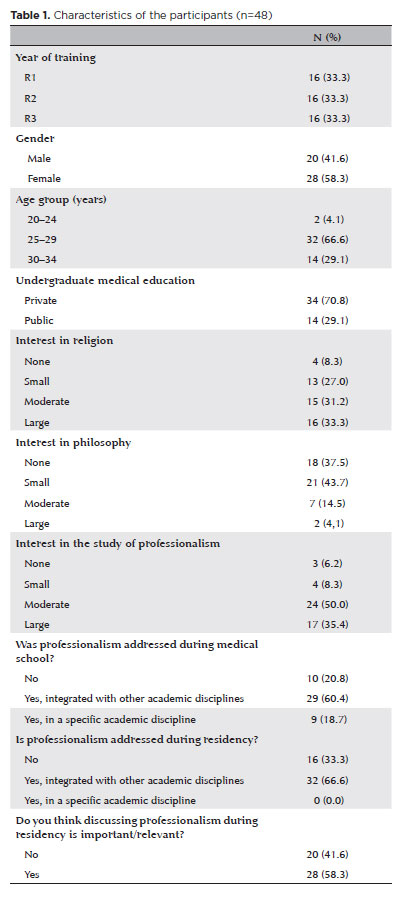
PURPOSE: This study aimed to examine factors related to the professionalism of ophthalmology residents.
METHODS: A cross-sectional study was carried out involving 48 ophthalmology residents in Brazil. Professionalism was assessed using the professionalism mini-evaluation exercise, completed by both preceptors and residents, and the Pennsylvania State College of Medicine Professionalism Questionnaire, completed by the residents. The association between the professionalism score assigned by the preceptor through the professionalism mini-evaluation exercise and various sociodemographic and educational variables was assessed. The correlation between the residents’ self-assessment across both instruments and the preceptor’s assessments was measured using Spearman’s Rho.
RESULTS: All 48 residents were included, with equal representation across the 3 years of residency. The majority were female (58.3%) and between 25 and 29 years old (66.7%). The average professionalism score on the professionalism mini-evaluation exercise given by the preceptors was 3.0 (75%). A significant association was found between the year of training and the score in the doctor-patient relationship domain, with first-year residents showing lower scores (p=0.002). Male residents had higher scores in the “Interprofessional” domain (p=0.031). Graduates from private medical schools scored higher in both the “doctor-patient relationship” (p=0.015) and “reflective skills” (p=0.033) domains. Lower interest in professionalism was linked to lower scores in the “Interprofessional relationships” (p=0.033) and “time management” (p=0.003) domains. A strong correlation was observed between preceptor’s professionalism mini-evaluation exercise scores and residents’ self-assessed professionalism mini-evaluation exercise scores (r=0.917). However, the correlation between the self-assessed professionalism mini-evaluation exercise and the Pennsylvania questionnaire scores was weak (r=0.226).
CONCLUSION: Professionalism scores among ophthalmology residents were associated with year of training, gender, type of undergraduate education, and level of interest in the topic.
Keywords: Internship and residency; Ophthalmology; Professional competence; Education, professional; Physician-patient relations; Surveys and questionnaires
Arq. Bras. Oftalmol. 2025;88 (4 )
:1-8
| DOI: 10.5935/0004-2749.2024-0151
Abstract
PURPOSE: To compare the incidence rates of complications following pediatric cataract surgery between the limbal and pars plana approaches.
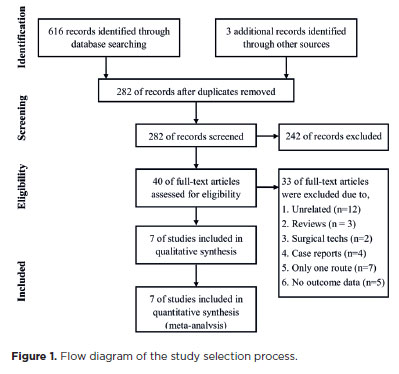
METHODS: PubMed, EMBASE, Web of Science, Scopus, Cochrane Library, and ClinicalTrials.gov were systematically searched for studies comparing the two surgical approaches. We pooled the incidence rates of postoperative complications using a random-effects model.
RESULTS: Seven studies comprising 375 eyes from 260 patients were included. No significant differences in complication rates were observed between the limbal and pars plana approaches. The pooled incidence rates (95% confidence Interval) of postoperative visual axis opacity (VAO), VAO treated with laser or surgery, secondary glaucoma, wound leakage, corneal edema, anterior chamber reaction, posterior iris synechiae, capsular phimosis, intraocular lens dislocation, posterior capsular rupture, and intravitreal lens fragmentation were 4.7% (0.8%10.8%), 3.9% (1.0%-8.1%) , 2.8% (0%-11.4%), 0 (0%-1.3%), 2.9% (0%-11.8%), 5.6% (0.1%-16.5%), 2.4% (0%-8.5%), 3.8% (0.6%-8.9%), 2.2% (0%-6.4%), 9.2% (4.1%-15.8%) and 1.3% (0%-6.3%), respectively. Both surgical approaches demonstrated improved visual acuity postoperatively.
CONCLUSIONS: Pediatric cataract surgery, performed via the limbal or pars plana approach, is effective and safe, with a low incidence of complications when conducted by trained surgeons. Neither method demonstrated a significant difference in the visual acuity improvement or complication rates.
Keywords: Pediatric cataract surgery; Postoperative complications; Limbal route; Pars plana routes; Meta-analysis
Arq. Bras. Oftalmol. 2025;88 (6 )
:1-8
| DOI: 10.5935/0004-2749.2024-0394
Abstract
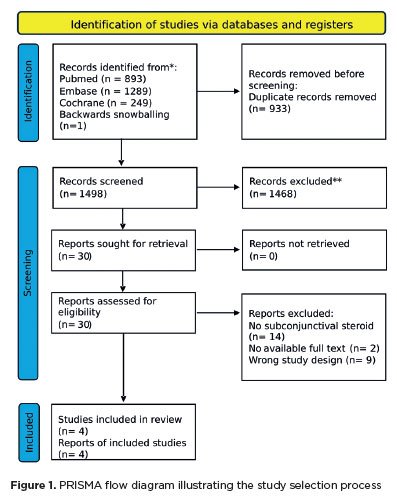
The advantages and disadvantages of using perioperative subconjunctival steroid injections in dropless cataract surgery continue to be debated. A systematic review of PubMed, EMBASE, and the Cochrane Central database identified five studies—two randomized controlled trials and three non-randomized studies—encompassing 70,751 eyes. Among these, 12,319 eyes (17.4%) received subconjunctival steroid injections, while 58,432 eyes (82.6%) were managed with topical steroids. The Cochrane Collaboration’s RoB 2 tool was applied for bias assessments in randomized controlled trials, and heterogeneity was assessed using the I² statistics. No statistically significant differences were found between the two groups regarding macular edema (p=0.249), visual acuity (p=0.73), or laser flare count (p=0.45). Both subconjunctival injections and topical steroids demonstrated comparable efficacy and safety in controlling postoperative inflammation after cataract surgery. Additional research is warranted to validate these conclusions.
Keywords: Cataract extraction; Phacoemulsification; Lens implantation, intraocular; Postoperative care; Intravitreal injections; Anti-inflammatory agents, non-steroidal/administration & dosage; Glucocorticoids; Triamcinolone acetonide; Research design; Randomiz
Arq. Bras. Oftalmol. 2024;87 (3 )
:1-7
| DOI: 10.5935/0004-2749.2021-0514
Abstract
Objetivo: Comparar os achados oculares em longo prazo de crianças que se submeteram à cirurgia de catarata congênita antes dos dois anos de idade e receberam uma injeção intracameral de triancinolona no intraoperatório ou usaram prednisolona oral no pós-operatório para modular a inflamação ocular.
Métodos: Neste estudo prospectivo de coorte, todos os pacientes que participaram de um ensaio clínico anterior, que analisou os resultados cirúrgicos de 1 ano da cirurgia de catarata congênita usando triancinolona intracameral (Grupo de Estudo) ou prednisolona oral (Grupo Controle), eram elegíveis para participar. Os prontuários médicos dos pacientes foram revisados e as crianças foram submetidas a um exame oftalmológico completo no acompanhamento final. As principais medidas de desfecho foram: achados biomicroscópicos, pressão intraocular, espessura central da córnea, a necessidade de intervenções cirúrgicas adicionais e achados compatíveis com glaucoma.
Resultados: Vinte e seis olhos (26 pacientes) foram incluídos (Grupo de Estudo = 11 olhos; Grupo de Controle = 15 olhos). O seguimento médio foi de 8,2 ± 1,2 anos e 8,1 ± 1,7 anos nos Grupos de Estudo e Controle, respectivamente (p=0,82). Todos os olhos apresentavam lente intraocular centrada. Não houve diferença estatisticamente significativa entre os grupos com relação à presença de sinéquia posterior (p=0,56), pressão intraocular (p=0,49) ou espessura central da córnea (p=0,21). Nenhum dos olhos preencheu os critérios diagnósticos para glaucoma, apresentou opacificação secundária do eixo visual ou foi reoperado.
Conclusão: Os achados oculares em longo prazo de crianças que se submeteram à cirurgia de catarata congênita e receberam uma injeção intracameral de triancinolona no intraoperatório foram semelhantes aos que usaram prednisolona oral no pós-operatório para modular a inflamação ocular, sugerindo que a triancinolona intracameral pode substituir a prednisolona oral na cirurgia de catarata congênita, facilitando o tratamento pós-operatório e a adesão ao mesmo.
Keywords: Catarata congênita; Triancinolona; Prednisolona; Esteroides; Complicações pós-operatórias; Criança
Arq. Bras. Oftalmol. 2024;87 (6 )
:1-5
| DOI: 10.5935/0004-2749.2021-0482
Abstract
OBJETIVO: Nos últimos 20 anos, o número de escolas médicas no Brasil aumentou, mas as vagas para especialização em Oftalmologia não acompanharam a demanda crescente. Este estudo quer estimar a demanda por especialização e avaliar a oferta de oportunidades de aprendizado em Oftalmologia.
MÉTODOS: Estudo epidemiológico com pesquisa em banco de dados provenientes do Ministério da Educação e Conselho Brasileiro de Oftalmologia. Estes dados foram checados através de 120 editais publicados pelos serviços de Residência em 2021.
RESULTADOS: De 2002 a 2021, o número de vagas em faculdades de Medicina aumentou 370%, enquanto o número de vagas certificadas de especialização em Oftalmologia aumentou 64%. Houve um desalinhamento de 11.4% entre os dados do Conselho Brasileiro de Oftalmologia e do Ministério da Educação.
CONCLUSÃO: A proporção de graduados em Medicina aumentou muito mais do que a oferta de oportunidades de especialização em Oftalmologia, o impacto disto na busca por vagas de especialização não acreditadas é desconhecido, políticas de monitoramento das vagas de especialização em Oftalmologia devem ser estabelecidas.
Keywords: Oftalmologia; Ensino; Educação médica; Especialização
Arq. Bras. Oftalmol. 2025;88 (5 )
:1-8
| DOI: 10.5935/0004-2749.2024-0328
Abstract
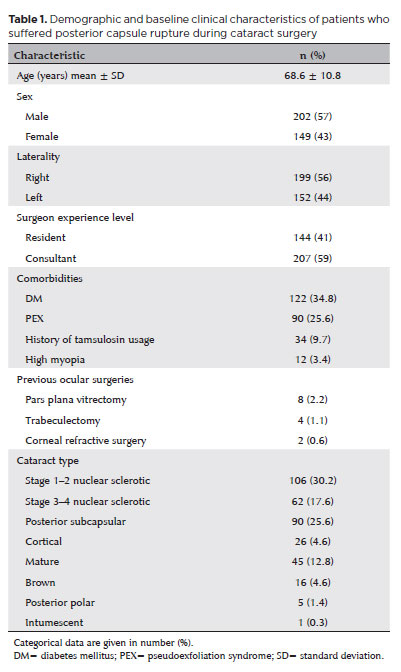
PURPOSE: Posterior capsule rupture is defined as an intraoperative posterior capsule tear resulting in vitreous loss. This study aimed to analyze the clinical characteristics, preoperative risk factors, intraoperative management strategies, and postoperative complications associated with posterior capsule rupture during phacoemulsification surgery.
METHODS: This was a retrospective observational cohort study of the medical records for 25,224 phacoemulsification surgeries performed at our tertiary eye care center between 2017 and 2022. We collected and collated the demographic characteristics and clinical findings of the patients in our cohort. Intraoperative management strategies and postoperative outcomes over a 1-year followup period were also recorded.
RESULTS: Posterior capsule rupture occurred in 351 eyes (351 patients), giving an overall posterior capsule rupture rate of 1.3%. The mean patient age was 68.6 ± 10.8 years. Pseudoexfoliation syndrome, mature cataracts, brown cataracts, and surgery performed by a resident were identified as risk factors for posterior capsule rupture (p<0.05 for each; the risk ratios were 2.70, 2.15, 2.44, 1.34, respectively). The most common intraoperative complications were dislocated lens fragments in the vitreous (8%) and iris damage (7.1%). The mean best-corrected visual acuity improved from 1.31 ± 0.84 (logMAR) postoperatively to 0.51 ± 0.56 at the end of the 1-year follow-up period (p<0.001). Corneal edema (55.6%) and elevated intraocular pressure (33.3%) were the most common early postoperative complications. Persistently elevated intraocular pressure (11.1%) and cystoid macular edema (5.1%) were the most common late postoperative complications.
CONCLUSION: Posterior capsule rupture is a common complication of phacoemulsification surgery that requires prolonged postoperative follow-up and a multidisciplinary approach. Despite the increased incidence of complications when rupture occurs, appropriate intraoperative and postoperative management can lead to satisfactory visual outcomes.
Keywords: Cataract extraction; Phacoemulsification; Posterior capsule rupture; Corneal edema; Risk factors; Postoperative complications; Intraoperative complications
Arq. Bras. Oftalmol. 2025;88 (5 )
:1-7
| DOI: 10.5935/0004-2749.2024-0368
Abstract
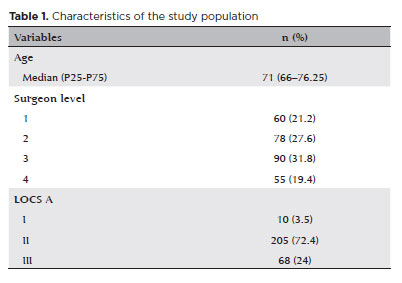
PURPOSE: To compare endothelial corneal cell changes following cataract surgery performed by phacoemulsification with intraocular lens implantation, conducted by surgeons with varying levels of experience.
METHODS: Two hundred and eighty-three eyes diagnosed with cataract were included. Lens opacity was classified into three categories (I, II, and III). Surgeons were categorized into four experience levels (1, 2, 3, and 4), based on years of practice and lifetime surgeries performed. Corneal endothelial characteristics were assessed using non-contact specular microscopy, with measurements taken before surgery and 30-60 days post-surgery.
RESULTS: Pre- and postoperative endothelial analysis showed no significant differences between surgeon levels regarding visual acuity achieved, corneal thickness, and endothelial hexagonality. However, the central endothelial cell density index showed a significantly greater reduction among level 1 surgeons (p=0.026). Grade II cataracts exhibited significant variations in the central endothelial cell density (p=0.011) and average cell size, with level 1 surgeons showing the largest increases (p=0.024).
CONCLUSIONS: The analysis revealed significant differences in visual acuity and endothelial indices between surgeon experience levels, with less experienced surgeons showing greater variations and poorer performance. Clinical protocols should consider these data to establish safer training protocols.
Keywords: Cataract extraction; Phacoemulsification; Endothelium; corneal; Lens implantation, intraocular; Visual acuity; Internship and residency; Surgeons
Arq. Bras. Oftalmol. 2025;88 (3 )
:1-5
| DOI: 10.5935/0004-2749.2024-0084
Abstract
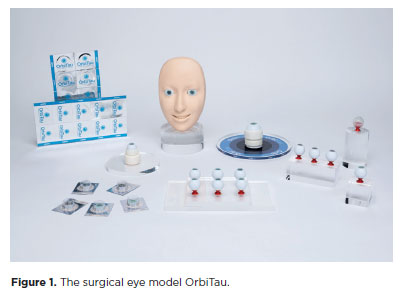
PURPOSE: The OrbiTau surgical simulator is a synthetic eye model developed to enhance cataract surgical training. Herein, we aimed to describe the perspectives of Harvard’s Ophthalmology faculty and residents regarding the effectiveness of OrbiTau.
METHODS: A cross-sectional study was conducted in which 11 surgeons from the Massachusetts Eye and Ear Infirmary, with prior experience utilizing simulated phacoemulsification platforms, conducted cataract surgery with the OrbiTau. Subsequently, they completed a satisfaction questionnaire using the Likert scale.
RESULTS: Regarding the various OrbiTau components, 90.90% of the participants reported that the OrbiTau lens capsule was comparable to that of the human lens during capsulotomy. Furthermore, 72.72% of the participants found that the OrbiTau lens consistency was analogous to that of the human lens nucleus. Approximately 63.63% of the participants reported that the model’s posterior lens capsule resembled the native posterior capsule, and 72.72% of the participants noted that the model’s red reflex was similar to that of the dilated human pupil. Most participants believed that the OrbiTau was easier to use and more realistic than other commercially available simulators.
CONCLUSION: Our single-institution survey of the Orbitau demonstrated that this model realistically replicates ocular structures and may be a viable option for cataract surgery training.
Keywords: Cataract extraction/education; Simulation training/methods; Ophthalmology/education; Phacoemulsification/education; Ophthalmologists/education; Surgeons/education; High fidelity simulation training
Arq. Bras. Oftalmol. 2024;87 (3 )
:1-5
| DOI: 10.5935/0004-2749.2023-0038
Abstract
PURPOSE: To assess the effect of the coronavirus disease 2019 (COVID-19) pandemic on cataract surgery by residents who had mandatory surgical simulator training during residency.
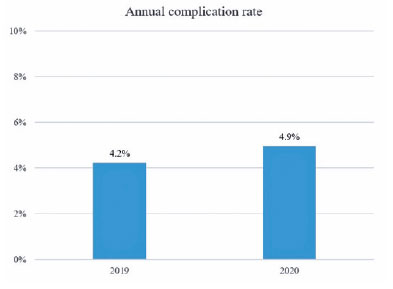
METHODS: In this retrospective, observational analytical study, the total number of cataract surgeries and surgical complications by all senior residents of 2019 (2019 class; prepandemic) and 2020 (2020 class; affected by the reduced number of elective surgeries due to the COVID-19 pandemic) were collected and compared. All residents had routine mandatory cataract surgery training on a virtual surgical simulator during residency. The total score obtained by these residents on cataract challenges of the surgical simulator was also evaluated.
RESULTS: The 2020 and 2019 classes performed 1275 and 2561 cataract surgeries, respectively. This revealed a reduction of 50.2% in the total number of procedures performed by the 2020 class because of the pandemic. The incidence of surgical complications was not statistically different between the two groups (4.2% in the 2019 class and 4.9% in the 2020 class; p=0.314). Both groups also did not differ in their mean scores on the simulator’s cataract challenges (p<0.696).
CONCLUSION: Despite the reduction of 50.2% in the total number of cataract surgeries performed by senior residents of 2020 during the COVID-19 pandemic, the incidence of surgical complications did not increase. This suggests that surgical simulator training during residency mitigated the negative effects of the reduced surgical volume during the pandemic.
Keywords: COVID-19; Pandemics; Cataract extraction/education; Internship and residency/methods; Simulation training/methods; Phacoemulsification/education; Surgery, computer-assisted; Computer simulation; Clinical competence; Ophthalmology/education


 ABO is licensed under a Creative Commons Attribution-NonComercial 4.0 Internacional.


05-fig01.jpg)
12-fig01tb.jpg)
12-tab01.jpg)
15-fig01.jpg)
06-fig01.jpg)