Showing of 1 until 15 from 105 result(s)
Search for: Intraocular pressure; Exercise; Exertion; Weight lifting; Ocular hypotension
Abstract
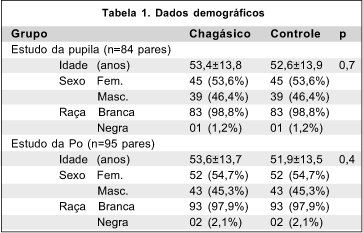
Objetivo:Comprovar na região endêmica de Água Comprida (MG) a maior incidência de anisocoria e menor pressão intra-ocular (Po) em chagásicos anteriormente observados em outra região endêmica da doença de Chagas (Mambaí, GO). Material e métodos: Em estudo prospectivo, mascarado e pareado quanto a idade, sexo e cor, foram analisados 190 pacientes (95 pares de chagásicos e não-chagásicos). Em 84 pares, realizou-se estudo fotográfico da pupila para determinação do diâmetro pupilar e freqüências de anisocoria (diferença >0,3 mm). Em 95 pares, foi estudada a pressão intra-ocular entre chagásicos e não-chagásicos. Resultados: No grupo chagásicos foram observados 25 casos de anisocoria (29,8%) e nos não-chagásicos, 10 ocorrências (11,9%), diferença essa estatisticamente significante (p = 0,007). Não houve diferenças estatisticamente significantes para o diâmetro pupilar entre os grupos tanto para OD quanto para OE. Os chagásicos mostraram uma Po média de 11,3±2,5 mmHg em OD e de 11,3±2,4 mmHg em OE e os não-chagásicos uma Po de 13,1±2,6 e 13,1±2,5 mmHg respectivamente, diferenças essas estatisticamente significantes entre chagásicos e não-chagásicos tanto para OD quanto para OE (pOD=pOE <0,0001). Tais diferenças mantiveram-se quando a Po foi comparada quanto ao sexo (feminino p =0,002, masculino p= 0,003). Conclusão: Os resultados comprovam a maior freqüência de anisocoria e menores valores de pressão intra-ocular em pacientes portadores da forma crônica da doença de Chagas.
Keywords: Anisocoria; Pressão intra-ocular, alterações; Doença de Chagas
Abstract
Objetivo: Avaliar a pressão intraocular e as alterações da amplitude do pulso ocular em crianças e adolescentes obesos, usando tonometria de contorno dinâmico.
Métodos: Um total de 137 casos, sendo 64 crianças obesas e 73 crianças saudáveis, pareadas por idade e sexo, compôs a população estudada neste estudo transversal. Crianças com valores de índice de massa corporal superior ao percentil de 95% para seu sexo e idade foram consideradas obesas. Os participantes foram submetidos a exames oftalmológicos detalhados, incluindo a medição da pressão intraocular com um tonômetro de contorno dinâmico Pascal. As relações entre a pressão intraocular e as medidas da amplitude do pulso ocular com a idade, sexo, obesidade, estado puberal e resistência à insulina foram investigadas.
Resultados: A amplitude do pulso ocular bilateral foi menor no grupo obeso do que no grupo controle saudável (p<0,001), enquanto a pressão intraocular foi maior (p<0,001). Não foi observada nenhuma relação significativa entre a resistência à insulina e a pressão intraocular ou a amplitude de pulso ocular (p>0,005). Não foi determinada nenhuma correlação entre a pressão arterial sistólica e diastólica, a avaliação do modelo de homeostase para resistência à insulina ou os níveis de lipídios sanguíneos e a pressão intraocular e a amplitude de pulso ocular.
Conclusão: Os resultados mostraram que a obesidade causou um aumento da pressão intraocular e uma diminuição da amplitude do pulso ocular em crianças e adolescentes, independentemente da resistência à insulina. São necessários agora estudos prospectivos envolvendo o seguimento de longo prazo dos casos, para avaliar os prováveis efeitos adversos desses achados oculares observados em crianças obesas.
Keywords: Tanometria ocular; Pressão intraocular; Obesidade; Criança; Adolescente.
Abstract
Objetivo: Examinar o efeito de infiltrados sub-epiteliais corneanos nas propriedades biomecânicas da córnea após ceratoconjuntivite epidêmica, em comparação com controles saudáveis.
Métodos: Este estudo transversal incluiu pacientes consecutivos com infiltrados sub-epiteliais corneanos bilaterais após ceratoconjuntivite epidêmica e controles saudáveis. Foram medidas a melhor acuidade visual corrigida, uma pontuação do infiltrado sub-epitelial da córnea, a escala de graduação de Fantes e a espessura central da córnea. A histerese da córnea, o fator de resistência da córnea, a pressão intraocular correlacionada à tonometria de Goldmann e a pressão intraocular compensada da córnea foram avaliados com o Ocular Response Analyzer.
Resultados: Este estudo incluiu 66 olhos de 33 pacientes com infiltrados corneanos sub-epiteliais após ceratoconjuntivite epidêmica e selecionou aleatoriamente 37 olhos de 37 voluntários saudáveis. As pontuações médias da escala de Fantes e dos infiltrados sub-epiteliais corneanos nos primeiros olhos acometidos foram respectivamente de 1,8 ± 0,8 e 2,9 ± 1,3. Nos olhos contralaterais, foram respectivamente de 1,3 ± 1,1 e 1,9 ± 1,7 (p=0,009 e p=0,002, respectivamente). O primeiro e o segundo olhos envolvidos tinham córneas significativamente mais finas (respectivamente 526,1 ± 28,1 µm; p=0,005 e 523,4 ± 38,1 µm; p=0,044) em comparação com os controles saudáveis (557,0 ± 38,1 µm). Embora a acuidade visual melhor corrigida tenha mostrado uma correlação positiva com o fator de resistência da córnea (r=0,363, p=0,045) e com a histerese da córnea (r=0,414, p=0,021), a pontuação dos infiltrados sub-epiteliais corneanos mostrou uma correlação negativa com a pressão intraocular correlacionada à tonometria de Goldmann (r=-0,479, p=0,006) e com a pressão intraocular compensada da córnea (r=-0,413, p=0,021).
Conclusão: Os olhos com infiltrados corneanos sub-epiteliais tinham córneas significativamente mais finas em comparação com os controles saudáveis. Ao se medirem os valores de pressão intraocular em pacientes com infiltrados sub-epiteliais corneanos, deve-se levar em consideração tanto as correlações positivas do fator de resistência da córnea e da histerese da córnea com a melhor acuidade visual corrigida quanto as correlações negativas da pressão intraocular correlacionada à tonometria de Goldmann e da pressão intraocular compensada da córnea com a pontuação do infiltrado sub-epitelial da córnea.
Keywords: Ceratoconjuntivite; Pressão intraocular; Epitélio corneano; Corticosteroides; Ciclosporina;Tonometria ocular

Abstract
Objetivo: Utilizar aprendizado de máquina para predizer o risco de picos de pressão intraocular às 6 AM em pacientes com glaucoma primário de ângulo aberto e suspeitos.
Métodos: Esse estudo observacional transversal incluiu 98 olhos de 98 pacientes submetidos à curva de 24 horas de pressão intraocular (incluindo as medidas às 6 AM). A curva diurna de pressão intraocular foi definida como uma série de três medidas da curva de 24 horas de pressão intraocular às 8 AM, às 9 AM e às 11 AM. Duas novas variáveis foram apresentadas: inclinação e concavidade. A inclinação da curva às 8 AM foi calculada como a diferença entre pressão intraocular às 9 AM e 8 AM e reflete a variação da pressão intraocular na primeira hora. A concavidade da curva foi calculada como a diferença entre as inclinações às 9 AM e às 8 AM e pode ser para cima ou para baixo. Uma árvore de classificação foi usada para determinar um algoritmo multivariado a partir das medidas da curva diurna para prever o risco de pressão intraocular elevada às 6 AM.
Resultados: Quarenta e nove (50%) olhos apresentaram pressão intraocular às 6 AM >21 mmHg e a mediana do pico de pressão intraocularPIO foi 26 mmHg. Os melhores preditores de pressão intraocular às 6 AM >21 mmHg foram a pressão intraocular às 8 AM e a concavidade. O modelo proposto apresentou uma sensibilidade de 100% e uma especificidade de 86%, com uma acurácia de 93%.
Conclusões: A abordagem de aprendizado de máquina foi capaz de prever o risco de picos de pressão intraocular às 6 AM com uma boa acurácia. Essa nova abordagem para a curva diurna de pressão intraocular pode se tornar uma ferramenta amplamente utilizada na prática clínica e a indicação da curva de 24 horas de pressão intraocular pode ser racionalizada de acordo com a estratificação de risco.
Keywords: Glaucoma; Glaucoma de ângulo aberto; Suspeita de glaucoma; Pressão intraocular; Aprendizado de máquina
Abstract
OBJETIVO: Glaucoma é a principal causa de cegueira irreversível no mundo. O pico da pressão intraocular é um dos principais fatores de risco para progressão do glaucoma, e o controle pressórico ainda é o único tratamento efetivo para todas as formas de glaucoma. O objetivo principal deste estudo é comparar a redução basal e do pico da pressão intraocular, obtidas através do Teste de Sobrecarga Hídrica, entre os dois olhos dos mesmos pacientes utilizando latanoprosta 0,005% em um olho e submetidos à aplicação de trabeculoplastia a laser seletiva no olho contralateral.
MÉTODOS: Este é um estudo prospectivo, intervencionista, longitudinal e randomizado. Trinta pacientes consecutivos, glaucomatosos, com pressão intraocular controlada em uso de monoterapia com latanoprosta, foram recrutados de um único centro oftalmológico. Os olhos dos pacientes foram randomizados e um olho foi selecionado para tratamento com trabeculoplastia a laser seletiva e olho contralateral tratado com colírio de latanoprosta 0,005%. Foram avaliados a pressão intraocular basal e pico de pressão intraocular um mês (Teste de Sobrecarga Hídrica 2) e seis meses (Teste de Sobrecarga Hídrica 3) após tratamento.
RESULTADOS: Não houve diferença estatística entre a pressão intraocular pré washout entre os olhos randomizados para trabeculoplastia a laser seletiva e latanoprosta, 13,6 ± 2,1 e 13,3 ± 1,8 mmHg, respectivamente (p=0,182). Em relação à pressão intraocular basal, não houve diferença estatística entre os grupos, tanto no Teste de Sobrecarga Hídrica 2 (p=0,689) e Teste de Sobrecarga Hídrica 3 (p=0,06). Não houve diferença estatística em relação ao pico de pressão intraocular entre os grupos trabeculoplastia a laser seletiva e latanoprosta, no Teste de Sobrecarga Hídrica 2 (p=0,771) e Teste de Sobrecarga Hídrica 3 (p=0,774).
CONCLUSÕES: Em resumo, nosso estudo demonsrou que a eficácia da redução pressórica é similar entre latanoprosta e trabeculoplastia a laser seletiva, e pacientes glaucomatosos que estão com a pressão intraocular clinicamente controlados com latanoprosta e trocam de tratamento para trabeculoplastia a laser seletiva mantém sua pressão intraocular controlada.
Keywords: Glaucoma; Pressão intraocular; Latanoprosta; Lasers
Abstract
PURPOSE: This study aimed to determine whether early-stage intraocular pressure can be modulated using a thermal face mask.
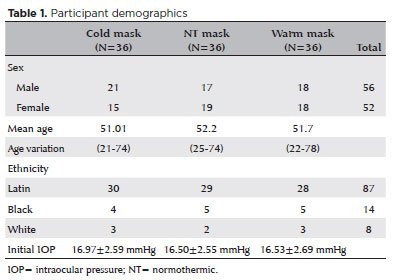
METHODS:In this prospective clinical study, healthy participants were randomized on a 1:1:1 allocation ratio to three mask groups: hypothermic (G1), normothermic (G2), and hyperthermic (G3). After randomization, 108 eyes from 108 participants were submitted to clinical evaluations, including measurement of initial intraocular pressure (T1). The thermal mask was then applied for 10 minutes, followed by a second evaluation of intraocular pressure (T2) and assessment of any side effects.
RESULTS:The hypothermic group (G1) showed a significant reduction in mean intraocular pressure between T1 (16.97 ± 2.59 mmHg) and T2 (14.97 ± 2.44 mmHg) (p<0.001). G2 showed no significant pressure difference between T1 (16.50 ± 2.55 mmHg) and T2 (17.00 ± 2.29 mmHg) (p=0.054). G3 showed a significant increase in pressure from T1 (16.53 ± 2.69 mmHg) to T2 (18.58 ± 2.95 mmHg) (p<0.001). At T1, there was no difference between the three study groups (p=0.823), but at T2, the mean values of G3 were significantly higher than those of G1 and G2 (p<0.00).
CONCLUSION:Temperature was shown to significantly modify intraocular pressure. Thermal masks allow the application of temperature in a controlled, reproducible manner. Further studies are needed to assess the duration of these effects and whether they are reproducible in patients with pathologies that affect intraocular pressure.
Keywords: Intraocular pressure; Temperature; Masks; Glaucoma; Eye diseases
Abstract
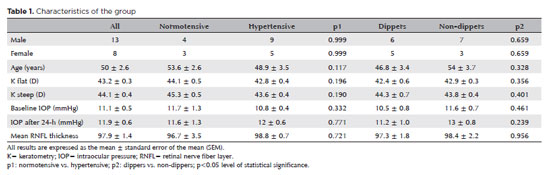
PURPOSE: This study investigated the relationship between blood pressure and intraocular pressure in treatment-naive, non-glaucoma patients with different blood pressure statuses, focusing on the 24-h ocular volume and nocturnal blood pressure decline.
METHODS: Treatment-naive, non-glaucoma patients undergoing hypertension evaluation were enrolled as study participants. Simultaneous 24-h ambulatory blood pressure measurement and 24-h ocular volume recording with a contact lens sensor. We also compared ocular volume curve parameters between normotensive and hypertensive patients, as well as between those with and without nocturnal blood pressure decline.
RESULTS: A total of 21 patients, including 7 normotensive and 14 treatment-naive hypertensive individuals, were included in the study. of them, 11 were dippers and 10 were non-dippers. No significant difference in the 24-h ocular volume slope was observed between the hypertensive and normotensive patients (p=0.284). However, dippers had a significantly higher 24-h ocular volume slope (p=0.004) and nocturnal contact lens sensor output (p=0.041) than non-dippers.
CONCLUSION: Nocturnal blood pressure decline, rather than the blood pressure level, is associated with the increased 24-h ocular volume slope and nocturnal ocular volume. Further studies are required to determine whether the acceleration of glaucoma progression in dippers is primarily due to low blood pressure, high intraocular pressure, or a combination of both.
Keywords: Intraocular pressure; Blood pressure; Contact lens; Glaucoma; Hypertension; Hypotension
Abstract
PURPOSE: This study aimed to report the surgical outcomes and success predictors of micropulse transscleral cyclophotocoagulation in eyes with refractory glaucoma.
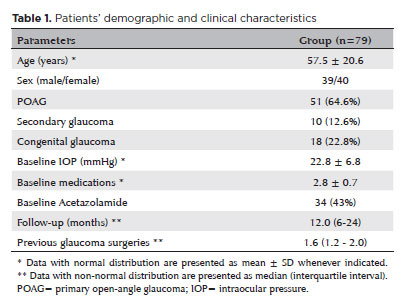
METHODS: This was a noncomparative, interventional case series. Patients with refractory glaucomas, defined as eyes with prior incisional glaucoma surgery failure and uncontrolled intraocular pressure, who underwent micropulse transscleral cyclophotocoagulation between March 2017 and June 2021 were enrolled. A minimum follow-up period of 6 months was required. Preoperative and postoperative intraocular pressure, number of hypotensive medications, surgical complications, and any subsequent related events were recorded. Success criteria were as follows: 1) intraocular pressure reduction ≥20% and intraocular pressure ≤18 mmHg; 2) intraocular pressure reduction ≥30% and intraocular pressure ≤15 mmHg. The need for topical hypotensive medications was not considered a failure.
RESULTS: Seventy-nine (79) eyes (79 patients; mean age, 57.5 ± 20.6 years) were included. Overall, the median follow-up duration was 12.0 (interquartile interval, 6–24) months, and the mean intraocular pressure was reduced from 22.8 ± 6.8 mmHg to 15.5 ± 5.6 mmHg at the last follow-up visit (p<0.001). The mean number of medications was reduced from 2.8 ± 0.7 to 2.0 ± 1.0 (p<0.01). At 12 months postoperatively, the success rates for criteria 1 and 2 were 54.9% and 49.7%, respectively. Aside from one case of corneal ulcer, which fully resolved with clinical treatment, and two cases of persistent hypotony (with no visual acuity loss during follow-up), no other vision-threatening complications were observed during the postoperative period. The magnitude of intraocular pressure reduction at 1 month (adjusted to preoperative intraocular pressure; HR=1.01; p=0.002).
CONCLUSION: Our findings suggest that micropulse transscleral cyclophotocoagulation is a relatively effective alternative for managing refractory glaucomas, with minor postoperative complications. In addition, the initial intraocular pressure reduction was a statistically significant predictor of 1-year success in patients undergoing micropulse transscleral cyclophotocoagulation.
Keywords: Intraocular pressure/physiology; Glaucoma, open-angle/surgery; Trabeculectomy; Laser coagulation/methods; Tonometry, ocular/methods; Postoperative complications; Antihypertensive agents/therapeutic use.
Abstract
PURPOSE: This study aimed to evaluate the influence of intrastromal corneal ring segment implants on the intraocular pressure measurements using Goldmann applanation tonometry, rebound tonometry, and noncontact tonometry in keratoconic corneas and analyze the intertonometer agreement.
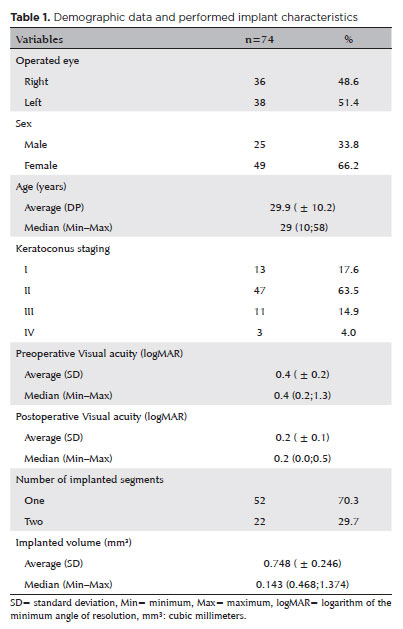
METHODS: We enrolled 74 eyes in this observational and prospective study. Each participant had a complete eye examination, corneal analysis with Scheimpflug Tomography (Pentacam®), and intraocular pressure evaluation with Goldmann applanation tonometry, rebound tonometry, and noncontact tonometry, before and after intrastromal corneal ring segment implantation (on postoperative days 1, 7, 45, and 90). Intertonometer agreement was assessed using Bland-Altman analysis.
RESULTS: The mean age was 29.9 ± 10.2 years, and 47 (63.5%) eyes had keratoconus grade II. Intraocular pressures were higher for noncontact tonometry preoperatively and on 90 postoperative day (mean ± SD: 12.4 ± and 12.1 ± 2.2 mmHg, respectively), followed by Goldmann applanation tonometry (11.1 ± 3.0 and 11.2 ± 2.7 mmHg, respectively), and were lower for rebound tonometry (9.7 ± and 9.4 ± 3.2 mmHg, respectively). The variation from the Goldmann tonometry on 7 postoperative day to the baseline (p=0.022) and that of noncontact tonometry on 90 postoperative day to the baseline (p=0.021) were statistically significant. The rebound tonometry underestimated intraocular pressure when compared with the Goldmann applanation tonometry by a mean of 1.47 ± 5.19 mmHg. Noncontact tonometry, when compared with Goldmann applanation tonometry, overesti-mated intraocular pressure by a mean of 1.23 ± 4.15 mmHg.
CONCLUSION: Despite statistically significant differences between some postoperative periods, the intraocular pressure measurement differences may not be clinically relevant.
Keywords: Keratoconus; Intraocular pressure; Cornea; Corneal stroma; Postoperative period; Tonometry ocular; Prostheses and implants
Abstract
Objetivo: Avaliar a influência das alterações da pressão atmosférica no comportamento da pressão intraocular de indivíduos militares saudáveis-alunos e instrutores da Escola de Mergulho e Resgate da Marinha Nacional na base naval “ARC BOLÍVAR”-durante uma imersão simulada na câmara hiperbárica do Hospital da Marinha de Cartagena.
Métodos: Realizamos um estudo exploratório descritivo. A pressão intraocular foi medida em diferentes pressões atmosféricas durante sessões de 60 minutos na câmara hiperbárica respirando ar comprimido. A profundidade máxima simulada foi de 60 pés. Os participantes eram alunos e instrutores do Departamento de Mergulho e Resgate da Base Naval.
Resultados: Quarenta e oito olhos de 24 mergulhadores foram estudados. Vinte e dois participantes (91,7%) eram do sexo masculino. A média de idade dos participantes foi de 30,6 (DP=5,5) anos, variando de 23 a 40. Nenhum participante tinha histórico de glaucoma ou hipertensão ocular. A média de base da pressão intraocular ao nível do mar foi de 14 mmHg, diminuindo para 13,1 mmHg (queda de 1,2 mmHg) a 60 pés de profundidade (p=0,0012). Entretanto, durante a parada de segurança a 30 pés, a pressão intraocular média continuou diminuindo até atingir 11,9 mmHg (p<0,001). Ao final da sessão, a pressão intraocular média atingiu 13,1 mmHg, valor inferior e estatisticamente significativo quando comparada à média de base da pressão intraocular (p=0,012).
Conclusões: Em indivíduos saudáveis, a pressão intraocular diminui ao atingir uma profundidade de 60 pés (2,8 de pressão atmosférica absoluta) e diminui ainda mais durante a ascensão a 30 pés. As medidas em ambos os pontos foram significativamente diferentes quando comparadas à pressão intraocular de base. A pressão intraocular final foi menor do que a pressão intraocular de base, sugerindo um efeito residual e prolongado da pressão atmosférica sobre a pressão intraocular.
Keywords: Pressão atmosférica; Tanometria; Pressão intraocular; Hipertensão ocular; Glaucoma; Militares
Abstract
PURPOSE: To evaluate the predictive value of initial intraocular pressure difference of the detached and fellow eyes of patients with complex rhegmatogenous retinal detachment on postoperative persistent ocular hypotony.
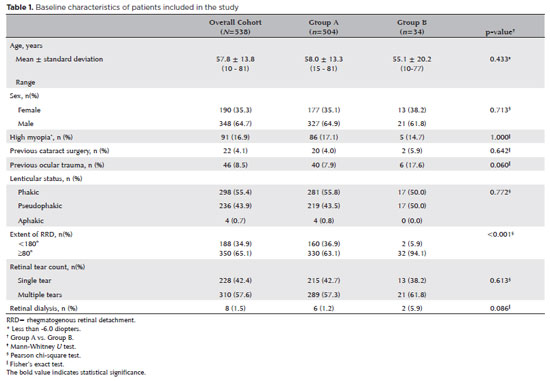
METHODS: This retrospective observational study included 538 eyes of 538 unilateral complex rhegmatogenous retinal detachment patients with a proliferative vitreoretinopathy grade of C-1 or higher, treated with silicone oil endotamponade following pars plana vitrectomy. The patients were divided into Group A (patients having silicone oil removal without ocular hypotony; n=504) and Group B (patients with persistent ocular hypotony following silicone oil removal [n=8, 23.5%] and with retained silicone oil [n=26, 76.5%] due to the risk of persistent ocular hypotony; total n=34). Ocular hypotony was defined as an intraocular pressure of <6 mmHg on two or more occasions. Patients' demographics, including age, sex, and follow-up time, and ocular characteristics, including ocular surgical and trauma history, initial and final best-corrected visual acuity, intraocular pressure and initial intraocular pressure difference of the detached and fellow eyes, and anatomical success rates and postoperative complications, were retrospectively collected from the electronic patient files.
RESULTS: The initial intraocular pressure was significantly lower in the detached eyes of Group B than in Group A (8.3 ± 3.5 vs. 12.9 ± 3.3, p<0.001). Also, the initial intraocular pressure difference was significantly higher in Group B than in Group A (8.9 ± 3.2 vs. 2.2 ± 2.7mmHg, p<0.001). The receiver operating characteristic curve analysis showed that the cutoff value of the initial intraocular pressure difference was 7.5mmHg for the risk of persistent ocular hypotony. The most influential factors on postoperative persistent ocular hypotony in the binary logistic regression analysis were the initial intraocular pressure difference and the need for a retinectomy.
CONCLUSION: In eyes with complex rhegmatogenous retinal detachment treated with pars plana vitrectomy and silicone oil tamponade, the initial intraocular pressure difference could be of value in predicting postoperative persistent ocular hypotony and could guide surgeons on the decision of silicone oil removal.
Keywords: Hypotony; Intraocular pressure; Pars plana vitrectomy; Retinal detachment; Silicone oils; Ocular hypotension; Visual acuity
Abstract
Myopia is a significant risk factor for glaucoma and a growing public health problem worldwide. Detecting glaucomatous changes in highly myopic eyes is diagnostically challenging due to the abnormal appearance of the optic nerve head. These patients also have a greater biomechanical susceptibility to pressure-induced glaucomatous damage. Refractive surgery has become increasingly popular, and many candidates for refractive surgery are myopic. Therefore, we sought to review the aspects of patient evaluation in those who have undergone refractive surgery for myopia concerned with the detection and monitoring of glaucoma development. We identified several important elements of patient evaluation for glaucoma after refractive surgery. These included the need for both structural and functional assessments before and after surgery, and the importance of monitoring for postoperative biomechanical changes in the cornea and their impact on intraocular pressure. We conclude that, in patients who undergo refractive surgery for myopia, it is essential to assess for the presence of glaucoma, to identify staging, and to plan for long-term control of the disease, regardless of IOP.
Keywords: Glaucoma; Intraocular pressure; Myopia; Refractive surgery
Abstract
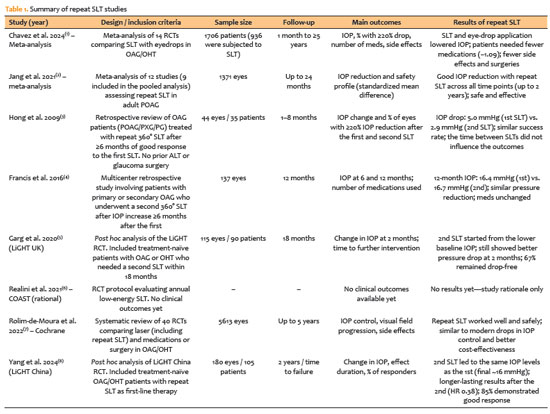
Repeat selective laser trabeculoplasty has emerged as a valuable option for managing intraocular pressure in patients with primary open-angle glaucoma or ocular hypertension. This review synthesizes current evidence of the efficacy, safety, and clinical applicability of repeat selective laser trabeculoplasty. Evidence from randomized controlled trials, systematic reviews, and observational studies indicate that repeat selective laser trabeculoplasty effectively sustains significant intraocular pressure reduction with minimal complications. This procedure demonstrates comparable efficacy to that of initial selective laser trabeculoplasty, supporting its role as a sustainable, drop-free management strategy. However, further research is warranted to optimize treatment intervals, assess long-term outcomes, and evaluate cost-effectiveness across different healthcare settings.
Keywords: Glaucoma; Ocular hypertension; Intraocular pressure; Selective laser trabeculoplasty
Abstract
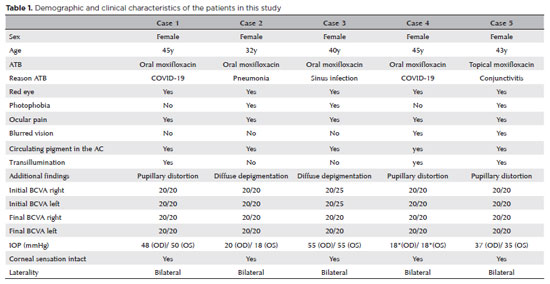
Bilateral acute depigmentation of the iris and bilateral acute iris transillumination (BAIT) are similar clinical entities. The former causes acute-onset depigmentation of the iris stroma without transillumination, whereas the latter causes depigmentation of the iris pigment epithelium with transillumination. The etiopathogenesis of these conditions is not yet fully understood, but the proposed causes include the use of systemic antibiotics (especially moxifloxacin) and viral triggers. We present a case series of five female patients with a mean age of 41 (32-45) years, all of whom suffered acute onset of bilateral pain and redness of the eyes after moxifloxacin use (oral or topical). It is important for ophthalmologists to be aware of the two forms of iris depigmentation since this case series suggests that SARS-CoV-2 or its empirical treatment with moxifloxacin may trigger iris depigmentation. If this is the case, clinicians will likely see increased incidences of bilateral acute depigmentation of the iris and bilateral acute iris transillumination during and after the COVID-19 pandemic.
Keywords: SARS-CoV-2; Pigment epithelium of eye; Iris diseases/pathology; Transillumination; Ocular hypertension; Intraocular pressure; Drug related side effect and adverse reactions; Iris diseases/drug therapy; Moxifloxacin/therapeutic Use; Humans; Case reports
Abstract
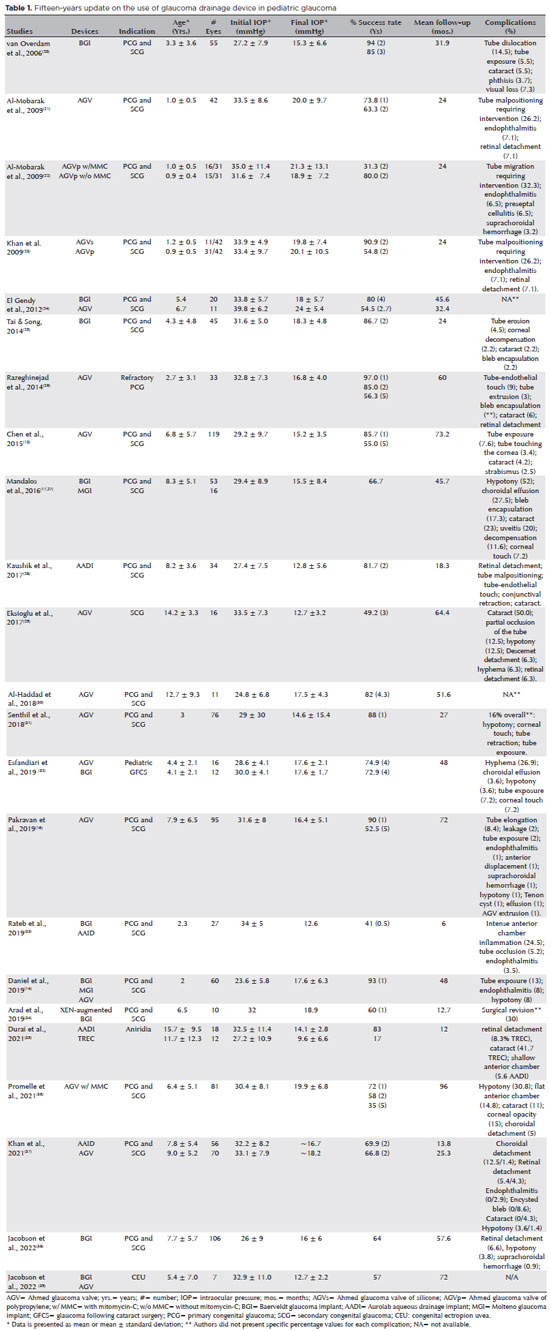
O implante de dispositivos de drenagem para glaucoma (DDGs) é uma opção terapêutica valiosa, principalmente em crianças com glaucoma refratário ao tratamento cirúrgico primário. Os dispositivos de drenagem para glaucoma têm sido utilizados principalmente quando a cicatrização conjuntival dificulta a cirurgia fistulizante ou procedimentos angulares prévios não foram eficazes no controle da pressão intraocular. Apesar das complicações conhecidas, o uso de dispositivos de drenagem para glaucoma em crianças tem aumentado nos últimos anos, inclusive como opção cirúrgica primária. Nesta revisão, atualizamos os resultados de estudos recentes envolvendo o implante de dispositivos de drenagem para glaucoma em crianças, discutindo novos avanços e comparando diferentes dispositivos, taxas de sucesso e complicações.
Keywords: Glaucoma congênito; Implantes para drenagem de glaucoma; Tonometria ocular; Drenagem; Pressão intraocular
ABO is licensed under a Creative Commons Attribution-NonComercial 4.0 Internacional.

About
Issues
Editorial Board
Submission
Official publication of Conselho Brasileiro de Oftalmologia
Rua Casa do Ator, 1.117 - 2º andar - CEP: 04546-004
São Paulo - SP, Brazil
Phone: +55 11 3266-4000