
Showing of 1 until 15 from 93 result(s)
Search for: Patient satisfaction; Consumer satisfaction; Quality of health care; Health care quality; access and evaluation; Quality assurance; health care
10-fig01.jpg)
Abstract
Objetivo: Avaliar os resultados visuais, satisfação e qualidade de vida de pacientes atendidos em um hospital escola pelo Sistema Único de Saúde, submetidos a implante bilateral de lente intraocular multifocal difrativa.
Métodos: Estudo tipo série de casos com intervenção, incluindo 20 pacientes submetidos a implante bilateral da lente intraocular multifocal difrativa EyeDiff® (Eyeol UK, Dunstable, UK). Os critérios de exclusão foram astigmatismo corneano >1,5 dioptria cilíndrica, cirurgia ou doença ocular prévias e complicações intraoperatórias ou pós-operatórias. Os pacientes foram avaliados após 1, 3 e 6 meses da cirurgia. Foram avaliadas a acuidade visual monocular e binocular para longe, intermediário e perto sob condições fotópica e mesópica, sensibilidade ao contraste monocular sob condições fotópicas, curva de defocus e questionário para avaliação da qualidade de vida.
Resultados: A acuidade visual para longe corrigida monocular foi de 0,3 logMAR ou melhor e a acuidade visual para perto com correção para longe foi J3 ou melhor em todos os olhos, sob condições fotópicas. A acuidade visual binocular para perto com a correção para longe foi J1 em todos os casos. A sensibilidade ao contraste estava no nível mínimo de normalidade para frequências espaciais baixas e altas e abaixo dos limites normais para frequência espacial intermediária. O questionário de qualidade de vida mostrou que os pacientes apresentavam altos níveis de satisfação.
Conclusão: O implante bilateral da lente intraocular multifocal EyeDiff® proporcionou boa acuidade visual e qualidade de vida, e independência de óculos aos pacientes. A acuidade visual e a sensibilidade ao contraste melhoraram progressivamente entre um e seis meses de pós-operatório.
Keywords: Acuidade visual; Qualidade de vida; Satisfação do paciente; Implante de lente intraocular; Sistema Único de Saúde.
08-fig01.jpg)
Abstract
Objetivo: Este estudo tem como objetivo avaliar a eficácia de lentes de contato híbridas de nova geração nos resultados visuais e na qualidade de vida relacionada à visão em pacientes com ceratocone com intolerância ou insucesso dos métodos de correção habituais, tais como lentes flexíveis de silicone-hidrogel ou rígidas permeáveis a gases.
Métodos: Foram incluídos neste estudo transversal prospectivo 42 olhos de 28 pacientes com ceratocone. Uma lente Airflex (Swisslens) foi aplicada nos olhos de acordo com as instruções do fabricante. Um exame oftalmológico, incluindo refração manifesta, melhor acuidade visual corrigida para longe, biomicroscopia com lâmpada de fenda e a aplicação do National Eye Institute Visual Function Questionnaire-25 (NEI-VFQ-25), foi realizado no início do estudo e na visita de 6 meses.
Resultados: Foi possível obter um ajuste adequado em 39 olhos (92,9%) de 26 pacientes. Foram excluídos do estudo 6 olhos de 3 pacientes devido à cessação do uso de lentes. A idade média dos usuários bem-sucedidos era de 20,3 ± 4,9 anos. A média da melhor acuidade visual corrigida para longe foi melhorada estatisticamente de 0,62 ± 0,30 para 0,11 ± 0,06 logMAR com as lentes de contato híbridas Airflex (p<0,001). A pontuação média geral composta no questionário NEI-VFQ-25 aumentou de forma estatisticamente significativa com a lente de contato híbrida Airflex na visita de 6 meses, em comparação com a pontuação inicial (de 77,1 ± 16,3 para 90,9 ± 7,3, p=0,036). As lentes de contato híbridas Airflex apresentaram pontuações melhores com significância estatística em todos os itens das sub-escalas do NEI-VFQ-25 (todos com p<0,05). Nenhum efeito adverso significativo foi observado.
Conclusões: Lentes de contato híbridas de nova geração podem ser usadas como uma alternativa eficaz para a correção do astigmatismo irregular em pacientes com ceratocone com intolerância ou insucesso dos métodos habituais. Com essas lentes, pode-se alcançar uma melhora significativa na qualidade de vida relacionada à visão em pacientes com ceratocone.
Keywords: Lentes de contato; Ceratocone; Refração ocular; Acuidade visual; Qualidade de vida; Inquéritos e questionários
Abstract
PURPOSE: To analyze the quality of life and treatment adherence of patients with glaucoma at different disease stages, considering factors such as sex, visual acuity, disease severity, and treatment characteristics.
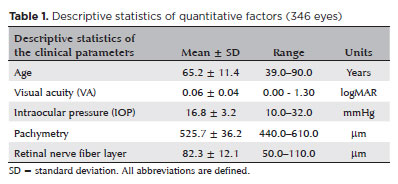
METHODS: This cross-sectional study included 174 patients (346 glaucomatous eyes) recruited from clinical records and routine follow-ups at a specialized ophthalmology center. Their mean age was 39–90 years, and 60.9% of them were women. Their quality of life and adherence were assessed using the NEI-VFQ25 and MMAS-8 questionnaires, respectively. Complementary tests included 24:2 visual field test, retinography, and optical coherence tomography. Patients diagnosed with glaucoma for at least 6 months were included, whereas pregnant patients and those with ocular diseases were excluded.
RESULTS: Among the participants, 59.2% adhered to the treatment whereas 40.8% showed low adherence. The mean quality of life score was 81.87. Patients with low adherence had slightly higher quality of life scores (mean 83.1) than those with good adherence (mean 81.0), but the difference was not statistically significant. Disease severity was associated with increased optic nerve cupping, reduced thickness of the nerve fiber and ganglion cell layers, and great visual field loss. No significant correlation was observed between adherence and quality of life, indicating the independence of these factors and the influence of psychological or social elements.
CONCLUSION: The absence of a correlation between quality of life and treatment adherence highlights the need for tailored interventions for psychological and social aspects. These findings indicate the importance of a comprehensive approach to managing glaucoma, preserving visual function, strengthening doctor–patient relationships, and considering psychosocial factors to enhance quality of life and treatment adherence.
Keywords: Glaucoma; Quality of life; Patient health questionnaire; Patient acuity; Antiglaucoma agents; Visual acuity; Treatment adherence and compliance; Surveys and questionnaires
Abstract
Objetivos: Avaliar a percepção do risco de exposição da Doença de Coronavírus 2019 (COVID-19), conhecimento sobre medidas de proteção pessoal entre os profissionais de oftalmologia latino-americanos e priorização de pacientes com Covid-19.
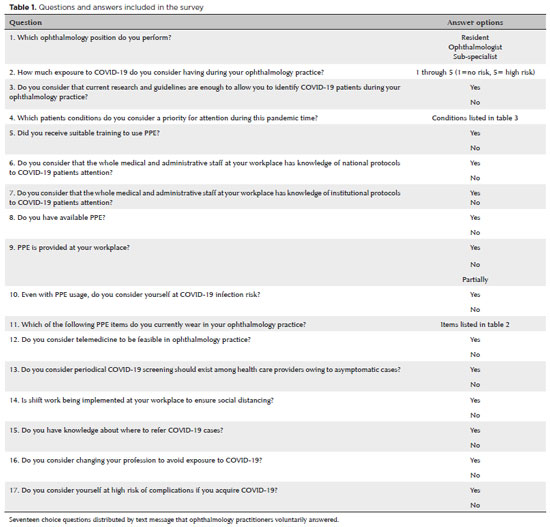
Métodos: Pesquisa anônima voluntária autoadministrada (formulários do Google Drive) distribuída por mensagem de texto para profissionais de oftalmologia em 1º a 5 de maio de 2020.
Resultados: Trezentos e setenta e um profissionais completaram a pesquisa (taxa de resposta de 45%), composta por 118 residentes (27,6%), 111 oftalmologistas (40,5%) e 142 subespecialistas (32,8%). 106 profissionais (32,6%) sentiram-se em alto risco de adquirir o COVID-19 no trabalho. 273 (69,1%) acreditavam que as diretrizes atuais não são suficientes para identificar os pacientes com COVID-19. 265 (59,5%) não tinham treinamento para usar os equipamentos de proteção individual (EPI) e, mesmo com seu uso correto, 341 (91,5%) ainda se sentiram em risco de adquirir COVID-19. 80% consideraram que a equipe de trabalho não tem conhecimento de protocolos nacionais para o atendimento aos pacientes com COVID-19. Apenas 9 dos profissionais (2%) consideraram mudar a profissão para minimizar o risco de contágio por COVID-19.
Conclusão: Esta pesquisa mostra a escassez de pessoal e treinamento específico que os praticantes de oftalmologia na América Latina enfrentam em sua prática diária. Essas preocupações e ansiedade parecem ser as mesmas em todo o mundo com a pandemia de COVID- 19. É importante reforçar a confiança dos profissionais de oftalmologia nas diretrizes atuais de atendimento ao paciente com COVID-19 e também disponibilizar programas de treinamento sobre o uso de EPI e também itens de EPI disponíveis em todos os momentos para garantir a qualidade do atendimento e a disseminação mínima da doença.
Keywords: Pandemias; Oftalmologia; Pesquisas sobre serviços de saúde; América Latina; SARS-CoV2; Infecções por coronavirus; COVID-19
05-tab01tb.jpg)
Abstract
Objetivo: Avaliar as razões para não comparecimento à clínica oftalmológica da universidade após triagem oftalmológica realizada usando uma unidade móvel oftalmológica que fornece exame oftalmológico para comunidades não assistidas em uma região do Brasil.
Métodos: Foi realizado um estudo observacional prospectivo no ano de 2017/2018 para avaliar as razões que fizeram com que os indivíduos triados usando uma unidade móvel oftalmológica e referenciados para a clínica oftalmológica da universidade não comparecessem à consulta agendada. A triagem foi feita em 10 municípios da região centro-oeste do estado de São Paulo, Brasil. Todos os 1.928 participantes fizeram o exame oftalmológico sem custo e 37,1% deles necessitaram de encaminhamento para a clínica oftalmológica da universidade para exames especializados ou cirurgias. O estudo usou duas ferramentas: (1) análise comparativa entre os dados dos indivíduos encaminhados que compareceram ao agendamento com os que não compareceram; (2) busca ativa dos indivíduos que não compareceram à consulta agendada, aplicando-se um questionário para avaliar os motivos para o não comparecimento.
Resultados: Fatores como idade, sexo, distância entre a cidade de origem e o hospital universitário, número de oftalmologistas na cidade de procedência, renda familiar média e acuidade visual não influenciaram no comparecimento ao encaminhamento. Catarata foi a maior causa para o encaminhamento (350 casos). O não comparecimento foi maior nos portadores de glaucoma/glaucoma suspeitos (54,1%), estrabismo (45%) e afecções do segmento anterior (33,6%). Muitos indivíduos que não compareceram ao serviço de referência procuraram por outro local para o atendimento oftalmológico.
Conclusão: O não comparecimento para tratamento oftalmológico sem custo depende de fatores relacionados ao paciente ou à falta de conhecimento das próprias condições oftalmológicas. Campanhas educativas nas comunidades assistidas devem ser feitas para alcançar maior comparecimento às consultas e melhor prevenir a cegueira evitável.
Keywords: Serviços de saúde ocular; Unidades móveis de saúde; Acesso aos serviços de saúde; Pacientes desistentes do tratamento; Promoção da saúde
Abstract
PURPOSE: This study aimed to evaluate the quality and reliability of YouTube videos as an educational resource about retinopathy of prematurity.
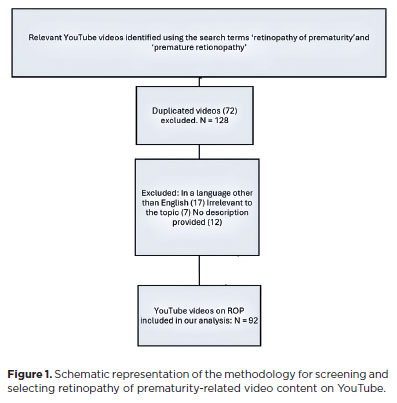
METHODS: Videos were sourced from YouTube using the search terms "retinopathy of prematurity" and "premature retinopathy" with the default settings. Each video was assessed on the following metrics: views, likes, dislikes, comments, upload source, country of origin, view ratio, like ratio, and video power index. The quality and reliability of the videos were evaluated by two independent researchers using the DISCERN questionnaire, the JAMA benchmarks, the Global Quality Score scale, the Health on the Net Code of Conduct, and the Ensuring Quality Information for Patients scale.
RESULTS: The study assessed 92 videos, the majority of which (42 videos, 45.7%) originated from the United States. Most of the videos focused on screening, pathophysiology, and diagnosis of retinopathy of prematurity (61.9%). The primary contributors were medical organizations (19 videos, 20.6%), nonacademic health channels (19 videos, 20.6%), and physicians (15 videos, 16.3%). Significant differences were found between the DISCERN (p=0.003), JAMA (p=0.001), Global Quality Score (p=0.003), Health on the Net Code of Conduct (p=0.006), and Ensuring Quality Information for Patients (p=0.001) scores among different video sources. However, the key video metrics did not differ. Using the DISCERN and Global Quality Score scales, the overall YouTube video content on retinopathy of prematurity was rated as moderate in quality. Using the Health On the Net Code of Conduct and Ensuring Quality Information for Patients scales, it was rated as high quality. Strong correlations were observed between the scores on all of the scales (p<0.001).
CONCLUSION: Videos from medical organizations and healthcare centers were of a higher quality than those from nonmedical sources. Despite the varied foci of each evaluation scale, the strong correlation between them indicates that they provide reliable and comprehensive assessments of the quality of informational content.
Keywords: Retinopathy of prematurity; YouTube; Information dissemination/methods; Online education; Internet access; Social media/instrumentation; Information seeking behavior; Internet/statistics & numerical data; Consumer health information; Social networking
Abstract
PURPOSE: To describe the epidemiological and clinical profile of hospitalized patients with retinoblastoma in Brazil.
METHODS: Using data from the Hospital Cancer Registry of the , patients with the morphological codes of retinoblastoma who were diagnosed between 2000 to 2018, aged 0–19 years, and followed up in registered hospitals (analytical cases) were selected. The relative and absolute frequencies of demographic, clinical, diagnostic, therapeutic, and outcome variables were described. Hospital performance indicators were calculated and compared between hospitals qualified and not qualified to treat pediatric oncology cases and between hospitals with different case volumes (<20, 20–75, >75 cases).
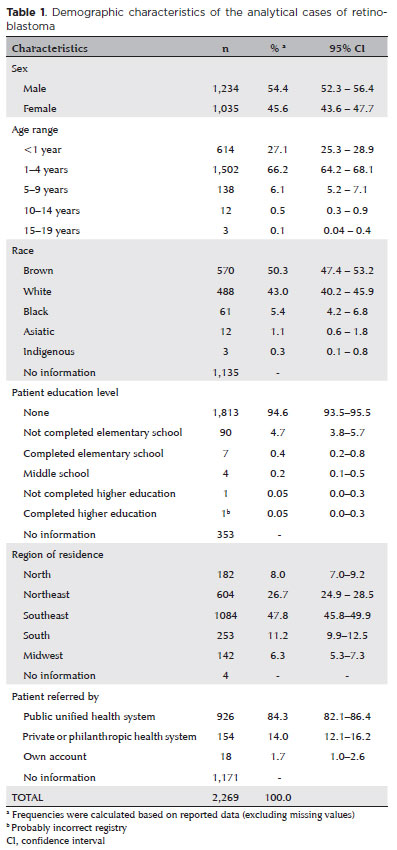
RESULTS: Of the 2,269 identified analytical cases from 86 institutions, 48% were from the Southeast, 54% were male, and 66% were aged <4 years. The proportion of missing data (NA) was too high for several variables. Approximately 84% of the patients were from the public health system, 40% had a positive family history, and 88% had unilateral involvement. The first treatment included surgery in 58.3% of the patients (NA=2), Approximately 36.6% of these patients achieved complete remission, 10.8% achieved partial remission, and 12.7% died (NA=59%). Hospital performance indicators were within the target in >90% of the patients. The median time between the first appointment and diagnosis (6 days, interquartile range [IQR] 1–14) was significantly lower and the median time to death was longer (343 days, IQR, 212-539) in high-volume hospitals (>75 cases) than in medium- and low-volume hospitals.
CONCLUSIONS: Despite the high proportion of missing data, we found that the delay in diagnosis is due to prehospital factors. Additionally, there is a need for educational programs for healthcare professionals and families that emphasize early identification and referral to specialized centers. Future studies should focus on the impact of Hospital Cancer Registry data completeness on outcomes, causes of delay in diagnosis, regional inequalities, and barriers to accessing specialized services.
Keywords: Retinoblastoma/diagnosis; Retinoblastoma/epidemiology; Patient care; Humans; Children; Adolescents; Brazil.
15-tab01.jpg)
Abstract
Objetivos: Validar a versão em português do Catquest-9SF através de sua aplicação em uma população nativa do Brasil com catarata e determinar a correlação da pontuação obtida no questionário com a acuidade visual pré-operatória.
Métodos: Realizou-se um estudo prospectivo para validação de questionário. O Catquest-9SF foi traduzido e retro traduzido gerando uma versão final em português. Um total de 120 pacientes brasileiros que aguardavam realização de cirurgia de catarata foram recrutados para responder ao questionário e para documentação de dados pré-operatórios e acuidade visual. Análise Rasch foi utilizada para acessar as propriedades psicométricas do instrumento.
Resultados: A versão em português do Catquest-9SF demonstrou ajuste aceitável dos itens (item fit statistics variando entre 0,7 e 1,3), unidimensionalidade (Principal Component Analisis) e boa organização nas categorias de resposta dos itens (limiares das categorias: -2,79; 0,57; 2,22). O questionário contém itens com relação estável, se considerado um mesmo nível de deficiência visual, na comparação entre dois grupos (ausência de differential item functioning). Existe adequada separação de pessoas (Person Separation Index 3,07). A acuidade visual em LogMAR no melhor olho com melhor correção óptica mostrou correlação estatisticamente significativa com a pontuação
em logit do Catquest-9SF (r=0,282 e p=0,004).
Conclusões: A versão em português do Catquest-9SF apresenta evidência de validade e confiabilidade, além de ser linguística e culturalmente compreensível para pacientes de língua portuguesa naturais do Brasil. Trata-se de questionário de fácil entendimento e rápida aplicação, sendo capaz de estimar de maneira adequada o funcionamento visual subjetivo em pacientes com catarata. Existe correlação significativa com a acuidade visual e a pontuação obtida no questionário.
Keywords: Extração de catarata; Perfil do impacto da doença; Acuidade visual; Inquéritos e questionários; Qualidade de vida.
Abstract
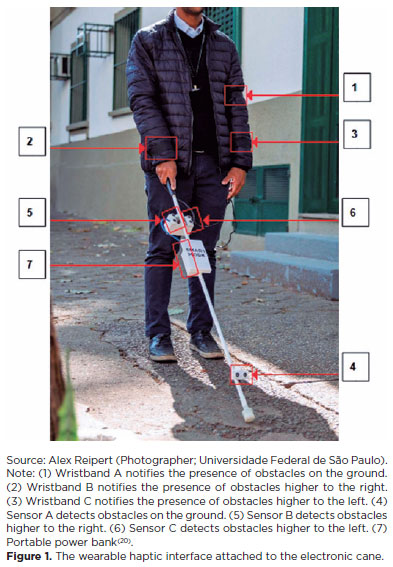
PURPOSE: This study aimed to evaluate the perception and degree of satisfaction of blind individuals regarding an electronic cane prototype with a wearable haptic interface.
METHODS: Two scenarios with different obstacles were created to conduct tests with the canes (the user's cane and the prototype one). The perception and satisfaction of participants regarding the electronic cane were assessed using a questionnaire, the number of collisions during the tests, and the time each individual took to complete the course in each scenario.
RESULTS: Ten blind individuals who used the white cane participated in this study. Eight were males, and two were females. Their age ranged from 23 to 43 (average 32.3 ± 7.13 years and median 32 years). There was a tendency for fewer collisions with ground obstacles when the electronic cane was used than when the white cane was used. However, there was no statistically significant difference between the number of collisions and the course completion time in each scenario with either canes tested.
CONCLUSION: Overall, the perception and satisfaction of individuals regarding the prototype used were positive.
Keywords: Blindness; Canes; Patient satisfaction; Perception; Haptic technology; Wearable electronic devices; Surveys and questionnaires
11-tab01.jpg)
Abstract
OBJETIVO: Associar os resultados refrativos a longo prazo da cirurgia de catarata e a função visual autorreferida pelo questionário Catquest-9SF.
MÉTODOS: Paciente recrutados no ambulatório de catarata da VER MAIS Oftalmologia, foram submetidos a exame oftalmológico completo. Após diagnóstico de catarata com indicação de tratamento cirúrgico com facoemulsificação e implante de lente intraocular, o questionário foi aplicado antes da intervenção, 30 dias após cirurgia e 1 ano após, novamente.
RESULTADOS: Foram recrutados 133 pacientes. No decorrer do seguimento, 32 pacientes foram perdidos e ao final foram analisados os dados de 101 pacientes, dos quais 48 foram homens e 53 foram mulheres. A variância bruta explicada por dados foi de 69,9% e a inexplicada em primeiro contraste por 2,39 eigenvalores, sendo maior que 2, o que nos mostra que são resultados diferentes dos esperados de dados aleatórios. O índice de separação de pessoas foi de 2.95 (>2) e o valor de confiança de pessoas foi de 0,9 (>0,8). Estes índices são os valores mínimos aceitáveis na diferenciação de níveis de habilidade. Acuidade visual foi a principal variável correlacionada com o score do Catquest.
CONCLUSÕES: O Catquest-9SF traduzido para o português se demonstrou unidimensional e uma ferramenta psicometricamente válida para avaliar disfunção visual em pacientes com catarata, além de ter tido sucesso para quantificar objetivamente melhoras após a intervenção cirúrgica. Essa ferramenta pode ser utilizada como preditiva e concordante da melhora da acuidade visual.
Keywords: Extração de catarata; Acuidade visual; Inquéritos e questionários; Qualidade de vida; Medidas de resultados relatados pelo paciente
Abstract
PURPOSE: To evaluate the current scenario of rehabilitation services for people with retinal diseases in Brazil.
METHODS: An exploratory study was conducted between February 2023 and June 2023 using a Google Forms questionnaire that was distributed by patient associations.
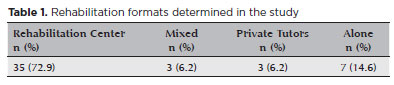
RESULTS: A total of 142 patients, aged 18-80 were included in the study. Forty-eight participants (33.8%) were undergoing rehabilitation, while 94 (66.2%) were not. The main reason for not undergoing rehabilitation was a lack of knowledge about the service (n=41, 43.6%). Healthcare professionals made the most referrals (n=20, 41.7%). Rehabilitation improved the quality of life in 38 (80.9%) participants, and 28 (62.2%) participants were satisfied with the process. There was a statistically significant disparity between patient satisfaction and the locale of rehabilitation implementation. Twenty-three (69.7%) participants who underwent rehabilitation at a specialized center reported satisfaction.
CONCLUSION: The rehabilitation process directly increases the quality of life of individuals with retinal diseases. However, despite the availability of rehabilitation centers in large parts of Brazil, most patients with retinal diseases are not acquainted with the rehabilitation process and do not receive referrals for it. Thus, healthcare providers should increase referrals to rehabilitation centers, and public policies should be formulated to raise awareness among the population regarding the availability of rehabilitation services.
Keywords: Rehabilitation; Quality of life; Retinal diseases; Personal satisfaction; Patient care team; Public policy; Surveys and questionnaires; Brazil
Abstract
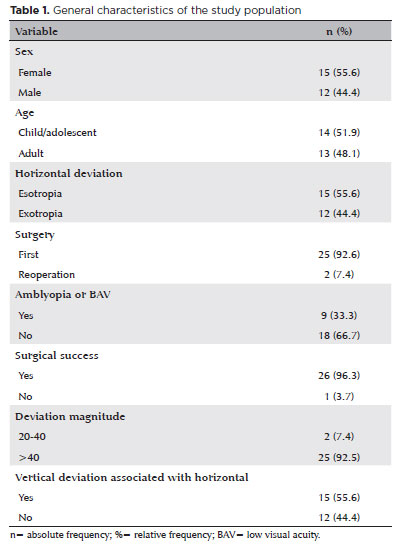
PURPOSE: To determine the influence of strabismus and its surgical correction on the preoperative and postoperative functional and psychosocial aspects of patients being treated at the CEROF/UFG Strabismus Outpatient Clinic.
METHODS: This prospective cross-sectional study included 27 patients, aged >7 years that were divided into two groups (<18 years and >18 years). The AS 20 questionnaire is composed of two domains (psychosocial and functional). Each domain includes 10 questions, which should be answered using a 5-point Likert scale. The questionnaire was administered preoperatively and 3 months postoperatively. In patients aged
<18 years, the questionnaire was concurrently administered to their parents and/or guardians.
RESULTS: Preoperatively, the average psychosocial and functional scores were 55 (p=0.01) and 57.5 (p=0.025), respectively, in adults, 70 (p=0.03) and 78.7 (p=0.16), respectively, in children and adolescents, and 46.2 (p=0.002) and 57.5 (p=0.003), respectively, in the parents and/or guardians. Postoperatively, the average psychosocial and functional scores were 80 (p=0.01) and 82.5 (p=0.025), respectively, in adults, 81.2 (p=0.03) and 85 (p=0.16), respectively, in children and adolescents, and 83.7 (p=0.002) and 86.2 (p=0.003), respectively, in parents and/or guardians.
CONCLUSION: The postoperative scores in the psychosocial (p=0.001), functional (p=0.001) and general (p<0.001) domains had increased in all the patients, demonstrating an improvement in the quality of life following strabismus correction surgery.
Keywords: Quality of life; Strabismus; Surveys and questionnaires; Psychosocial domain; Functional domain
Abstract
PURPOSE: To assess the quality of life in patients diagnosed as having tuberculous uveitis and its association with sociodemographic, clinical, and psychosocial aspects.
METHOD: By conducting standardized interviews, clinical and demographic data were collected using a measure developed in this study. This measure was applied in addition to other measures, namely SF-12, Hospital Anxiety and Depression Scale, and NEI-VFQ-39, which were used to assess health-related quality of life, anxiety and depression symptoms, and visual functioning.
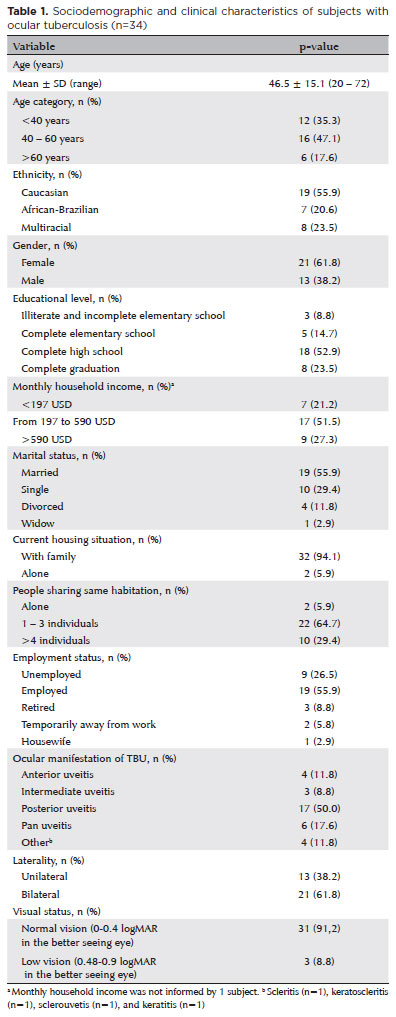
RESULTS: The study included 34 patients [mean age: 46.5 ± 15.1 years, female patients: 21 (61.8%)]. The mean of the VFQ-39 score was 74.5 ± 16.6 and that of SF-12 physical and mental component scores were 45.8 ± 10.1 and 51.6 ± 7.5, respectively, for the health-related quality of life. Anxiety symptoms were the most prevalent compared with depression symptoms and were found in 35.3% of the participants.
CONCLUSION: Tuberculous uveitis affects several scales of quality of life, thereby affecting a population economically active with a social, psychological, and economic burden.
Keywords: Tuberculosis, ocular; Quality of life; Uveitis; Anxiety; Depression; Surveys and questionnaires
Abstract
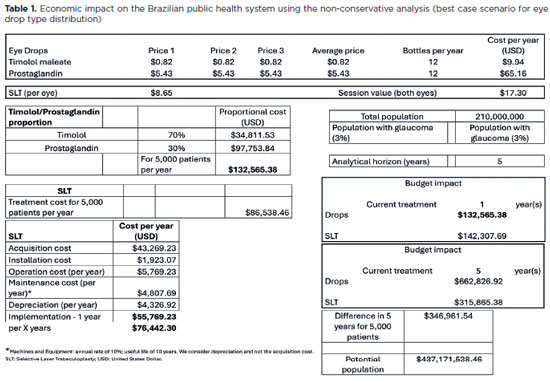
PURPOSE: To evaluate the economic impact of the following initial treatment scenarios for glaucoma on the Brazilian Public Health System (SUS): (1) traditional continuous instillation of hypotensive eye drops and (2) single session of selective laser trabeculoplasty.
METHODS: Economic impact was analyzed in three scenarios, from the least to the most conservative, for a hypothetical cohort of 5,000 individuals with open-angle glaucoma. Thereafter, projections were made on the basis of a glaucoma prevalence of 3% in the 2021 Brazilian population size.
RESULTS: All three scenarios demonstrated that selective laser trabeculoplasty exhibited a significantly lower economic impact than the eye drops on SUS over one and five years. Furthermore, the difference was more than United States Dollar 8 billion at five years when considering 3% of the Brazilian population aged >40 years in 2021.
CONCLUSION: As the initial treatment for primary open-angle glaucoma, selective laser trabeculoplasty exhibited a lower economic impact on SUS than latanoprost and timolol maleate eye drop instillation in all the studied scenarios over one and five-year periods.
Keywords: Glaucoma; Trabeculotomy; Laser therapy; Cost analysis; Health care cost Unified Health System; Brazil
Abstract
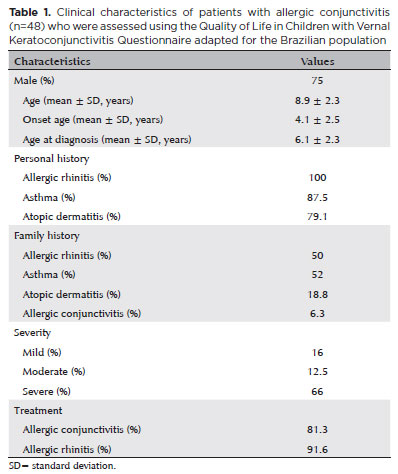
PURPOSE: The prevalence of ocular allergy varies according to the population and location of the study. Severe forms of ocular allergy are associated with compromised quality of life. In this study, we aimed to evaluate the application of the Brazilian-Portuguese version of the Quality of Life in Children with Keratoconjunctivitis questionnaire to children and adolescents with different subtypes of allergic conjunctivitis.
METHOD: A total of 48 patients (aged 5-12 years) with allergic conjunctivitis were included in this study. They were enrolled and monitored at a specialized center. After the clinical appointment, the children responded to the questionnaire on two occasions at an interval of 30 days. Individual scores (ranging from 0 to 3) of the 16 items were added.
RESULTS: The Brazilian-Portuguese version of the Quality of Life in Children with Keratoconjunctivitis questionnaire demonstrated good translation, adaptation, and intellectual properties, with substantial internal consistency (Cronbach's α coefficient = 0.702). There was no significant difference between the responses of the two interviews, revealing good reproducibility. The moderate/severe forms of allergic conjunctivitis had significantly higher quality of life scores (indicating a poorer quality of life) than the mild forms.
CONCLUSIONS: The Brazilian-Portuguese version of the Quality of Life in Children with Keratoconjunctivitis proved to be quick, reliable, and reproducible for assessing the quality of life in children with allergic conjunctivitis. However, its ability to detect changes resulting from symptom aggravation or treatment needs to be further evaluated.
Keywords: Conjunctivitis, allergic; Keratoconjunctivitis; Hypersensitivity; Quality of life; Child; Surveys and questionnaires
 ABO is licensed under a Creative Commons Attribution-NonComercial 4.0 Internacional.
About
Issues
Editorial Board
Submission

Arquivos Brasileiros de Oftalmologia
Official publication of Brazilian Council of Ophthalmology - Conselho Brasileiro de Oftalmologia (CBO)
Rua Casa do Ator, 1.117 - 2nd floor - Zip Code: 04546-004
São Paulo - SP, Brazil
TEL: +55 11 3266-4000
E-mail: [email protected]