
Showing of 1 until 15 from 93 result(s)
Search for: Diabetic retinopathy; Regional medical programs; Delivery of health care; Hospitals, public
09-fig01.jpg)
Abstract
Objetivo: Analisar o perfil epidemiológico dos casos de evisceração e enucleação no pronto-socorro oftalmológico de um hospital terciário brasileiro.
Métodos: Análise retrospectiva dos casos tratados no pronto-socorro oftalmológico do Hospital São Paulo (Universidade Federal de São Paulo) entre os anos de 2013 a 2018. Os casos urgentes de evisceração e enucleação foram incluídos e os casos eletivos foram excluídos. A análise dos prontuários médicos foi baseada em: dados demográficos, causas imediatas e associadas ao procedimento, acuidade visual informada, duração dos sintomas antes do atendimento oftalmológico, complicações, distância da residência até o hospital e tempo de hospitalização.
Resultados: 61 enucleações e 121 eviscerações foram incluídas no estudo. Os pacientes tinham uma média de idade de 63,27 ± 18,68 anos; 99 eram do sexo masculino (54,50%) e 83 do sexo feminino (45,60%). As indicações de evisceração e enucleação foram: perfuração corneana com (44,50%) e sem (23,63%) sinais infecciosos, endoftalmite (15,38%), trauma ocular (14,29%), neoplasia (0,55%), queimadura (1,10%) e phthisis bulbi (0,55%). A acuidade visual informada foi de ausência de percepção luminosa (87,36%), percepção luminosa (1.10%), ausência de colaboração (3,30%) e sem dados informados (8,24%). A média de tempo até a busca pelo serviço oftalmológico foi de 18,32 dias. Houve 2 casos de oftalmia simpática após evisceração.
Conclusões: Eviscerações foram predominantemente realizadas em comparação a enucleações em todo o período de estudo. As características demográficas mais comuns foram idade >60 anos e sexo masculino. As principais indicações para procedimentos urgentes de evisceração e enucleação foram perfuração corneana com e sem infecção, endoftalmite e trauma ocular. Este estudo poderia guiar medidas preventivas para evitar procedimentos oculares destrutivos.
Keywords: Evisceração do olho; Enucleação ocular; Úlcera da córnea/epidemiologia; Endoftalmite; Traumatismos oculares; Serviços médicos de emergência; Serviços de saúde ocular.
Abstract
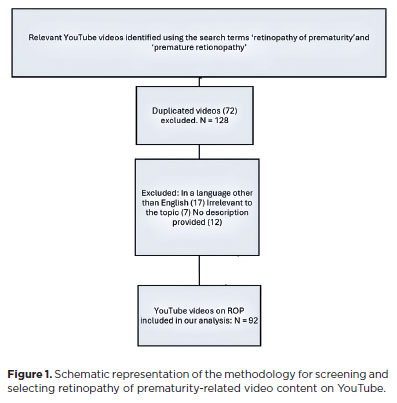
PURPOSE: This study aimed to evaluate the quality and reliability of YouTube videos as an educational resource about retinopathy of prematurity.
METHODS: Videos were sourced from YouTube using the search terms "retinopathy of prematurity" and "premature retinopathy" with the default settings. Each video was assessed on the following metrics: views, likes, dislikes, comments, upload source, country of origin, view ratio, like ratio, and video power index. The quality and reliability of the videos were evaluated by two independent researchers using the DISCERN questionnaire, the JAMA benchmarks, the Global Quality Score scale, the Health on the Net Code of Conduct, and the Ensuring Quality Information for Patients scale.
RESULTS: The study assessed 92 videos, the majority of which (42 videos, 45.7%) originated from the United States. Most of the videos focused on screening, pathophysiology, and diagnosis of retinopathy of prematurity (61.9%). The primary contributors were medical organizations (19 videos, 20.6%), nonacademic health channels (19 videos, 20.6%), and physicians (15 videos, 16.3%). Significant differences were found between the DISCERN (p=0.003), JAMA (p=0.001), Global Quality Score (p=0.003), Health on the Net Code of Conduct (p=0.006), and Ensuring Quality Information for Patients (p=0.001) scores among different video sources. However, the key video metrics did not differ. Using the DISCERN and Global Quality Score scales, the overall YouTube video content on retinopathy of prematurity was rated as moderate in quality. Using the Health On the Net Code of Conduct and Ensuring Quality Information for Patients scales, it was rated as high quality. Strong correlations were observed between the scores on all of the scales (p<0.001).
CONCLUSION: Videos from medical organizations and healthcare centers were of a higher quality than those from nonmedical sources. Despite the varied foci of each evaluation scale, the strong correlation between them indicates that they provide reliable and comprehensive assessments of the quality of informational content.
Keywords: Retinopathy of prematurity; YouTube; Information dissemination/methods; Online education; Internet access; Social media/instrumentation; Information seeking behavior; Internet/statistics & numerical data; Consumer health information; Social networking
10-tab01.jpg)
Abstract
Objetivo: Este estudo de qualidade e confiabilidade teve como objetivo identificar a variabilidade da massa do volume da gota de colírios multidose e verificar a existência de um padrão de referência para o volume da gota dos colírios usando lágrimas artificiais do mercado brasileiro.
Métodos: Cinco marcas de colírios lubrificantes foram avaliadas quanto ao volume da gota. Uma gota padrão ideal de 20 μL de cada fabricante foi coletada usando uma micropipeta ajustável. Os frascos dos colírios foram selecionados aleatoriamente e cinco medidas das massas das amostras foram coletadas usando escalas de precisão calibradas.
Resultados: A massa das amostras de 20 μL variou significativamente (p<0,001) entre os diferentes fabricantes. No entanto, entre os colírios da mesma marca, a variação da massa não foi estatisticamente diferente. A massa média global de todas as gotas pesadas foi de 18,24 mg e foi observada uma não-uniformidade entre todas as marcas de colírios.
Conclusão: Identificou-se uma variação significativa nas massas do volume das gotas dos colírios lubrificantes, usando equipamento padrão de laboratório. A heterogeneidade no volume da gota dos colírios testados sugere a existência de discrepâncias potenciais em suas posologias, possivelmente alterando a eficácia do tratamento. Uma medida de referência pré-estabelecida pode levar à produção de colírios com gotas de tamanho mais apropriado para uso em olhos humanos.
Keywords: Soluções oftálmicas/administração & dosagem; Volume da gota; Padrão de referência dos colírios; Padronização de colírios multidose; Administração de medicamentos oftálmicos; Qualidade

Abstract
PURPOSE: This study aimed to evaluate disparities in the distribution of ophthalmologists and the volume of cataract surgeries across Brazil, considering public and private health sectors and the country's federative units.
METHODS: Data on ophthalmologists were obtained from the National Medical Residency Commission and the Associação Múdica Brasileira. Information on cataract surgeries performed through the Unified Health System was collected from the DATASUS database, while data on procedures covered by private health plans were retrieved from the National Supplementary Health Agency. Population estimates from the 2024 Demographic Census of the Brazilian Institute of Geography and Statistics were used to calculate physician density and surgery rates per 100,000 inhabitants. Associations between the number of ophthalmologists and cataract surgery volume were analyzed using Spearman's correlation coefficient.
RESULTS: Brazil has 16,784 ophthalmologists, representing 8.96 specialists per 100,000 inhabitants. Marked disparities were observed: large cities (>500,000 inhabitants) had 18.75 ophthalmologists per 100,000 residents, whereas municipalities with <50,000 inhabitants had fewer than one. Across federative units, physician density ranged from 19.18 per 100,000 in the Federal District to 4.22 in Maranhão. In 2024, cataract surgery rates varied widely, from 1,012.61 per 100,000 inhabitants in the Southeast to 435.00 in the North. Nationally, Unified Health System performed 736.30 surgeries per 100,000 inhabitants, compared with 1,276.79 in the private sector. On average, each ophthalmologist performed 96.92 cataract surgeries annually.
CONCLUSION: Significant inequalities persist in the geographic distribution of ophthalmologists and in cataract surgery provision, with higher surgical volumes concentrated in the private sector. Targeted policies are required to address regional disparities and improve the equity and efficiency of cataract care delivery in Brazil.
Keywords: Ophthalmologists/supply & distribution; Ophthalmologists/statistics & numerical data; Cataract extraction; Health services accessibility/statistics & numerical data; Healthcare disparities; Health policy; Public health systems; Insurance, Heal
Abstract
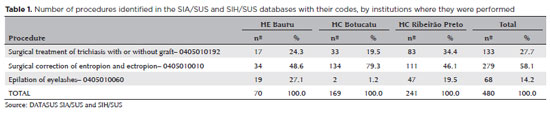
PURPOSE: Trachoma is the major infectious cause of preventable blindness in the world, and its sequelae include the presence of cicatricial entropion and trachomatous trichiasis. Trachoma can be corrected by surgical treatment of the eyelids and, if left untreated, may result in corneal opacification, low vision, and blindness. There are limited data on trachomatous trichiasis in Brazil. This study was conducted to estimate the frequency of entropion and trichiasis surgeries of trachomatous origin based on the records of procedures performed in specialized hospitals that served the Unified Health System (SUS) in the years 2016 and 2017.
METHODS: This was a retrospective study conducted in the oculoplastic sectors of the ophthalmology services of the following three hospitals in the state of São Paulo: Hospital das Clínicas da Faculdade de Medicina de Botucatu (HC Botucatu), Hospital das Clínicas da Faculdade de Medicina de Ribeirão Preto da Universidade de São Paulo (HC Ribeirão Preto), and Hospital Estadual de Bauru (HE Bauru). Medical records corresponding to the codes of interest were evaluated.
RESULTS: In total, 462 medical records were evaluated, including 170 (36.8%) at HC Botucatu, 61 (13.2%) at HE Bauru, and 231 (50.0%) at HC Ribeirão Preto. There were 39 (8.4%) cases of trachomatous trichiasis, ranging from 9 (14.8%) at HE Bauru to 15 (6.5%) at HC Ribeirão Preto.
CONCLUSIONS: The frequency of surgery due to trachoma was low in these oculoplastic services. The state of São Paulo might have reached the goal for trachoma elimination in the surgical component. The questionnaire used for data collection was successfully tested despite some difficulties in collecting data from the medical records. Studies with the same methodology are recommended in other services in the areas of endemic trachoma in the past to understand the frequency of eye lid surgeries performed for treating trachomatous sequelae.
Keywords: Trachoma; Trichiasis; Medical records; Epidemiology; Neglected diseases; Unified Health System; Brazil
10-tab01.jpg)
Abstract
OBJETIVO: Analisar a teleconsulta em um hospital público de ensino oftalmológico, durante o período da pandemia do COVID-19.
MÉTODOS: Foram revisados os registros médicos dos pacientes que solicitaram teleconsulta oftalmológica, no período de Junho de 2020 a Março de 2021. Os resultados incluem dados demográficos, sintomas de queixas oculares e hipóteses diagnósticas. Além disso, foram analisados dados da pesquisa de satisfação aplicada após cada teleconsulta.
RESULTADOS: Um total de 161 prontuários foram revisados. A idade média dos pacientes foi de 45.98 ± 17.57 (8 a 90) anos, a maioria mulheres, 113 (70,20%). Apenas 57 (35,60%) eram pacientes acompanhados no hospital previamente. A principal razão pela busca pela teleconsulta foi o erro refracional, 73 (45.43%), seguido de olho seco, 16 (9.93%), pterígio, 13 (8.07%). Outros motivos foram o acompanhamento de doenças prévias como glaucoma, retinopatias, miopia, estrabismo e ceratocone. Quanto a pesquisa de satisfação, 151(93,87%) pacientes responderam a pesquisa on-line. A maioria deles mostrou-se satisfeito com a teleconsulta (94.03%) e fariam uma nova teleconsulta (90.06%).
CONCLUSÃO: A teleconsulta pode auxiliar a saúde pública em oftalmologia podendo ser utilizada em hospitais universitários. Embora o erro refracional tenha sido o motivo mais frequente nas consultas, os pacientes mostraram-se satisfeitos com essa modalidade de atendimento que serve como um serviço de orientação.
Keywords: COVID-19; Telemedicina; Pandemias; Consulta remota; Oftalmopatias/diagnóstico; Hospitais públicos
Abstract
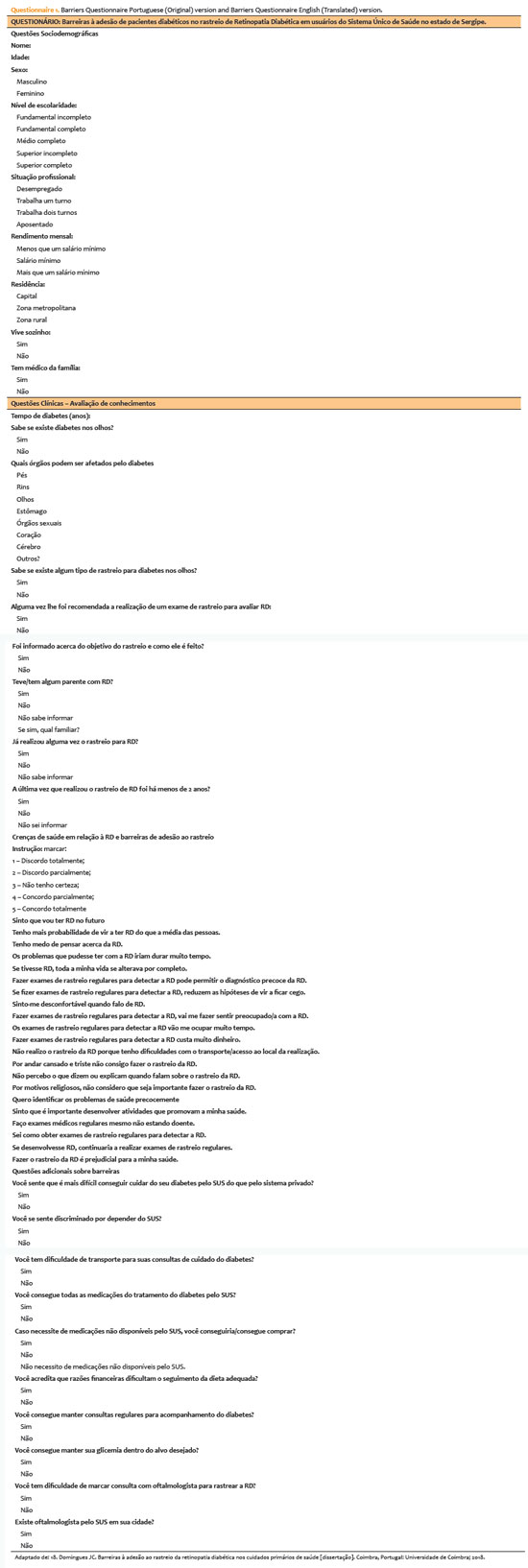
PURPOSE: This study aimed to identify barriers to diabetic retinopathy screening among a socioeconomically vulnerable urban population in northeast Brazil.
METHODS: A cross-sectional study was conducted during a diabetic retinopathy screening campaign at primary healthcare units. Ninety-five patients with diabetes underwent retinal examinations and completed a structured interview. Clinical, demographic, and socioeconomic data were collected.
RESULTS: The study population consisted predominantly of older adults (mean age: 60.7 ± 10.5 years), with a high prevalence of type 2 diabetes (99.0%) and low educational attainment. Most participants were economically inactive (81.1%) and reported low income (83.2%). Diabetic retinopathy and maculopathy were highly prevalent, affecting 50.0% and 22.9% of participants, respectively. Longer duration of diabetes was significantly associated with greater awareness of diabetic retinopathy (p=0.035), higher HbA1c levels (p<0.001), and increased prevalence of diabetic retinopathy (p=0.013) and maculopathy (p=0.002). Notably, 33.3% of participants reported difficulties attending medical appointments for diabetes management. In addition, 78.1% experienced challenges scheduling ophthalmologic evaluations, and 76.3% reported that no ophthalmologist was available in their city through the public healthcare system. Financial constraints also limited adherence to recommended dietary practices (90.4%) and impaired glycemic control, with more than half of participants reporting difficulty maintaining target glucose levels.
CONCLUSION: Major barriers to diabetic retinopathy screening included limited awareness of the importance of screening, financial hardship, and transportation challenges. Targeted educational initiatives and structural interventions such as expanded screening programs incorporating telemedicine and subsidized transportation—may improve screening adherence among vulnerable populations.
Keywords: Diabetic retinopathy; Mass screening; Health services accessibility; Health knowledge, attitudes, practices; Socioeconomic factors
Abstract
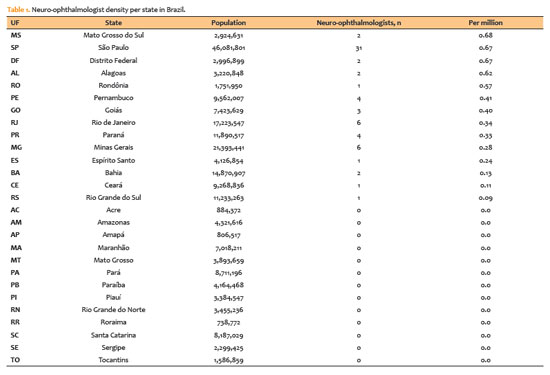
PURPOSE: Neuro-ophthalmology is a highly specialized subspecialty at the interface of neurology and ophthalmology. Globally, workforce shortages and geographic maldistribution limit access to neuro-ophthalmic care. Although Brazil has a large ophthalmology workforce, regional disparities may restrict access to subspecialty services. The national distribution of neuro-ophthalmologists has not previously been quantified. This study aimed to characterize the geographic distribution of neuro-ophthalmologists in Brazil and identify potential gaps in access to neuro-ophthalmic care.
METHODS: This cross-sectional, population-based study used data from the registry of the Brazilian Neuro-Ophthalmology Association (Associação Brasileira de Neuro-Oftalmologia [ABNO]) to identify practicing neuro-ophthalmologists (data extracted on January 1, 2026). Municipal- and state-level population estimates were obtained from the Brazilian Institute of Geography and Statistics. Specialist density was calculated as the number of neuro-ophthalmologists per million inhabitants. States were classified according to the presence or absence of at least one specialist and were further grouped into Brazil's five macroregions for comparative analyses. Descriptive statistical analyses were performed.
RESULTS: A total of 66 neuro-ophthalmologists were identified across 14 of Brazil's 27 states. Thirteen states had no registered neuro-ophthalmologists, representing approximately 49.4 million people (23.2% of the national population). Five states—São Paulo (n=31), Rio de Janeiro (n=6), Minas Gerais (n=6), Pernambuco (n=4), and Paraná (n=4)—accounted for more than two-thirds of all specialists. Specialist density ranged from 0 to more than 0.7 per million inhabitants, with higher concentrations in the Southeast and no specialists in several states in the North and Northeast. The distribution was highly clustered in metropolitan areas.
CONCLUSION: Brazil exhibits marked geographic maldistribution of neuro-ophthalmologists, with nearly one-quarter of the population lacking local access to specialized care. The concentration of specialists in urban and economically developed regions mirrors international trends and may exacerbate inequities within the public health system. Expanding the workforce and integrating teleophthalmology into neuro-ophthalmic services may help reduce regional disparities and improve access to specialized care.
Keywords: Ophthalmologists; Public health; Health policy; Workforce; Professional practice location; Telemedicine; Teleophthalmology; Brazil
Abstract
PURPOSE: To describe the ophthalmological findings of dry eye disease and its relation to the quality of life of COVID-19 survivors.
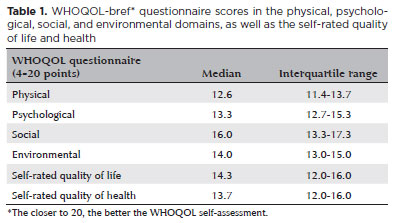
METHODS: COVID-19 survivors who had previously been hospitalized at Hospital das Clínicas de Ribeirão Preto complex underwent an ophthalmological evaluation, which included a dry eye disease questionnaire, break-up time, fluorescein staining, and Schirmer test. We collected the presenting and best-corrected visual acuity, sociodemographic data, personal medical history, and scores from a self-reported quality of life questionnaire (WHOQOL-bref). According to the severity of the acute phase of the disease, the patients were classified into mild-to-moderate, severe, and critical groups.
RESULTS: Ninety-five patients (190 eyes) were evaluated 100 ± 44 days after the onset of COVID-19 symptoms. Of these, 83 patients (87.3%) completed the WHOQOL-bref questionnaire. Ten patients (12.0%) had mild-to-moderate COVID-19, 41 (49.4%) had severe COVID-19, and 32 (38.6%) had critical COVID-19. The median best-corrected visual acuity was logMAR 0 (0-1). Approximately 26.3% patients had a history of dry eye disease or severe dry eye symptoms (frequent or constant ocular dryness and irritation). There was an association between the proportion of patients with dry eye disease and the quality of life (p=0.014) and health (p=0.001). Furthermore, there was a significant trend between the proportion of patients with dry eye disease and how they rated their health and quality of life (p=0.0004 and 0.0027, respectively.
CONCLUSIONS: There is a significant negative correlation between the proportion of patients with dry eye disease and their self-reported quality of life.
Keywords: COVID-19; Coronavirus infections; SARS-CoV-2; Eye diseases; Epidemiology; Ocular surface; Public health
04-fig01tb.jpg)
Abstract
OBJETIVO: Descrever o processo de implementação e os resultados preliminares de um sistema de vigilância epidemiológica para endoftalmites associada à assistência à saúde.
MÉTODOS: Trata-se de um estudo de caso de implementação de um sistema de vigilância epidemiológica para endoftalmites. O sistema de vigilância epidemiológica para endoftalmites é um sistema estruturado que possibilita a vigilância de casos de endoftalmite associados à assistência à saúde após procedimentos oftalmológicos invasivos, desenvolvido e coordenado pela Divisão de Infecção Hospitalar da Secretaria de Estado da Saúde, São Paulo, Brasil. O processo de implementação incluiu uma fase piloto, seguida pela fase de expansão. Os dados foram enviados mensalmente à Divisão de Infecção Hospitalar pelos estabelecimentos de saúde participantes que realizaram procedimentos oftalmológicos no estado de São Paulo, Brasil no período de setembro de 2017 a dezembro de 2019.
RESULTADOS: Entre os 1.483 estabelecimentos de saúde elegíveis, 175 participaram do estudo (taxa de adesão de 11,8%), relatando 222.728 procedimentos oftalmológicos realizados, sendo 164.207 cirurgias de catarata e 58.521 injeções intravítreas. A taxa de incidência global de endoftalmite relatada foi de 0,05% (n=105; 80 casos após cirurgia de catarata e 25 casos após injeção intravítrea). As taxas de incidência entre os estabelecimentos de saúde variaram de 0,02% a 4,55%. A maioria dos casos foi causada por bactérias gram-positivas, principalmente Staphylococcus spp. Em 36 (46,2%) casos não houve crescimento bacteriano; nenhuma amostra foi coletada em 28 (26,7%) casos. O sistema de vigilância epidemiológica para endoftalmites possibilitou a identificação de um surto de quatro casos de endoftalmite após injeção intravítrea.
CONCLUSÃO: O sistema de vigilância epidemiológica para endoftalmites mostrou-se operacionalmente viável e eficiente para o monitoramento de casos de endoftalmite em nível estadual.
Keywords: Monitoramento epidemiológico; Endoftalmite; Atenção à saúde; Inquéritos epidemiológicos; Procedimentos cirúrgicos oftalmológicos
Abstract
PURPOSE: To evaluate the current scenario of rehabilitation services for people with retinal diseases in Brazil.
METHODS: An exploratory study was conducted between February 2023 and June 2023 using a Google Forms questionnaire that was distributed by patient associations.
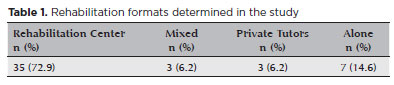
RESULTS: A total of 142 patients, aged 18-80 were included in the study. Forty-eight participants (33.8%) were undergoing rehabilitation, while 94 (66.2%) were not. The main reason for not undergoing rehabilitation was a lack of knowledge about the service (n=41, 43.6%). Healthcare professionals made the most referrals (n=20, 41.7%). Rehabilitation improved the quality of life in 38 (80.9%) participants, and 28 (62.2%) participants were satisfied with the process. There was a statistically significant disparity between patient satisfaction and the locale of rehabilitation implementation. Twenty-three (69.7%) participants who underwent rehabilitation at a specialized center reported satisfaction.
CONCLUSION: The rehabilitation process directly increases the quality of life of individuals with retinal diseases. However, despite the availability of rehabilitation centers in large parts of Brazil, most patients with retinal diseases are not acquainted with the rehabilitation process and do not receive referrals for it. Thus, healthcare providers should increase referrals to rehabilitation centers, and public policies should be formulated to raise awareness among the population regarding the availability of rehabilitation services.
Keywords: Rehabilitation; Quality of life; Retinal diseases; Personal satisfaction; Patient care team; Public policy; Surveys and questionnaires; Brazil
Abstract
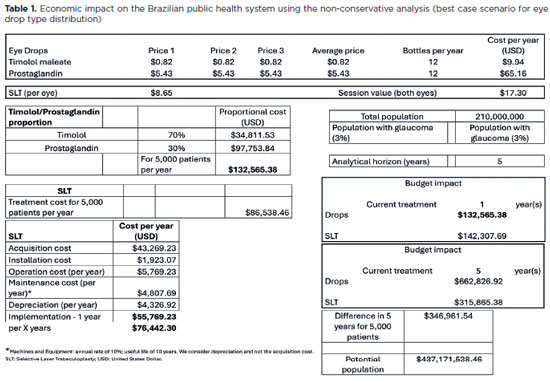
PURPOSE: To evaluate the economic impact of the following initial treatment scenarios for glaucoma on the Brazilian Public Health System (SUS): (1) traditional continuous instillation of hypotensive eye drops and (2) single session of selective laser trabeculoplasty.
METHODS: Economic impact was analyzed in three scenarios, from the least to the most conservative, for a hypothetical cohort of 5,000 individuals with open-angle glaucoma. Thereafter, projections were made on the basis of a glaucoma prevalence of 3% in the 2021 Brazilian population size.
RESULTS: All three scenarios demonstrated that selective laser trabeculoplasty exhibited a significantly lower economic impact than the eye drops on SUS over one and five years. Furthermore, the difference was more than United States Dollar 8 billion at five years when considering 3% of the Brazilian population aged >40 years in 2021.
CONCLUSION: As the initial treatment for primary open-angle glaucoma, selective laser trabeculoplasty exhibited a lower economic impact on SUS than latanoprost and timolol maleate eye drop instillation in all the studied scenarios over one and five-year periods.
Keywords: Glaucoma; Trabeculotomy; Laser therapy; Cost analysis; Health care cost Unified Health System; Brazil
Abstract
PURPOSE: This study measured serum hypoxia-inducible factor-1 (HIF-1α) and survivin levels in patients with diabetes and investigated their association with the severity of retinopathy.
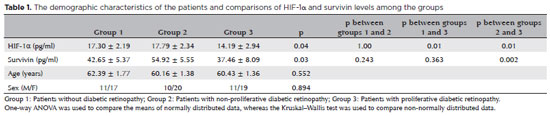
METHODS: This study included 88 patients with type 2 diabetes mellitus who underwent routine eye examinations. Three groups were created. Group 1 consisted of patients without diabetic retinopathy. Group 2 included patients with non-proliferative diabetic retinopathy. Group 3 included patients with proliferative diabetic retinopathy. To measure serum HIF-1α and survivin levels, venous blood samples were collected from patients.
RESULTS: The mean HIF-1α levels in groups 1, 2, and 3 were 17.30 ± 2.19, 17.79 ± 2.34, and 14.19 ± 2.94 pg/ml, respectively. Significant differences were detected between groups 1 and 3 (p=0.01) and between groups 2 and 3 (p=0.01). The mean survivin levels in groups 1, 2, and 3 were 42.65 ± 5.37, 54.92 ± 5.55, and 37.46 ± 8.09 pg/ml, respectively. A significant difference was only detected between groups 2 and 3 (p=0.002).
CONCLUSION: The present study revealed that serum HIF-1α and survivin levels are increased in patients with non-proliferative diabetic retinopathy compared to those in patients without diabetic retinopathy.
Keywords: Survivin, HIF-1, Diabetic retinopathy, Hypoxia, Neovascularization
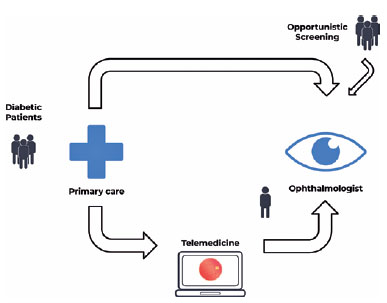
Abstract
PURPOSE: Timely screening and treatment are essential for preventing diabetic retinopathy blindness. Improving screening workflows can reduce waiting times for specialist evaluation and thus enhance patient outcomes. This study assessed different screening approaches in a Brazilian public healthcare setting.
METHODS: This retrospective study evaluated a telemedicine-based diabetic retinopathy screening implemented during the COVID-19 pandemic and compared it with in-person strategies. The evaluation was conducted from the perspective of a specialized referral center in an urban area of Central-West Brazil. In the telemedicine approach, a trained technician would capture retinal images by using a handheld camera. These images were sent to specialists for remote evaluation. Patient variables, including age, gender, duration of diabetes diagnosis, diabetes treatment, comorbidities, and waiting time, were analyzed and compared.
RESULTS: In total, 437 patients with diabetes mellitus were included in the study (mean age: 62.5 ± 11.0 years, female: 61.7%, mean diabetes duration: 15.3 ± 9.7 years, insulin users: 67.8%). In the in-person assessment group, the average waiting time between primary care referral and specialist evaluation was 292.3 ± 213.9 days, and the referral rate was 73.29%. In the telemedicine group, the average waiting time was 158.8 ± 192.4 days, and the referral rate was 29.38%. The telemedicine approach significantly reduced the waiting time (p<0.001) and significantly lowered the referral rate (p<0.001).
CONCLUSION: The telemedicine approach significantly reduced the waiting time for specialist evaluation in a real-world setting. Employing portable retinal cameras may address the burden of diabetic retinopathy, especially in resource-limited settings.
Keywords: Telemedicine/methods; Diabetic retinopathy; Diagnostic screening programs; Vision screening; Practice patterns, physicians
13-fig01.jpg)
Abstract
OBJETIVO: A diabetes mellitus é considerada uma epidemia global e causa de baixa visual em países em desenvolvimento. Este estudo foi realizado com o objetivo de avaliar a viabilidade do retinógrafo portátil e análise remota de imagens associada a questionário virtual para o rastreio de retinopatia diabética em Unidades Básicas de Saúde da cidade de Ribeirão Preto/SP durante a pandemia de Covid-19.
MÉTODOS: Trezentos e sessenta pacientes compareceram a campanha. O acolhimento foi realizado na Unidade Básica de Saúde pela equipe de enfermagem, respeitando medidas de prevenção do Covid-19 Os realizou-se aferição da pressão arterial e glicemia capilar seguida de dilatação. Dados demográficos e sociais foram coletados através de questionário on-line padronizado via smartphone e realizou-se a triagem da retinopatia diabética através da obtenção de imagens com retinógrafos portáteis realizados por residentes de oftalmologia previamente treinados, com a aquisição de 2 imagens padronizadas de 45o: uma do segmento posterior e outra nasal ao nervo óptico.
RESULTADOS: Trezentos e sessenta pacientes foram atendidos durante a campanha. Dez pacientes (1,02%) foram excluídos devido à opacidade de meios e impossibilidade de obtenção de imagens de fundo de olho. Foram avaliados 350 pacientes, 64% do sexo feminino, 45% entre 55 e 70 anos e 55% brancos. A Campanha foi a primeira avaliação de retina para 40,5% dos pacientes e 47,56% apresentavam diabetes mellitus há mais de 10 anos. Na análise comparativa da classificação da retinopatia diabética segundo Early Treatment Diabetic Retinopathy Study (triagem X Nuvem) observou-se uma diferença de 7,8% nos resultados. Retinopatia diabética leve foi observada em 12,23%, moderada em 6,31%, proliferativa em 2,58%; edema macular presente em 4,58% e ausência de retinopatia diabética em 72,78% dos pacientes.
CONCLUSÃO: A utilização de retinógrafos portáteis juntamente a telemedicina, para o rastreamento da retinopatia diabética pode ser considerada uma alternativa eficiente para triagem e diagnóstico da retinopatia diabética dentro ou fora do cenário pandêmico, auxiliando na prevenção de perda visual pelo diabetes.
Keywords: Retinopatia diabética/diagnóstico; Covid-19; Retina/diagnóstico por imagem; Oftalmologia/instrumentação; Oftalmoscópicos; Sistemas automatizados de assistência junto ao leito; Telemedicina/métodos
 ABO is licensed under a Creative Commons Attribution-NonComercial 4.0 Internacional.
About
Issues
Editorial Board
Submission

Arquivos Brasileiros de Oftalmologia
Official publication of Brazilian Council of Ophthalmology - Conselho Brasileiro de Oftalmologia (CBO)
Rua Casa do Ator, 1.117 - 2nd floor - Zip Code: 04546-004
São Paulo - SP, Brazil
TEL: +55 11 3266-4000
E-mail: [email protected]