Arq. Bras. Oftalmol. 2024;87 (6 )
:1-7
| DOI: 10.5935/0004-2749.2022-0252
Abstract
Objetivo: Determinar as taxas de fechamento de buracos maculares idiopáticos grandes tratados com vitrectomia posterior e técnica de flap invertido 360 graus pediculado de membrana limitante interna, sem posicionamento de cabeça pós-operatório e definir melhora visual, tipos de fechamento do buraco macular e integridade das camadas retinianas externas como objetivo secundário.
Métodos: Este estudo foi uma série retrospectiva de casos. Todos os pacientes foram submetidos a vitrectomia com flap invertido 360 graus pediculado de membrana limitante interna e tamponamento com gás, sem posição de cabeça no pós-operatório. Idade, gênero, tempo de redução da acuidade visual, outras patologias oculares e status do cristalino foram compilados. Medida de melhor acuidade visual corrigida e tomografia de coerência óptica foram registradas durante as visitas de pré e pós-operatório (15 dias e 2 meses após cirurgia).
Resultados: Vinte olhos de 19 pacientes foram incluídos neste estudo. A idade média foi de sessenta e seis anos. Um total de 19 olhos (95%) atingiu fechamento do buraco, observado através das imagens de tomografia de coerência óptica após 2 meses de cirurgia. Melhor acuidade visual corrigida média aumentou +1,08 pré-operatória para +0,66 LogMAR em 2 meses de cirurgia (p<0,001), com média de 20 letras de melhora visual (0,4 LogMAR) na tabela do Early Treatment Diabetic Retinopathy Study. Dois tipos de fechamento do buraco foram observados: V (47,36%) e U (52,63%).
Conclusão: A técnica de flap invertido 360 graus pediculado de membrana limitante interna, sem posicionamento de cabeça no pós-operatório promoveu elevada taxa de fechamento (95%), reestabelecimento das camadas retinianas externas, fechamento com contorno foveal dos tipos V e U, além de melhora visual na maioria dos casos de BMI grandes (mesmo nos buracos maiores que 650 μm). Esta técnica pode representar uma alternativa para o tratamento de buracos maculares grandes em pacientes impossibilitados de cumprir o tradicional posicionamento de cabeça pós-operatório.
Keywords: Perfurações retinianas; Cuidados pós-operatórios; Vitrectomia; Cirurgia vitreorretiniana
Arq. Bras. Oftalmol. 2024;87 (3 )
:1-7
| DOI: 10.5935/0004-2749.2022-0374
Abstract
PURPOSE: To describe a 2019 acute toxoplasmosis outbreak in the city of São Paulo, Brazil, and to evaluate the laboratory serological profile for toxoplasmosis for three consecutive years. The ophthalmological manifestations of the patients involved in the outbreak were also studied.
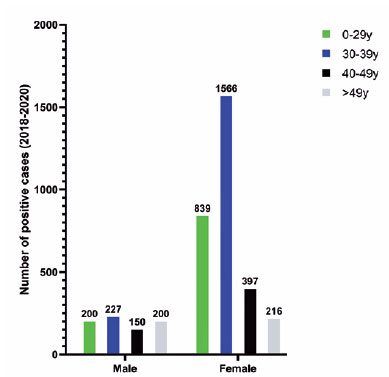
METHODS: A cross-sectional descriptive study of a toxoplasmosis outbreak in São Paulo, Brazil, between February and May 2019. Epidemiological data were described, as were the observed ocular manifestations. As part of this study the number of patients with positive IgM toxoplasmosis serology was obtained from a large laboratory network (DASA) for three consecutive years, including the year of the outbreak (2018, 2019, 2020).
RESULTS: Eighty-three individuals were identified in the outbreak and two clusters were studied. The clinical picture of at least 77% of the patients, the epidemiological analysis, and the short incubation period (5-8 days) suggested contamination by oocysts. Serological laboratory data analysis revealed an increase of positive toxoplasmosis IgM in 2019 of 73% compared to the previous year. Ophthalmological examination revealed that at least 4.8% of the patients developed toxoplasmic retinochoroiditis, none of whom had been treated during the acute systemic disease.
CONCLUSION: Our findings indicate vegetable contamination as the possible source of this outbreak, a high prevalence of toxoplasmosis in São Paulo during the outbreak period, and a drop in the number of tests during the COVID-19 pandemic. Retinochoroiditis was observed in at least 4.8% of the cases. We confirm the need to implement effective means for the prevention, diagnosis, and treatment of the disease. This may involve raising awareness among the population of the importance of vegetable hygiene, and improved quality control of food and water.
Keywords: Toxoplasmosis/etiology; Food parasitology; Water/parasitology; Uveitis, posterior/parasitology; Chorioretinitis/parasitology; Visual acuity; Disease outbreaks; Eye manifestations; Humans.


 ABO is licensed under a Creative Commons Attribution-NonComercial 4.0 Internacional.


02-fig01.jpg)
05-fig01.jpg)
02-fig01.jpg)
02-fig01.jpg)
12-fig01.jpg)
09-fig01.jpg)
13-fig01.jpg)
04-fig01.jpg)
14-fig01tb.jpg)
12-fig01.jpg)
03-fig01.jpg)
03-fig01.jpg)
04-fig01tb.jpg)