Showing of 1 until 14 from 119 result(s)
Search for: Glaucoma; Ophthalmic solutions; Antihypertensive agents; Comparative study; Risk factors
Abstract
PURPOSE: To report the surgical outcomes of patients with primary congenital glaucoma who underwent gonioscopy-assisted transluminal trabeculotomy.
METHODS: This retrospective, noncomparative, interventional study included consecutive patients with primary congenital glaucoma with uncontrolled intraocular pressure undergoing gonioscopy-assisted transluminal trabeculotomy between January 2017 and January 2020. The included participants were followed up for at least 24 months, and only one surgeon performed all the procedures. The number of glaucoma medications, pre- and postoperative intraocular pressure, treatment extension (in quadrants), surgical complications, and any associated events or interventions were documented.
RESULTS: This study included 13 eyes from 10 patients (mean age, 4.5 ± 3.2 years; range, 3 months to 10 years). After a 24-month follow-up, the mean intraocular pressure significantly decreased from 26.1 ± 3.7 to 11.8 ± 2.5 mmHg (p<0.001). The mean number of glaucoma medications was reduced from 3.3 ± 0.5 to 0.85 ± 1.0 (p<0.001). At the end of the follow-up interval, all eyes (13 out of 13) had an intraocular pressure between 7 and 15 mmHg. In 11 of 13 eyes (84.6%), gonioscopy-assisted transluminal trabeculotomy was performed in all quadrants (360º). The most frequent postoperative complication was transitory (self-limited) hyphema (7 out of 13 eyes [53.8%]). No sight-threatening adverse events occurred during the entire follow-up period.
CONCLUSIONS: The 2-year follow-up results indicated gonioscopy-assisted transluminal trabeculotomy as an efficient and safe option for primary congenital glaucoma treatment with minimal postoperative complications.
Keywords: Glaucoma, Open-angle/surgery; Gonioscopy; Trabeculectomy/methods; Intraocular pressure; Antihypertensive agents/therapeutic use.
Abstract
PURPOSE: This study aimed to compare the safety and effectiveness of intraocular pressure reduction between micropulse transscleral cyclophotocoagulation and “slow cook” transscleral cyclophotocoagulation in patients with refractory primary open-angle glaucoma.
METHODS: We included patients with primary open angle glaucoma with at least 12 months of follow-up. We collected and analyzed data on the preoperative characteristics and postoperative outcomes. The primary outcomes were a reduction of ≥20% of the baseline value (criterion A) and/or intraocular pressure between 6 and 21 mmHg (criterion B).
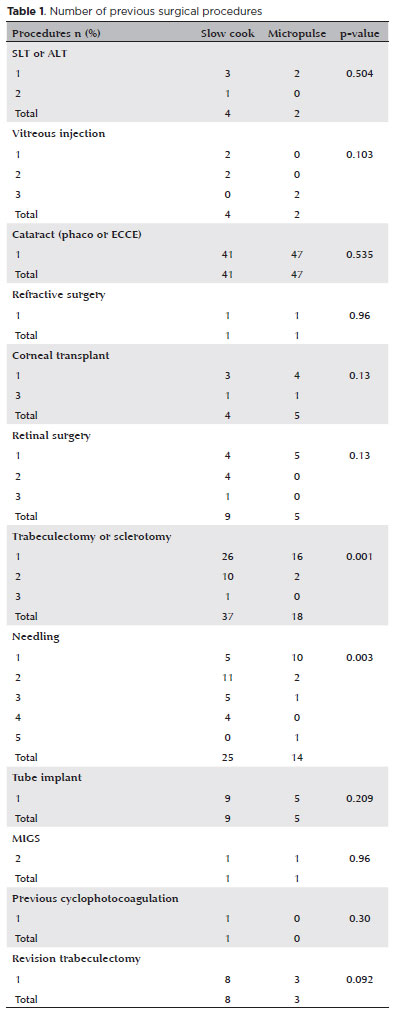
RESULTS: We included 128 eyes with primary open-angle glaucoma. The preoperative mean intraocular pressure was 25.53 ± 6.40 and 35.02 ± 12.57 mmHg in the micropulse- and “slow cook” transscleral cyclophotocoagulation groups, respectively (p<0.001). The mean intraocular pressure was reduced significantly to 14.33 ± 3.40 and 15.37 ± 5.85 mmHg in the micropulse- and “slow cook” transscleral cyclophotocoagulation groups at the last follow-up, respectively (p=0.110). The mean intraocular pressure reduction at 12 months was 11.20 ± 11.46 and 19.65 ± 13.22 mmHg in the micropulse- and “slow cook” transscleral cyclophotocoagulation groups, respectively (p<0.001). The median preoperative logMAR visual acuity was 0.52 ± 0.69 and 1.75 ± 1.04 in the micropulse- and “slow cook” transscleral cyclophotocoagulation groups, respectively (p<0.001). The mean visual acuity variation was -0.10 ± 0.35 and -0.074 ± 0.16 in the micropulse- and “slow cook” transscleral cyclophotocoagulation, respectively (p=0.510). Preoperatively, the mean eye drops were 3.44 ± 1.38 and 2.89 ± 0.68 drugs in the micropulse- and “slow cook” transscleral cyclophotocoagulation groups, respectively (p=0.017), but those were 2.06 ± 1.42 and 1.02 ± 1.46 at the end of the study in the slow cook” and micropulse transscleral cyclophotocoagulation groups, respectively (p<0.001). The success of criterion A was not significant between both groups. Compared with 11 eyes (17.74%) in the slow cook” transscleral cyclophotocoagulation group, 19 eyes (28.78%) in the micropulse transscleral cyclophotocoagulation group showed complete success (p=0.171). For criterion B, 28 (42.42%) and 2 eyes (3.22%) showed complete success after micropulse- and slow cook” transscleral cyclophotocoagulation, respectively (p<0.001).
CONCLUSION: Both techniques reduced intraocular pressure effectively.
Keywords: Sclera/surgery; Glaucoma, open-angle/surgery; Ciliary body/surgery; Intraocular pressure; Laser coagulation/methods; Lasers, semiconductor; Comparative study; Effectiveness
Abstract
OBJETIVO: Investigar a ação de colírios esteróides na doença de superfície ocular em pacientes a serem submetidos a cirurgia de trabeculectomia.
MÉTODOS: Foram incluídos 31 olhos de 31 pacientes com glaucoma em uso de pelo menos 3 medicações tópicas anti- hipertensivas há mais de 6 meses. Todos os pacientes foram tratados com colírio de etabonato de loteprednol 0,5% (1 gota a cada 6 horas) durante os 7 dias precedentes à cirurgia de trabeculectomia. Além disso, foram submetidos a exame oftalmológico completo e responderam questionário validado que visa avaliar parâmetros subjetivos correlacionados a doenças da superfície ocular (Ocular Surface Disease Index). Os aspectos clínicos avaliados foram: tempo de ruptura lacrimal, coloração da córnea após colírio de fluoresceína (ceratite) e hiperemia conjuntival. Os pacientes foram, ainda, submetidos à análise da superfície ocular através de novo
software tecnológico denominado “Keratographic”, tecnologia não invasiva que permite avaliar a doença da superfície ocular. A comparação da doença de superfície ocular antes e após a trabeculectomia foi avaliada estatisticamente através do teste pareado.
RESULTADOS: A média de idade dos participantes foi de 69,90 ± 10,77 anos. A AV média foi de 0,40 ± 0,34 logMAR. A taxa de prevalência global da Ocular Surface Disease Index foi de 27,20 ± 17,56 unidades. Em relação à avaliação clínica, não houve diferença significativa em relação hiperemia, ruptura lacrimal e ceratite antes e após a cirurgia (p>0,05 para todas as comparações). Em relação à análise com o “keratograph (menisco lacrimal, hiperemia, tempo de ruptura do filme lacrimal, meibografia para a pálpebra superior e inferior), os dois únicos parâmetros que diferiram significativamente antes e após a trabeculectomia, foram hiperemia e a média do tempo de rupture do filme lacrimal. Após a cirurgia de trabeculectomia, os pacientes apresentaram aumento da hiperemia conjuntival e diminuição do tempo de ruptura do filme lacrimal (p=0,013 e p=0,041, respectivamente).
CONCLUSÕES: O presente estudo, não somente confirma a elevada prevalência da doença de superfície ocular em pacientes com glaucoma, como também demonstra que a mesma pode ser mensurada objetivamente através de parâmetros mensurados pelo Keratograph. Apesar de ter utilizado etabonato de loteprednol 0,5% uma semana antes da cirurgia, nossa amostra apresentou piora da hiperemia conjuntival e diminuição no tempo de ruptura do filme lacrimal no pós-operatório.
Keywords: Glaucoma; Soluções oftálmicas; Doença de superfície ocular; Trabeculectomia
Abstract
Objetivo: Este estudo teve como objetivo comparar os resultados clínicos após ceratoplastia lamelar anterior profunda e ceratoplastia penetrante nos olhos contralaterais dos mesmos pacientes.
Métodos: Nesta série de casos comparativa e retrospectiva, avaliaram-se os seguintes dados de resultados clínicos: melhor acuidade visual corrigida, equivalente esférico refrativo, astigmatismo refrativo, densidade de células endoteliais, perda de células endoteliais, espessura central da córnea e pressão intraocular. Esses dados foram avaliados aos 6, 12, 24 e 36 meses após ceratoplastia lamelar anterior profunda e ceratoplastia penetrante. Também foram avaliadas as complicações.
Resultados: Foram incluídos 52 olhos (26 pacientes), sendo que 19 pacientes apresentavam ceratocone, 6 apresentavam distrofia estromal e 1 apresentava ectasia após ceratomileuse in situ assistida por laser. O tempo médio de acompanhamento foi de 44,1 ± 10,5 meses no grupo da ceratoplastia lamelar anterior profunda e 47,9 ± 11,9 meses no grupo da ceratoplastia penetrante. Nenhuma diferença significativa foi observada nas médias da melhor acuidade visual corrigida, equivalente esférico refrativo, astigmatismo refrativo e espessura central da córnea entre os grupos da ceratoplastia lamelar anterior profunda e da ceratoplastia penetrante durante o acompanhamento. A densidade de células endoteliais foi significativamente maior no grupo da ceratoplastia lamelar anterior profunda que no grupo da ceratoplastia penetrante aos 24 e 36 meses de pós-operatório (p=0,022 e 0,013, respectivamente). A perda de células endoteliais foi significativamente menor no grupo da ceratoplastia lamelar anterior profunda que no grupo da ceratoplastia penetrante aos 24 e 36 meses de pós-operatório (p=0,025 e 0,001, respectivamente). A pressão intraocular foi significativamente menor no grupo da ceratoplastia lamelar anterior profunda que no grupo da ceratoplastia penetrante aos 6 meses de pós-operatório (p=0,015). Ocorreu microperfuração em 4 olhos (15%) durante a cirurgia de ceratoplastia lamelar anterior profunda; entretanto, a ceratoplastia penetrante não foi necessária. Não ocorreu nenhuma rejeição endotelial no grupo da ceratoplastia penetrante durante o período de acompanhamento.
Conclusões: Durante o acompanhamento de 3 anos, a perda de células endoteliais e a pressão intraocular foram significativamente menores no grupo da ceratoplastia lamelar anterior profunda que no grupo da ceratoplastia penetrante, mas os resultados visuais e refrativos foram semelhantes.
Keywords: Doenças da córnea/cirurgia; Ceratocone/cirurgia; Ceratoplastia penetrante/métodos; Transplante de córnea/métodos; Pressão intraocular; Estudo comparativo.
Abstract
Objetivo: Estimar a epidemiologia do pterígio; sua correlação com sintomas de olho seco e com potenciais preditores sistêmicos e oculares.
Métodos: Estudo transversal, de base populacional, no qual foram realizadas visitas domiciliares aleatórias a 600 participantes, com 40 anos ou mais de idade, em Ribeirão Preto-SP (n=420) e Cassia dos Coqueiros-SP (n=180), Brasil. Uma entrevista estruturada com um questionário detalhado foi usada para coletar informações sobre demografia e possíveis fatores de risco. Em um segundo momento, participantes aleatórios com pterígio (n=63) ou não (n=110) foram avaliados quanto a alterações na superfície ocular.
Resultados: A frequência de pterígio em Ribeirão Preto foi de 21%; 15.7% entre as mulheres e 32.1% entre os homens (p=0,0002). Em Cássia dos Coqueiros, essa taxa foi de 19.4%; onde 17.3% eram mulheres e 25.5% eram homens (p=0,28). A média de idade naqueles afetados pelo pterígio foi superior à dos participantes sem pterígio, 65,6 ± 10,5 e 61,2 ± 12,0 anos, respectivamente (p=0,02). Houve uma correlação positiva entre o pterígio e história prévia de radioterapia e quimioterapia (p<0,0001 para ambos). Houve maior coloração de fluoresceína na córnea e maior coloração de lissamina verde na conjuntiva em olhos com pterígio (p=0,0003 e 0,0001, respectivamente).
Conclusão: Encontramos uma alta frequência de pterígio em duas populações adultas brasileiras, principalmente em homens e idosos. Danos na superfície ocular e história prévia de radioterapia e/ou quimioterapia foram associados ao pterígio.
Keywords: Pterígio/epidemiologia; Síndrome do olho seco; Prevalência; Fatores de risco
Abstract
Objetivo: Uma das desvantagens mais importantes do uso de stents Mini Monoka no reparo de lacerações canaliculares pediátricas é a perda prematura do stent. Neste estudo, objetivamos comparar os resultados clínicos dos stents monocanaliculares Mini Monoka e Masterka em crianças e discutir as possíveis causas da perda prematura do stent.
Métodos: Foram incluídos nesta revisão retrospectiva 36 pacientes <18 anos de idade que se submeteram ao reparo cirúrgico de uma laceração canalicular com um stent Mini Monoka ou Masterka e tiveram pelo menos 6 meses de acompanhamento após a remoção do stent. Foram analisados os dados demográficos, o mecanismo da lesão, o tipo de stent utilizado, a ocorrência de perda prematura de stent e o sucesso da intervenção. O sucesso foi definido como a ausência de epífora após a remoção do stent, sem a perda prematura deste.
Resultados: Vinte e sete pacientes preencheram os critérios do presente estudo e foram incluídos nas análises. O stent Mini Monoka foi usado em 14 pacientes (51,9%), enquanto o Masterka foi usado em 13 pacientes (48,1%). As características clínicas pré-operatórias, incluindo idade, sexo e mecanismo de lesão, foram semelhantes entre os dois grupos. A média de idade foi de 8,3 ± 5,5 anos no grupo Mini Monoka e de 7,8 ± 5,9 anos no grupo Masterka (p=0,61). Três pacientes do grupo Mini-Monoka (21,4%) tiveram que ser operados novamente por perda prematura do stent. Nenhuma perda prematura do stent foi observada no grupo Masterka. Como resultado, a taxa de sucesso foi de 78,6% no grupo Mini Monoka e de 100% no grupo Masterka (p=0,22).
Conclusões: Embora nenhuma diferença estatisticamente significativa tenha sido detectada entre os dois grupos em termos de taxas de sucesso, não observamos nenhuma perda prematura de stent no grupo Masterka. São necessários mais estudos, com séries maiores e randomizadas, para chegar a maiores conclusões sobre esses achados.
Keywords: Traumatismos oculares; Aparelho lacrimal/lesões; Ducto nasolacrimal; Lacerações; Stents; Microcirurgia; Intubação/métodos; Laceração canalicular; Criança; Estudo comparativo
Abstract
PURPOSE: Endophthalmitis is one of the most important adverse events after cataract surgery, as it can lead to total vision loss. This study aimed to describe the occurrence of endophthalmitis after phacoemulsification with intraocular lens implantation in patients treated in a community setting in Porto Velho, Rondônia, Brazil.
METHODS: This retrospective cohort study was conducted using a database of 649 medical records of patients who underwent surgery and were followed for three months. Poisson regression analysis was used to estimate relative risks and 95% confidence intervals (95% CIs).
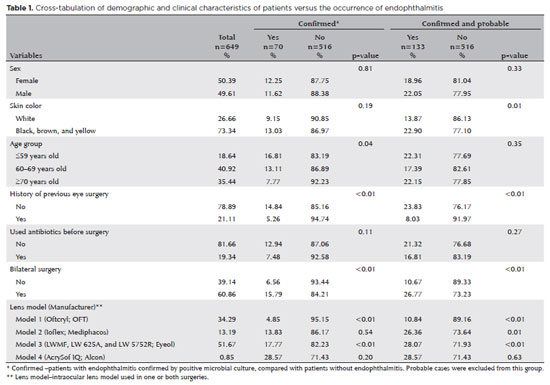
RESULTS: The incidence of confirmed endophthalmitis was 11.94% (95% CI, 9.50-14.76), while the incidence of confirmed and probable cases was 20.50% (95% CI, 17.52-23.73). For confirmed cases, bilateral surgery and the use of lens model 3 were identified as risk factors for endophthalmitis, whereas age over 70 yr and preoperative antibiotic use were protective factors. For confirmed and probable cases, brown and yellow skin color, bilateral surgery, and the use of lens model 3 were also identified as risk factors. Gram-negative bacteria were the predominant etiological agents, and corneal edema was the main clinical manifestation. The mean duration of treatment was eight days, and 27.12% of patients used antibiotics.
CONCLUSION: The incidence observed was substantially higher than that reported in the literature, with a predominance of Gram-negative agents and an association with bilateral surgeries and the Eyeol intraocular lens model. These findings reinforce the need for continuous epidemiological surveillance and the implementation of specific biosafety and infection control protocols during cataract surgery campaigns.
Keywords: Endophthalmitis; Disease outbreaks; Phacoemulsification; Lens implantation, intraocular; Lenses, intraocular; Cataract; Risk factors; Anti-bacterial agents
Abstract
PURPOSE: This study aimed to report the surgical outcomes and success predictors of micropulse transscleral cyclophotocoagulation in eyes with refractory glaucoma.
METHODS: This was a noncomparative, interventional case series. Patients with refractory glaucomas, defined as eyes with prior incisional glaucoma surgery failure and uncontrolled intraocular pressure, who underwent micropulse transscleral cyclophotocoagulation between March 2017 and June 2021 were enrolled. A minimum follow-up period of 6 months was required. Preoperative and postoperative intraocular pressure, number of hypotensive medications, surgical complications, and any subsequent related events were recorded. Success criteria were as follows: 1) intraocular pressure reduction ≥20% and intraocular pressure ≤18 mmHg; 2) intraocular pressure reduction ≥30% and intraocular pressure ≤15 mmHg. The need for topical hypotensive medications was not considered a failure.
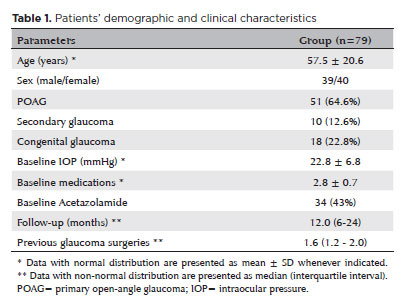
RESULTS: Seventy-nine (79) eyes (79 patients; mean age, 57.5 ± 20.6 years) were included. Overall, the median follow-up duration was 12.0 (interquartile interval, 6–24) months, and the mean intraocular pressure was reduced from 22.8 ± 6.8 mmHg to 15.5 ± 5.6 mmHg at the last follow-up visit (p<0.001). The mean number of medications was reduced from 2.8 ± 0.7 to 2.0 ± 1.0 (p<0.01). At 12 months postoperatively, the success rates for criteria 1 and 2 were 54.9% and 49.7%, respectively. Aside from one case of corneal ulcer, which fully resolved with clinical treatment, and two cases of persistent hypotony (with no visual acuity loss during follow-up), no other vision-threatening complications were observed during the postoperative period. The magnitude of intraocular pressure reduction at 1 month (adjusted to preoperative intraocular pressure; HR=1.01; p=0.002).
CONCLUSION: Our findings suggest that micropulse transscleral cyclophotocoagulation is a relatively effective alternative for managing refractory glaucomas, with minor postoperative complications. In addition, the initial intraocular pressure reduction was a statistically significant predictor of 1-year success in patients undergoing micropulse transscleral cyclophotocoagulation.
Keywords: Intraocular pressure/physiology; Glaucoma, open-angle/surgery; Trabeculectomy; Laser coagulation/methods; Tonometry, ocular/methods; Postoperative complications; Antihypertensive agents/therapeutic use.
Abstract
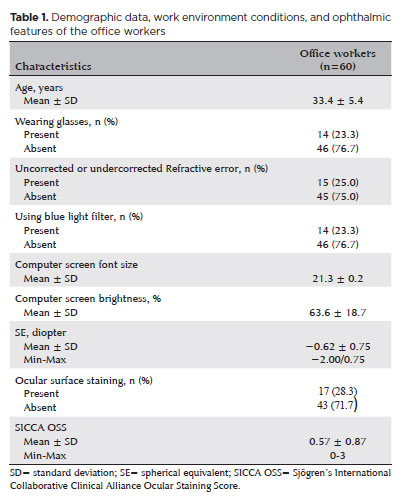
PURPOSE: To examine how ophthalmological features, screen exposure duration, and break habits among office employees affect ocular surface parameters.
METHODS: This single-center cross-sectional study involved two assessments on the same day: one before and one after a visual display terminal task. During the initial assessment, information on screen use was gathered, and refractive error, anterior segment examination, tear breakup time, and Schirmer test measurements were conducted. Participants tracked their screen usage and break durations throughout the day. At the end of the workday, tear breakup time and Schirmer I tests were repeated. Baseline and follow-up results were compared, and regression analysis was performed to identify factors linked to tear breakup time reduction.
RESULTS: The study enrolled 60 female office employees. Their mean screen time was 269.26 ± 70.21 min, with an average break duration of 151.93 ± 46.24 min. Tear breakup time at the second assessment (6.38 ± 2.70) was significantly lower than at baseline (8.62 ± 2.73) (p<0.001), whereas Schirmer test scores showed no significant change (p>0.05). Tear breakup time reduction was noted in 54 participants (90.0%), with a significant association between tear breakup time decrease percentage and screen exposure (p=0.001, r=0.463). Regression analysis showed that uncorrected or undercorrected refractive error was an independent risk factor for a ≥30% tear breakup time reduction, while taking more frequent short breaks (<15 min) acted as a protective factor.
CONCLUSIONS: Taking more frequent short breaks (<15 min) and correcting refractive errors help prevent intra-day tear breakup time decline during visual display terminal use. Structuring breaks to support tear film stability is advisable for occupations that require regular visual display terminal tasks.
Keywords: Tear film; Screen time; Tear breakup time; Office workers; Protective factors; Lacerations; Refractive errors; Risk factors.
Abstract
Objetivo: Determinar a relação entre doença da superfície ocular (OSD), número de medicamentos prescritos para o glaucoma, e como isso influencia na adesão ao tratamento.
Métodos: Neste estudo transversal, pacientes com glaucoma foram submetidos à coleta de dados demográficos, preenchimento do questionário Ocular Surface Disease Index e do Glaucoma Treatment Compliance Assessment Tool. Os parâmetros da superfície ocular foram avaliados pelo “Keratograph 5M”. Indivíduos foram estratificados em 2 grupos de acordo com a quantidade de colírios hipotensores oculares prescritos (Grupo 1: uma ou duas classes de medicamentos; Grupo 2: três ou quatro classes).
Resultados: No total, 27 olhos de 27 pacientes com glaucoma foram incluídos: 17 usando 1 ou 2 medicamentos tópicos (Grupo 1) e 10 olhos usando 3 ou 4 classes (Grupo 2). Na avaliação do Keratograph, os pacientes em uso de 3 ou mais medicamentos apresentaram altura do menisco lacrimal significativamente menor (0,27 ± 0,10 vs. 0,43 ± 0,22; p=0,037). Análise do questionário OSDI mostrou escores mais altos entre o grupo que usou mais colírios hipotensores (18,67 ± 13,53 vs. 38,82 ± 19,72; p=0,004). Em relação ao Glaucoma Treatment Compliance Assessment Tool, o Grupo 2 apresentou piores escores nos componentes de esquecimento (p=0,027) e barreiras por falta de colírios (p=0,031).
Conclusão: O estudo demonstrou que pacientes com glaucoma usando mais colírios hipotensivos apresentaram piores escores de altura do menisco lacrimal e Ocular Surface Disease Index, em comparação com aqueles que usaram menos medicamentos tópicos. Pacientes em uso de 3 ou 4 classes de colírios tiveram piores preditores de adesão ao glaucoma. Apesar dos piores resultados de doença da superfície ocular, não houve diferença significativa nos efeitos colaterais relatados.
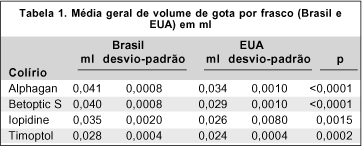
Keywords: Adesão à medicação; Doenças da superfície ocular; Soluções oftálmicas; Glaucoma
Abstract
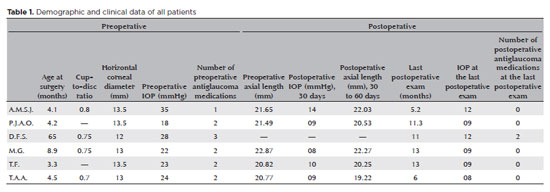
PURPOSE: This study aims to describe the technique, feasibility, efficacy, and safety of 360° trabeculotomy ab externo with double access for the treatment of congenital glaucoma.
METHODS: This paper provides a detailed description of the 360° trabeculotomy ab externo with double access used to treat pediatric glaucoma. The postoperative outcomes of six eyes from six patients who underwent this procedure for primary and secondary congenital glaucoma are also reported.
RESULTS: Six eyes from six patients were included in this study. The median age of the patients at the time of surgery was 1.25 yr (range: 0.27-5.41 yr). The mean preoperative intraocular pressure was 25 ± 5.87 mmHg (range: 18-35 mmHg). At baseline, the mean number of hypotensive eye drop medications used was 2 ± 0.63. Postoperatively, the mean intraocular pressure decreased to 10 ± 2.20 mmHg (range: 9-14 mmHg), and none of the patients required hypotensive eye drops. The most common postoperative complication was hyphema, observed in one case on the first postoperative day; however, it resolved within 7 days.
CONCLUSIONS: The 360° trabeculotomy ab externo with double access is a valuable addition to the surgical options for pediatric glaucoma. This technique facilitates a complete 360° ab externo opening of the trabecular meshwork while enhancing surgical safety.
Keywords: Glaucoma; Glaucoma/congenital; Trabeculectomy; Intraocular pressure; Ophthalmic solutions; Trabecular meshwork; Child
Abstract
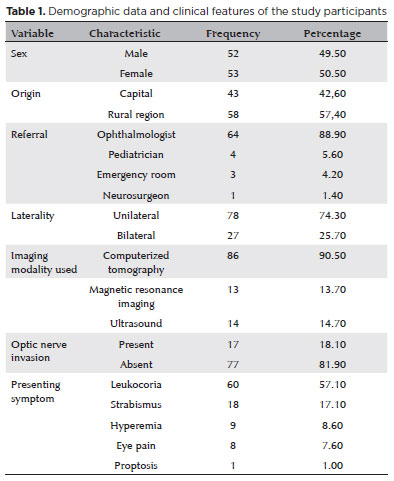
PURPOSE: Although Brazil has a high prevalence of retinoblastoma, there is a lack of epidemiological data on the disease. Thus, in this study, we aimed to evaluate the epidemiological profile of patients diagnosed with retinoblastoma in the ophthalmology department of a pediatric tertiary referral hospital in Ceara, Brazil.
METHODS: A descriptive and cross-sectional study was conducted by retrospectively analyzing the clinical and socioeconomic data from the medical records of pediatric patients followed-up at the hospital between 2007 and 2021. Retinoblastoma was diagnosed on the basis of a fundoscopic or histopathologic examination.
RESULTS: The data of 105 patients were included in the study, and the mean patient age at the time of diagnosis was 1.7 years. Most of the patients were women (50.5%) and hailed from rural areas (57.4%), which was associated with a higher tumor stage. Of the 150 patients, 57.1% initially presented with leukocoria. Ocular hyperemia was associated with more advanced stages of retinoblastoma (p=0.004). Bilateral involvement was observed in 25.7% of the patients and at a significantly younger age (p=0.009). The presence of retinal detachment, vascularized lesions, and vitreous seeds significantly increased the likelihood of requiring enucleation.
DISCUSSION: This study presents an epidemiological description of retinoblastoma in Brazil, which highlights the significance of early detection. Delayed diagnosis is associated with a poorer visual prognosis and higher mortality rate, particularly in patients with unilateral disease. Risk factors for a more severe disease were retinal detachment, vascularized lesions, and vitreous seeds. The correlation between histopathological features and clinical outcomes was limited.
CONCLUSION: Further studies are required to assess the influence of ocular hyperemia, fundoscopic assessment, and histopathologic findings on the prognosis of retinoblastoma. Moreover, it is critical to devise interventions to reduce the time-to-diagnosis in rural areas.
Keywords: Retinoblastoma; Retinal neoplasms; Epidemiology; Prevalence; Risk factors; Delayed diagnosis; Child
Abstract
A retinopatia lúpica é uma manifestação clínica do lúpus eritematoso sistêmico no sistema visual. Geralmente assintomática, porém pode ser uma condição ameaçadora à visão. Está intimamente associada à atividade inflamatória do lúpus eritematoso sistêmico e ao aumento da mortalidade. A retinopatia lúpica tem diversas apresentações clínicas, como a microangiopatia lúpica, oclusão vascular, vasculite, retinopatia hipertensiva associada à nefrite lúpica e retinopatia autoimune. A prevalência e os fatores associados à retinopatia lúpica estão bem definidos em algumas partes do mundo. No entanto, esses dados são pouco conhecidos na América Latina, incluindo o Brasil. Como a retinopatia lúpica é geralmente assintomática, sem a fundoscopia de rotina, provavelmente esta é subestimada. O objetivo desta revisão é discutir a epidemiologia e fatores de risco para retinopatia lúpica.
Keywords: Lúpus eritematoso sistêmico/epidemiologia; Doenças retinianas; Fatores de risco
Abstract
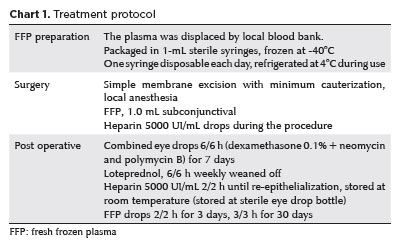
Ligneous conjunctivitis is a rare chronic form of recurrent membranous inflammation and plasminogen deficiency. Ocular manifestations may be associated with sites other than mucous membranes, such as the oral cavity, internal ear, respiratory, genitals, and kidney. Treatment is extremely difficult because of the lack of topic plasminogen drops, and a high volume is required for systemic supplementation. This report aimed to present two patients with ligneous conjunctivitis treated with membrane excision, topical fresh-frozen plasma, and heparin intra-, and postoperatively. No recurrence was found in the ligneous membrane in the 12-month follow-up. The use of topical fresh-frozen plasma and heparin after membrane excision could be effective to avoid recurrence.
Keywords: Conjunctivitis; Plasm; Heparin; Plasminogen; Ophthalmic solutions; Administration, ophthalmic
ABO is licensed under a Creative Commons Attribution-NonComercial 4.0 Internacional.

About
Issues
Editorial Board
Submission
Official publication of Conselho Brasileiro de Oftalmologia
Rua Casa do Ator, 1.117 - 2º andar - CEP: 04546-004
São Paulo - SP, Brazil
Phone: +55 11 3266-4000