
Arq. Bras. Oftalmol. 2026; 89 (5): 10.5935/0004-2749.2026-0019
Total: 343
Núbia Vanessa dos Anjos Lima1,2; Adriana Sobral Lourenço2; Ana Carolina Britto Garcia Rocha Vidal1; Nara Lidia Vieira Lopes1; Marcos Balbino3; Regina Cele Silveira Seixas4; Geraldo Magela Fernandes5; Lizandra Moura Paravidine Sasaki5; Maria Regina Chalita1,6
DOI: 10.5935/0004-2749.2026-0019
ABSTRACT
PURPOSE:To evaluate ocular findings in children born to mothers who were infected with severe acute respiratory syndrome coronavirus 2 (SARS-CoV-2) during pregnancy.
METHODS: This prospective observational study was conducted in Brasília, Brazil, between October 2020 and 2021. Children born to mothers with laboratory-confirmed SARS-CoV-2 infection during pregnancy were included and compared with a control group of nonexposed children. All participants underwent a comprehensive ophthalmological examination performed by pediatric ophthalmologists, including assessment of ocular motility, slit-lamp biomicroscopy, cycloplegic refraction, intraocular pressure measurement, central corneal pachymetry, indirect ophthalmoscopy, and retinal imaging. Maternal and neonatal clinical data were also collected. Ocular parameters were compared between the exposed and control groups.
RESULTS: A total of 84 children were evaluated, including 70 exposed to maternal SARS-CoV-2 infection and 14 nonexposed controls. The mean gestational age was 38.3±1.8 weeks, and the mean birth weight was 3,192±492 g. No significant differences were observed between the groups in terms of ocular motility, anterior or posterior segment findings, intraocular pressure, central corneal thickness, or refractive status. Isolated findings, including epicanthus and congenital ptosis, were observed in a small number of children but were not significantly associated with maternal SARS-CoV-2 infection.
CONCLUSIONS: In this prospective cohort, no significant ocular abnormalities were identified in children exposed in utero to maternal SARS-CoV-2 infection compared with nonexposed controls. However, the relatively small and unbalanced control group limits the strength of these findings, which should not be interpreted as evidence that maternal SARS-CoV-2 infection does not affect ocular development. Larger prospective studies with adequately sized and balanced comparison groups are warranted to further investigate the potential ocular effects of prenatal SARS-CoV-2 exposure.
Keywords: COVID-19; SARS-CoV-2; Pregnancy; Infants; Ocular findings; Vertical transmission; Ophthalmology
INTRODUCTION
SARS-CoV-2, the virus responsible for coronavirus disease 2019 (COVID-19), emerged in late 2019 and rapidly spread worldwide, prompting the World Health Organization to declare a pandemic in March 2020(1). Although COVID-19 is primarily transmitted through respiratory droplets, vertical transmission from mother to fetus has been documented, albeit infrequently(2-5). Maternal severe acute respiratory syndrome coronavirus 2 (SARS-CoV-2) infection during pregnancy has also been associated with adverse perinatal outcomes, including preterm birth, low birth weight, and admission to the neonatal intensive care unit(4,6,7).
Viral infections acquired during pregnancy are well-established causes of congenital ocular abnormalities. Infections caused by rubella virus, cytomegalovirus, Zika virus, and herpes simplex virus have been associated with structural and functional ocular abnormalities in infants, highlighting the importance of ocular surveillance in this population(8,9). Accordingly, concerns have been raised regarding the potential effects of maternal SARS-CoV-2 infection on ocular development in exposed offspring.
Although ocular manifestations of COVID-19 have been reported in both adults and children, including conjunctivitis and the detection of viral RNA in tears, the effects of in utero SARS-CoV-2 exposure on ocular development remain poorly understood(10-12). Most studies to date have reported normal ocular findings in infants exposed to SARS-CoV-2 during pregnancy(13,14), whereas isolated case reports have suggested a possible association with congenital ocular abnormalities(15). Recent evidence concerning antenatal and neonatal exposure to SARS-CoV-2 also indicates that long-term developmental outcomes remain insufficiently characterized, underscoring the need for continued follow-up of exposed children(16). The clinical significance of the isolated ocular findings reported to date therefore remains uncertain.
Because early visual development is essential for normal visual and neurodevelopmental maturation, determining whether maternal SARS-CoV-2 infection affects ocular development is important for clinical management and public health planning during pandemics. Comprehensive ophthalmological assessment may also facilitate the detection of subtle ocular abnormalities that could otherwise go unnoticed during routine pediatric examinations.
This study aimed to evaluate ocular findings in children born to mothers with laboratory-confirmed SARS-CoV-2 infection during pregnancy. We performed a comprehensive ophthalmological assessment, including ocular motility evaluation, cycloplegic refraction, intraocular pressure measurement, central corneal pachymetry, and fundus examination, and compared the findings with those of a control group of non-exposed children.
METHODS
This cross-sectional study was conducted at the Brazilian Center of Vision in Brasília, Brazil, between October 2020 and 2021, during a period characterized by high SARS-CoV-2 transmission and evolving clinical management practices. The study was nested within the Pregnancy Outcomes and Child Development Effects of SARS-CoV-2 Infection Study (PROUDEST), a prospective observational cohort conducted in Brasília, Federal District, Brazil, during the circulation of the SARS-CoV-2 B.1.1.28 and B.1.1.33 lineages.
The study protocol was reviewed and approved by the Ethics Committee of the Faculty of Medicine, University of Brasília, and by the Brazilian National Research Ethics Committee (CONEP; CAAE 32359620.0.0000.5558). The study was conducted in accordance with the ethical principles of the Declaration of Helsinki. Written informed consent was obtained from the parents or legal guardians of all participating infants before enrollment.
Participants
Infants born to mothers with laboratory-confirmed SARS-CoV-2 infection during pregnancy, established by reverse-transcription polymerase chain reaction (RT-PCR) or IgM serology, were eligible for inclusion. Infants with evidence of other congenital infections or incomplete medical records were excluded.
The control group consisted of infants born to mothers without documented SARS-CoV-2 infection during pregnancy who met the same eligibility criteria and underwent the same standardized ophthalmological evaluation protocol.
Clinical and maternal data
Maternal variables included gestational age at SARS-CoV-2 infection, trimester of infection, clinical severity, and treatment received. Neonatal variables included gestational age at birth, birth weight, Apgar scores, admission to the neonatal intensive care unit, and neonatal SARS-CoV-2 RT-PCR results.
Ophthalmological examination
All infants underwent a standardized ophthalmological examination performed by pediatric ophthalmologists. The examination included assessment of ocular motility, slit-lamp biomicroscopy, cycloplegic refraction, intraocular pressure measurement using an Icare tonometer (Icare Finland Oy, Helsinki, Finland), central corneal thickness measurement, binocular indirect ophthalmoscopy with a 28-diopter lens, and retinal imaging using the Eyer digital retinal imaging system.
The ophthalmological examination was performed at a mean age of 7.63±4.70 months after birth.
Statistical analysis
Statistical analyses were performed using SPSS version 26 (IBM Corp., Armonk, New York). Continuous variables are presented as mean±standard deviation (SD), whereas categorical variables are presented as absolute numbers and percentages. Between-group comparisons were performed using the Student t test or Mann–Whitney U test for continuous variables, as appropriate based on data distribution, and the chi-square test or Fisher exact test for categorical variables. Statistical significance was defined as p<0.05.
Because this was an exploratory prospective cohort study nested within the PROUDEST project, no formal a priori sample size calculation was performed. All eligible participants available during the study period were consecutively included.
For continuous ophthalmological outcomes, between-group mean differences, 95% confidence intervals (95% CIs), and p values were calculated to quantify the magnitude and precision of the observed differences.
Given the very low frequency of ophthalmological abnormalities, adjusted multivariable analyses were not performed. Regression models were considered inappropriate because they could yield unstable estimates and increase the risk of model overfitting
RESULTS
A total of 84 infants were included in the analysis: 70 (83.3%) had been exposed to maternal SARS-CoV-2 infection during pregnancy, whereas 14 (16.7%) constituted the nonexposed control group. The overall mean gestational age at birth was 38.3±1.8 weeks, and the mean birth weight was 3,192.4±492.4 g. Two infants subsequently tested positive for SARS-CoV-2 by RT-PCR after birth.
The mean maternal age was 29.7±5.4 years. Most mothers in both groups had no clinically relevant comorbidities. Among mothers in the exposed group, 15.7% experienced moderate-to-severe COVID-19 during pregnancy, whereas the remaining mothers were either asymptomatic or experienced mild disease.
Maternal and neonatal characteristics
Maternal and neonatal characteristics are summarized in table 1. Most infants (88.1%) were born at term, whereas 10 (11.9%) were born preterm. Twelve infants (14.3%) had a 1-minute Apgar score <7; however, all infants had a 5-minute Apgar score ≥7. Seven infants (8.3%) required admission to the neonatal intensive care unit, six of whom were in the exposed group. The rate of cesarean delivery was slightly higher among mothers with SARS-CoV-2 infection, although the difference was not statistically significant.
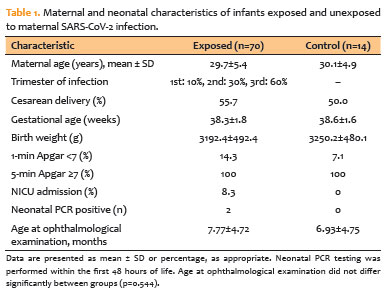
The mean age at ophthalmological examination was 7.77±4.72 months in the exposed group and 6.93±4.75 months in the control group (p=0.544).
Ophthalmological findings
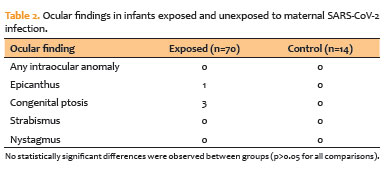
Ophthalmological examination findings are presented in table 2. All infants underwent a standardized ophthalmological assessment. No structural abnormalities of the anterior or posterior segments were identified. One case of epicanthus and three cases of congenital ptosis were observed; none was significantly associated with maternal SARS-CoV-2 infection. No cases of strabismus or nystagmus were detected, and ocular alignment and motility were within normal limits in all evaluated infants.
Systemic findings
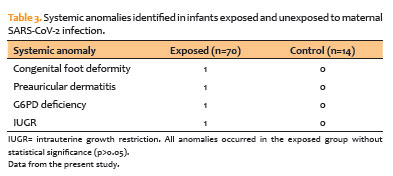
Systemic findings identified during clinical evaluation are presented in table 3. These included one case each of congenital foot deformity, preauricular dermatitis, glucose-6-phosphate dehydrogenase deficiency, and intrauterine growth restriction. All four findings occurred in the exposed group; however, none showed a statistically significant difference between the exposed and control groups.
Intraocular pressure, corneal thickness, and refractive status
Measurements of intraocular pressure, central corneal thickness, and refractive status are summarized in table 4. The mean central corneal thickness in the exposed group was 627.2±38.4 µm in the right eye and 632.6±43 µm in the left eye. The mean intraocular pressure was 10.15±2.49 mmHg in the right eye and 10.21±2.57 mmHg in the left eye, measured in 67 of the 70 exposed infants. Cycloplegic refraction showed similar distributions of spherical and cylindrical errors between the exposed and control groups. Hyperopia and astigmatism were the most frequent refractive findings, and no cases of myopia >1.0 diopter were identified.
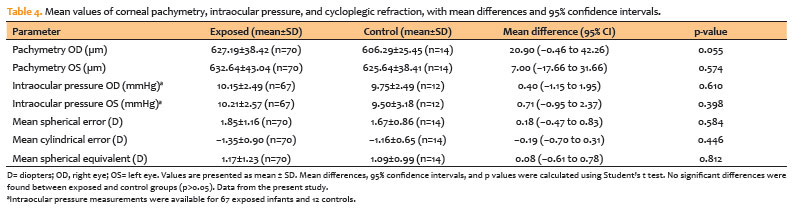
Mean differences, 95% CIs, and p values for all continuous ophthalmological variables are presented in table 4. The 95% CIs for the between-group differences included the null value, and no statistically significant differences were observed between the exposed and control groups.
Overall, no statistically significant differences were observed between infants exposed to maternal SARS-CoV-2 infection and controls for any of the ophthalmological parameters or systemic findings evaluated. Although the 95% CIs were relatively wide for some variables, reflecting the limited precision associated with the small and unbalanced control group, no clinically meaningful differences were identified. These findings suggest that maternal SARS-CoV-2 infection was not associated with detectable alterations in early ocular development in this cohort.
DISCUSSION
This study provides clinically relevant information on ocular findings in children exposed in utero to maternal SARS-CoV-2 infection. In this cohort, comprehensive ophthalmological evaluation did not identify an increased risk of structural or functional ocular abnormalities during early life among exposed infants compared with nonexposed controls. These findings are consistent with the growing body of evidence indicating that ocular abnormalities are uncommon among infants exposed to maternal SARS-CoV-2 infection, although the available evidence remains limited(14).
Previous studies of infants exposed to SARS-CoV-2 in utero have generally reported normal ophthalmological findings, supporting the results of the present study(14). In children with COVID-19, reported ocular manifestations have predominantly been mild and transient, including conjunctivitis and other ocular surface abnormalities, with occasional detection of viral RNA in tears(8,10,12). Importantly, these findings have not been consistently associated with structural ocular damage or long-term visual impairment. A recent systematic review and meta-analysis also concluded that the long-term developmental consequences of antenatal or neonatal SARS-CoV-2 exposure remain uncertain because of the limited number of prospective studies and relatively short follow-up periods(16).
Congenital ocular anomalies potentially associated with maternal SARS-CoV-2 infection remain rare and have primarily been described in isolated case reports. Morhart et al.(14) reported a case of microphthalmia, microcornea, and optic nerve hypoplasia in an infant whose mother was infected early in pregnancy; however, a causal relationship could not be established. Similarly, other case reports have not demonstrated a consistent pattern of ocular malformations attributable to maternal COVID-19(8,15). Larger observational studies have also failed to demonstrate an increased risk of congenital ocular abnormalities in infants exposed to SARS-CoV-2 during pregnancy(14).
A major strength of the present study is the standardized and comprehensive ophthalmological assessment performed in all infants. In addition to routine clinical examination, intraocular pressure, central corneal thickness, and cycloplegic refraction were systematically evaluated. These measurements are infrequently reported in similar studies and provide a more comprehensive assessment of early ocular development(8-10,12). Reporting mean differences with corresponding 95% confidence intervals also allowed assessment of the magnitude and precision of the observed between-group differences. The absence of abnormalities across these parameters further supports the findings of the present cohort.
Nevertheless, several limitations should be acknowledged. The sample size was modest, which may have limited the ability to detect rare ocular anomalies. However, given the low incidence of congenital ocular abnormalities and the practical challenges of conducting pediatric research during the COVID-19 pandemic, the sample size was comparable to that of other published cohorts in this field(6,14,15). In addition, the relatively small and unbalanced control group reduced the precision of the estimated between-group differences, as reflected by the relatively wide 95% confidence intervals, and increased the possibility of a type II error. Therefore, the absence of statistically significant differences should not be interpreted as evidence that no association exists. The cross-sectional nature of the ophthalmological evaluation also precluded assessment of long-term visual and neurodevelopmental outcomes. Longitudinal follow-up is therefore needed to identify potential late-onset effects, particularly because developmental outcomes following prenatal SARS-CoV-2 exposure remain insufficiently characterized(16).
The study was also conducted during the early stages of the pandemic, when healthcare access was restricted, clinical protocols were evolving, and maternal stress was increased. These factors may have influenced perinatal outcomes(2,4,5). In addition, viral genotyping was not performed; therefore, the potential effects of different SARS-CoV-2 variants on fetal and ocular development could not be assessed(2,4,5).
From a clinical perspective, these findings are reassuring for ophthalmologists, pediatricians, and families. In the absence of additional risk factors, routine ophthalmological follow-up may be sufficient for infants exposed to maternal SARS-CoV-2 infection during pregnancy. Nevertheless, careful surveillance may be warranted, particularly for infants with prematurity, systemic complications, or neurological risk factors, given the importance of early visual development(6,8,14).
In conclusion, no ocular abnormalities were detected among children exposed in utero to maternal SARS-CoV-2 infection compared with nonexposed controls. Comprehensive ophthalmological evaluation, including structural and functional parameters, did not reveal significant differences between the groups. However, the relatively small and unbalanced control group limits the precision of these findings, and the absence of statistically significant differences should not be interpreted as evidence of the absence of an association. Continued ophthalmological follow-up and larger prospective studies are warranted to better characterize the long-term ocular outcomes of children exposed to SARS-CoV-2 during pregnancy.
HIGHLIGHTS/KEY MESSAGES
What is already known on this topic
Evidence regarding ocular outcomes in infants exposed in utero to SARS-CoV-2 remains limited. Most published reports describe normal ocular findings, but available data are scarce.
What this study adds
This study provides a comprehensive ophthalmological assessment, including biometric and functional parameters, of infants born to mothers with SARS-CoV-2 infection during pregnancy. No significant ocular abnormalities were identified during early infancy.
How this study might affect research, practice, or policy
These findings provide reassurance to clinicians and families while emphasizing the need for continued follow-up. Larger prospective studies are warranted to better define the long-term ocular outcomes of prenatal SARS-CoV-2 exposure and to inform neonatal care protocols during future pandemics.
ACKNOWLEDGMENTS
The authors thank all members of the PROUDEST group for their valuable contributions to the development and conduct of this research: Cleandro Pires de Albuquerque, MD; Lícia Maria Henrique da Mota, MD; Ciro Martins Gomes, MD; Alberto Carlos Moreno Zaconeta, MD; Felipe Motta, MD; Laila Salmen Espíndola, MD; Geraldo Magela Fernandes, MD; José Alfredo Lacerda de Jesus, MD; Rosana Maria Tristão, MD; Olindo Assis Martins-Filho, MD; Otávio Toledo Nóbrega, MD; Lizandra Moura Paravidine Sasaki, MD; Caroline de Oliveira Alves, MD; Karina Nascimento Costa, MD; and Maria Eduarda Canellas de Castro, MD.
The authors also gratefully acknowledge Instituto Ciência Brasil for its valuable support and guidance throughout the research and publication process.
AUTHORS’ CONTRIBUTIONS:
Significant contribution to conception and design: Núbia Vanessa dos Anjos Lima; Regina Cele Silveira Seixas. Data Acquisition: Adriana Sobral Lourenço; Nara Lidia Vieira Lopes; Núbia Vanessa dos Anjos Lima. Data Analysis and interpretation: Ana Carolina Garcia; Marcos Balbino; Núbia Vanessa dos Anjos Lima; Regina Cele Silveira Seixas. Manuscript Drafting: Núbia Vanessa dos Anjos Lima; Regina Cele Silveira Seixas; Marcos Balbino. Significant intellectual content revision of the manuscript: Maria Regina Chalita; Regina Cele Silveira Seixas; Marcos Balbino. Final approval of the submitted manuscript: Adriana Sobral Lourenço; Ana Carolina Garcia; Maria Regina Chalita; Nara Lidia Vieira Lopes; Núbia Vanessa dos Anjos Lima; Regina Cele Silveira Seixas; Marcos Balbino; Geraldo Magela Fernandes; Lizandra Moura Paravidine Sasaki. Statistical analysis: Marcos Balbino. Obtaining funding: not applicable. Supervision of Administrative, technical, or material support: Maria Regina Chalita. Research group leadership: Núbia Vanessa dos Anjos Lima; Regina Cele Silveira Seixas.
REFERENCES
1. World Health Organization. Coronavirus disease 2019 (COVID-19): situation report–50. Geneva: WHO; 2020 Mar 10 [cited 2020 Jul 9]. Available from: https://www.who.int/docs/default-source/coronaviruse/situation-reports/20200310-sitrep-50-covid-19.pdf
2. Barcelos IDES, Penna IAA, Soligo AG, Costa ZB, Martins WP. Vertical transmission of SARS-CoV-2: a systematic review. Rev Bras Ginecol Obstet. 2021; 43(3):207-15.
3. Vivanti AJ, Vauloup-Fellous C, Prevot S, Zupan V, Suffee C, Do Cao J, et al. Transplacental transmission of SARS-CoV-2 infection. Nat Commun. 2020;11(1):3572.
4. Kotlyar AM, Grechukhina O, Chen A, Popkhadze S, Grimshaw A, Tal O, et al. Vertical transmission of coronavirus disease 2019: a systematic review and meta-analysis. Am J Obstet Gynecol. 2021;224(1):35-53.e3.
5. Raschetti R, Vivanti AJ, Vauloup-Fellous C, Loi B, Benachi A, De Luca D. Synthesis and systematic review of reported neonatal SARS-CoV-2 infections. Nat Commun. 2020;11(1):5164.
6. Abou Ghayda R, Li H, Lee KH, Lee HW, Hong SH, Kwak M, et al. COVID-19 and adverse pregnancy outcome: a systematic review of 104 cases. J Clin Med. 2020;9(11):E3582.
7. Sturrock S, Ali S, Gale C, Battersby C, Le Doare K. Neonatal outcomes and indirect consequences following maternal SARS-CoV-2 infection in pregnancy: a systematic review. BMJ Open. 2023;13(3):e063052.
8. Venkatesh A, Patel R, Goyal S, Rajaratnam T, Sharma A, Hossain P. Ocular manifestations of emerging viral diseases. Eye (Lond). 2021;35(4):1117-29.
9. Devilliers MJ, Ben Hadj Salah W, Barreau E, Da Cunha E, M’Garrech M, Bénichou J, et al. Ocular manifestation of viral diseases. Rev Med Interne. 2021;42(6):401-10.
10. Wu P, Duan F, Luo C, Liu Q, Qu X, Liang L, et al. Characteristics of ocular findings of patients with coronavirus disease 2019 in Hubei Province, China. JAMA Ophthalmol. 2020;138(5):575-8.
11. Ludvigsson JF. Systematic review of COVID-19 in children shows milder cases and a better prognosis than adults. Acta Paediatr. 2020;109(6):1088-95.
12. Valente P, Iarossi G, Federici M, Petroni S, Palma P, Cotugno N, et al. Ocular manifestations and viral shedding in tears of pediatric patients with coronavirus disease 2019: a preliminary report. J AAPOS. 2020;24(4):212-5.
13. Kiappe OP, Santos da Cruz NF, Rosa PAC, Arrais L, Bueno de Moraes NS, et al. Ocular assessments of a series of newborns gestationally exposed to maternal COVID-19 infection. JAMA Ophthalmol. 2021;139(7):777-80.
14. Morhart P, Mardin C, Rauh M, Jüngert J, Hammersen J, Kehl S, et al. Maternal SARS-CoV-2 infection during pregnancy: possible impact on the infant. Eur J Pediatr. 2022;181(1):413-8.
15. Leung JSM. Impact of COVID-19 as a vertical infection in late pregnancy. Hong Kong Med J. 2020;26(3):271-2.
16. Jackson R, Woodward K, Ireland M, Larkin C, Kurinczuk JJ, Knight M, et al. Antenatal and neonatal exposure to SARS-CoV-2 and children’s development: a systematic review and meta-analysis. Pediatr Res. 2024;96(1):40-50.
Submitted for publication:
February 12, 2026.
Accepted for publication:
August 12, 2026.
Approved by the following research ethics committee: Faculdade de Medicina da Universidade de Brasília – UnB (CAAE: 32359620.0.0000.5558).
Data Availability Statement: The datasets generated and/or analyzed during the current study are available from the corresponding author upon reasonable request, subject to justified conditions.
Edited by
Editor-in-Chief: Newton Kara-Júnior
Associate Editor: Luisa Moreira Hopker
Funding: This study received no specific financial support.
Disclosure of potential conflicts of interest: The authors declare no potential conflicts of interest.

How to cite this article:
 ABO is licensed under a Creative Commons Attribution-NonComercial 4.0 Internacional.