Arq. Bras. Oftalmol. 1999;62 (5 )
:590-593
| DOI: 10.1590/S0004-27491999000500008
Abstract
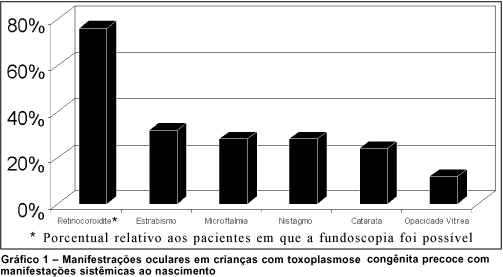
Objetivos: Estudar as manifestações oculares em crianças com toxoplasmose congênita precoce e manifestações sistêmicas ao nascimento. Métodos: Foram estudados 50 prontuários médicos de crianças com diagnóstico clínico e sorológico de toxoplasmose congênita precoce, provenientes do Hospital de Clínicas da Universidade Federal de Uberlândia. Todas as crianças tinham apresentado manifestações sistêmicas ao nascimento e foram examinadas por oftalmologista. Resultados: Encontrou-se alteração ocular em 86% dos pacientes. A principal alteração foi a retinocoroidite, encontrada em 76% dos pacientes submetidos à oftalmoscopia indireta, sendo bilateral em 54% deles. Alterações neurológicas foram evidenciadas em 69% dos pacientes com retinocoroidite. Conclusão: Consideramos que alterações oculares são comuns em crianças com toxoplasmose congênita precoce.O exame oftalmológico é importante no auxílio diagnóstico e subseqüente estímulo visual precoce.
Keywords: Toxoplasmose; Retinocoroidite; Manifestações sistêmicas
Arq. Bras. Oftalmol. 2024;87 (3 )
:1-7
| DOI: 10.5935/0004-2749.2022-0374
Abstract
PURPOSE: To describe a 2019 acute toxoplasmosis outbreak in the city of São Paulo, Brazil, and to evaluate the laboratory serological profile for toxoplasmosis for three consecutive years. The ophthalmological manifestations of the patients involved in the outbreak were also studied.
METHODS: A cross-sectional descriptive study of a toxoplasmosis outbreak in São Paulo, Brazil, between February and May 2019. Epidemiological data were described, as were the observed ocular manifestations. As part of this study the number of patients with positive IgM toxoplasmosis serology was obtained from a large laboratory network (DASA) for three consecutive years, including the year of the outbreak (2018, 2019, 2020).
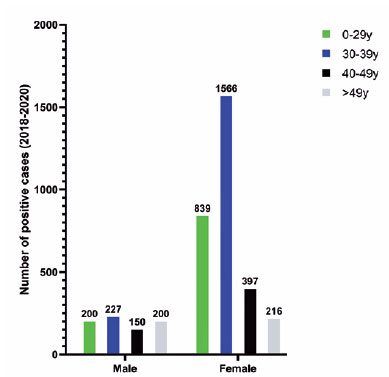
RESULTS: Eighty-three individuals were identified in the outbreak and two clusters were studied. The clinical picture of at least 77% of the patients, the epidemiological analysis, and the short incubation period (5-8 days) suggested contamination by oocysts. Serological laboratory data analysis revealed an increase of positive toxoplasmosis IgM in 2019 of 73% compared to the previous year. Ophthalmological examination revealed that at least 4.8% of the patients developed toxoplasmic retinochoroiditis, none of whom had been treated during the acute systemic disease.
CONCLUSION: Our findings indicate vegetable contamination as the possible source of this outbreak, a high prevalence of toxoplasmosis in São Paulo during the outbreak period, and a drop in the number of tests during the COVID-19 pandemic. Retinochoroiditis was observed in at least 4.8% of the cases. We confirm the need to implement effective means for the prevention, diagnosis, and treatment of the disease. This may involve raising awareness among the population of the importance of vegetable hygiene, and improved quality control of food and water.
Keywords: Toxoplasmosis/etiology; Food parasitology; Water/parasitology; Uveitis, posterior/parasitology; Chorioretinitis/parasitology; Visual acuity; Disease outbreaks; Eye manifestations; Humans.


 ABO is licensed under a Creative Commons Attribution-NonComercial 4.0 Internacional.